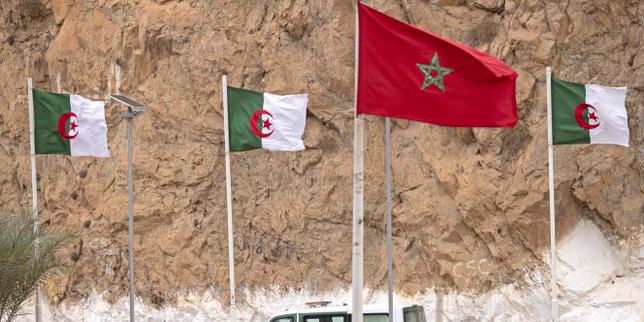
The Maghreb is fracturing along lines that European capitals prefer to ignore until a crisis breaches Mediterranean security barriers. Beneath diplomatic platitudes about regional cooperation, North Africa is locked in a deep structural uncoupling. Algeria and Morocco have severed diplomatic ties entirely, closing borders and airspace while quietly building up conventional arsenals in an escalating arms race. Tunisia drifts further into autocratic consolidation amid economic asphyxiation, while Libya remains carved up by rival militias and foreign patrons. This is not a temporary diplomatic chill. It is a fundamental rearrangement of power that threatens to destabilize the entire southern flank of Europe.
To understand why North Africa is tearing itself apart, one must abandon the comforting narrative of shared cultural heritage and examine the hard mechanics of state survival. For decades, regional integration was treated as an eventual inevitability, an economic destiny deferred only by minor political disputes. That assumption was dangerously naive. Today, the states of the Maghreb are pursuing divergent trajectories that make unity impossible and friction permanent.
The Closed Border and the Militarization of Diplomacy
The rupture between Algiers and Rabat is the central tectonic fault of the region. Closed since 1994, the land border between Algeria and Morocco is more than a logistical barrier; it is a monument to mutual strategic exhaustion. When Algiers unilaterally severed diplomatic relations in August 2021, citing hostile acts, it marked the death of any lingering pretense of pan-Maghreb solidarity.
At the center of this hostility lies the status of Western Sahara. Morocco views the territory as an existential core interest, rallying international recognition—most notably from the United States and Spain—for its autonomy plan under Moroccan sovereignty. Algeria, which backs the Polisario Front, sees this diplomatic momentum as a direct encirclement strategy by its western neighbor and Israel, with whom Rabat normalized relations under the Abraham Accords.
The consequences extend far beyond political rhetoric. Both nations are engaged in a quiet military buildup. Defense budgets across North Africa have climbed steeply, driven by fears of miscalculation along the desert frontier. Algiers relies on sizable hydrocarbon revenues to finance advanced Russian-built hardware, while Rabat secures sophisticated Western technology and intelligence-sharing partnerships. When two heavily armed neighbors stop talking, every border patrol and military exercise carries the risk of accidental escalation. Diplomacy has been entirely replaced by zero-sum paranoia.
Tunisia and the Erosion of Democratic Experimentation
Further east, Tunisia tells a different story of internal decay that ripples outward across the region. Once hailed as the lone success story of the Arab uprisings, Tunisia has slid backward into authoritarian centralism under President Kais Saied. Parliament has been neutered, the judiciary subjugated, and political opponents systematically marginalized.
Yet the true crisis in Tunis is economic, not merely constitutional. Inflation bites deeply into household budgets, basic foodstuffs face recurring shortages, and the state stares down a sovereign debt wall with limited international backing. Refusing the stringent conditions of an International Monetary Fund bailout, Saied has chosen a path of populist defiance, blaming external conspirators and undocumented sub-Saharan migrants for the country's woes.
This scapegoating is not accidental. It serves as a deliberate mechanism of state deflection. By framing Tunisia as the victim of an international plot to alter its demographic identity, the government generates a nationalist distraction from its own administrative failures. Simultaneously, Tunis has positioned itself as Europe’s border guard, striking financial deals with Brussels to stem migrant departures across the Sicilian Channel. This transactional diplomacy turns human despair into a political subsidy, keeping an insolvent government afloat while creating profound humanitarian crises along desert transit routes.
The Permanent Shadow State in Libya
Across Tunisia's eastern border, Libya remains a cautionary tale of institutional collapse transformed into a permanent status quo. The country is split between a Government of National Unity in Tripoli and an entrenched rival administration in the east backed by military strongman Khalifa Haftar. Despite repeated international conferences and UN-brokered roadmaps, national elections remain an elusive mirage because neither faction is willing to risk losing control of oil revenues.
Libya is no longer simply a failed state. It has become a privatized marketplace for transnational influence. Russian private military contractors operate airbases in the east, Turkish military trainers secure the western coast, and neighboring powers use Libyan territory as a staging ground for intelligence operations and arms trafficking.
The oil wealth that should finance reconstruction instead fuels the patronage networks of local militia leaders. These armed groups have embedded themselves so deeply into state ministries and the banking sector that they operate as a shadow government impervious to external pressure. Whenever international actors attempt to force a political settlement, local spoilers simply realign or threaten to shut down petroleum production. The result is a frozen conflict that bleeds instability into the Sahel and provides an unobstructed highway for illicit trade, human trafficking, and extremist recruitment.
External Powers and the New Great Game
North Africa is no longer an exclusive sphere of influence for former colonial powers. While France struggles to maintain diplomatic relevance amid growing popular resentment in the region, a new constellation of external actors has stepped into the vacuum.
Russia projects military power through security contractors and weapon sales, capitalizing on African disillusionment with Western double standards. Turkey asserts commercial and strategic dominance in the eastern Mediterranean and North Africa through infrastructure investments and military cooperation agreements. Meanwhile, Gulf capitals deploy substantial financial resources to shape political outcomes, backing favored factions in Libya and competing for economic influence in Morocco and Egypt.
Energy dynamics have amplified these external interventions. Following the curtailment of Russian gas supplies to Europe, European capitals have scrambled to secure alternative hydrocarbons from Algeria. This sudden revival of European interest has paradoxically empowered Algiers, providing the regime with renewed diplomatic breathing room and financial cushion. Yet this reliance creates a strategic dilemma for Europe. By courting Algiers for gas, European leaders find themselves constrained in their ability to criticize domestic repression or regional belligerence.
The Human Cost of Structural Paralysis
Behind the geopolitical maneuvering lies a restless demographic majority that is systematically disenfranchised. The youth of the Maghreb face a bleak socioeconomic reality characterized by soaring joblessness, profound inflation, and crumbling public services. Educational systems produce graduates for economies incapable of absorbing them, driving an intellectual drain of doctors, engineers, and technicians toward Europe and North America.
For those without the means to secure formal visas, the only option is the clandestine maritime journey. The Mediterranean has transformed into a mass grave, yet the departures continue unabated because the push factors at home outweigh the terrifying risks of the crossing. Governments in the region treat migration either as a security nuisance to be suppressed through police violence or as a diplomatic pressure point to extract aid from wealthy northern neighbors. None address the foundational structural failures that drive millions of citizens to risk their lives on the open sea.
Water stress adds another catastrophic layer to this unfolding drama. The Maghreb is one of the most arid regions on Earth, and climate change is accelerating desertification, shrinking aquifers, and devastating agricultural yields. Rivers that once sustained rural communities are drying up into cracked earth. Governments have been slow to invest in large-scale desalination infrastructure or agricultural modernization, preferring to kick the crisis down the road while rural populations migrate into already overcrowded coastal cities.
The geopolitical fractures of North Africa are not isolated phenomena that can be managed with temporary containment strategies. They represent the systemic failure of post-colonial governance models across the region. Until regional leaders abandon the politics of external scapegoating and internal repression, the Maghreb will remain a volatile frontier where minor sparks can ignite devastating regional fires.


