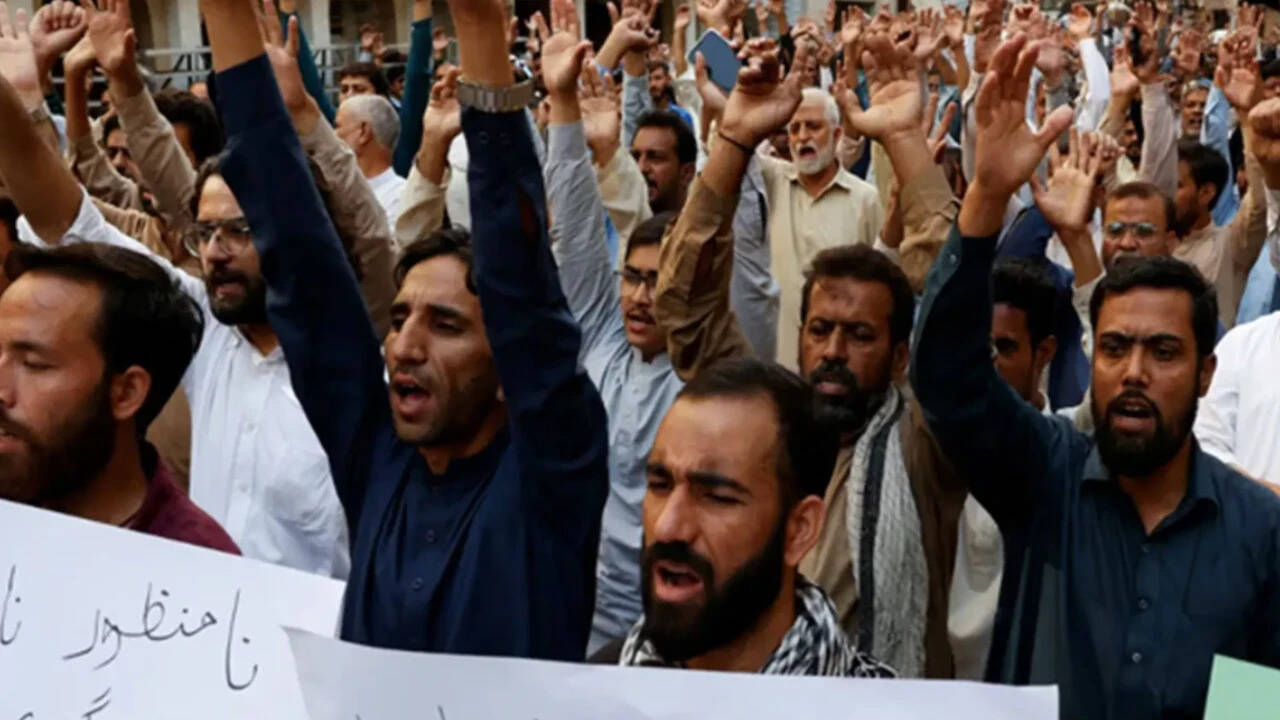
When medical directives mandate the clearing of wards and the postponement of elective procedures, the official language often speaks of emergency readiness. But beneath the bureaucratic phrasing lies a stark political calculation. As hospitals in Islamabad and Rawalpindi received urgent advisories to prepare for mass casualty incidents ahead of high-stakes political demonstrations called by the Pakistan Tehreek-e-Insaf (PTI), the boundaries between public health administration and state containment blurred entirely. This is not merely a logistical precaution. It is a symptom of a deeply fractured political landscape where civil unrest is anticipated with military-grade apprehension.
To understand the weight of these hospital orders, one must examine the mechanics of state response in Pakistan during moments of intense political confrontation. When former Prime Minister Imran Khan’s party announces mobilization strategies targeting the capital, the state machinery activates a multi-layered defense. Security perimeters are drawn, container blockades seal major arteries, and administrative tools like the Maintenance of Public Order (MPO) regulations are deployed to detain leadership figures and key organizers. Yet, the quiet mobilization inside emergency rooms and trauma centers reveals the most telling indicator of official expectations. Bed capacities are artificially inflated, blood banks are placed on maximum alert, and leave requests for medical personnel are abruptly canceled.
The primary question driving public anxiety is simple yet profound. Why do administrative preparations for political rallies increasingly mirror preparations for natural disasters or armed conflict? The answer lies in the volatile history of street confrontations between state security forces and opposition workers. Previous demonstrations have frequently devolved into violent clashes, tear gas dispersal, baton charges, and live ammunition use, leaving emergency wards overwhelmed with trauma cases. By ordering facilities like the Pakistan Institute of Medical Sciences (PIMS) and other regional health hubs to clear space, authorities are bracing for the worst-case statistical probabilities of civil trauma.
Yet, this defensive posture carries a heavy collateral cost for ordinary citizens. Public health infrastructure in urban centers is already stretched to its operational limits under normal economic conditions. When elective surgeries are postponed indefinitely to reserve capacity for potential political unrest, patients suffering from chronic illnesses, scheduled oncology procedures, and routine orthopedic operations are pushed into a state of medical limbo. A cardiac patient awaiting a bypass or a tumor excision finds their treatment plan subordinated to the political calculus of the capital's security apparatus. This creates a secondary humanitarian friction point, where the collateral damage of political polarization is measured in delayed diagnoses and neglected care.
Examining the operational reality of these emergency orders requires looking past the sanitized press releases issued by municipal health departments. Hospital administrators operate in a climate of intense administrative pressure. Directives originating from higher echelons leave little room for independent clinical prioritization. Wards are emptied not necessarily because a precise intelligence report demands it, but because institutional liability dictates absolute preparedness for catastrophic civil friction. In an environment where political dissent is treated as a high-security threat, healthcare facilities are temporarily re-engineered as triage units for state-versus-society friction.
The broader implications extend far beyond the immediate horizon of a single political march. When routine governance is perpetually suspended in favor of crisis management, civic institutions lose their resilience. The normalization of mass casualty alerts in response to opposition gatherings signals a dangerous institutional normalization. It suggests that political expression and civil disobedience are inherently coupled with the expectation of severe physical violence. Rather than addressing the root structural grievances that drive thousands into the streets under the PTI banner, state energy remains concentrated on containment, deterrence, and emergency medical triage.
As the political stalemate persists and legal battles surrounding imprisoned leadership figures continue to dominate headlines, the institutional strain on public infrastructure deepens. The hospitals of Islamabad remain caught in the crossfire of an unrelenting power struggle, forced to balance the immediate demands of emergency readiness against the long-term erosion of public trust in civic stability. The beds may be cleared for incoming trauma, but the systemic ailments of the political sphere remain entirely untreated.
For a deeper look into how these emergency protocols and security lockdowns are reshaping daily life in the capital, watch this Islamabad security lockdown overview. This video provides a direct visual perspective on the extensive barricades and administrative measures implemented across Islamabad ahead of the planned demonstrations.