The air inside the Senate of the Philippines carries a specific, heavy scent. It is a mixture of floor wax, old paper, and the invisible weight of a century of laws. In the halls where Claro M. Recto once thundered and where the foundations of a republic were supposedly poured, there is a silence that feels less like peace and more like a held breath.
But tonight, that silence is jagged.
Ronald "Bato" dela Rosa—the former police chief, the architect of a bloody national era, and now a sitting Senator—is no longer in his seat. The man who once stood as the physical embodiment of the state’s iron fist has slipped through the marble fingers of the institution he helped lead. He is gone. Not just from the chamber, but from the immediate reach of a warrant that has been decades in the making.
To understand why a man would run from the very halls that grant him immunity, you have to look past the political theater and into the red soil of Davao. You have to look at the shadows cast by the International Criminal Court (ICC).
The Shadow in the Room
The ICC is often described as a "court of last resort," but for the thousands of families in the Philippines, it felt like the only resort. For years, the narrative was simple: a war on drugs was necessary to save the soul of a nation. But the cost was written in ink and blood.
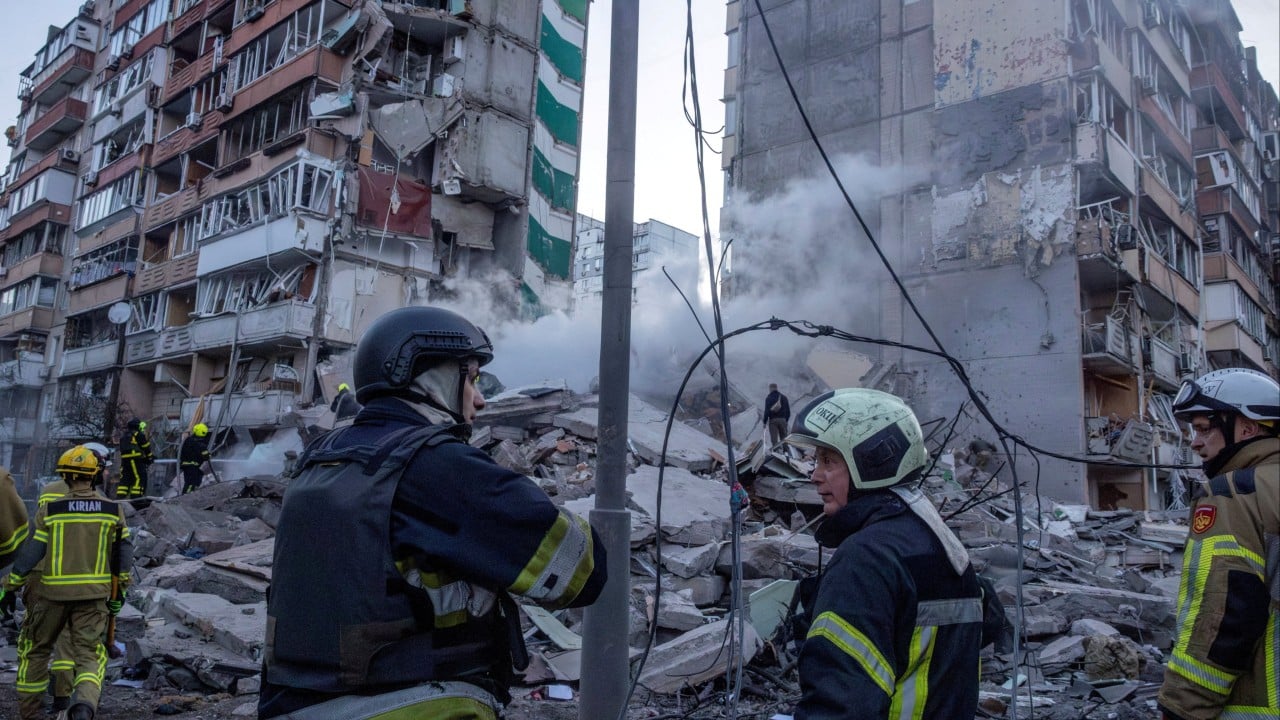
Imagine a mother in a cramped settlement in Tondo. Let’s call her Maria. In 2016, she watched through a cracked door as men in civilian clothes, backed by the authority of the badge, dragged her son into the night. No trial. No lawyer. Just a dull pop in the distance and a body left on a pile of trash with a cardboard sign. This is the "human element" the dry news reports often miss. Behind every statistic about the ICC investigation is a Maria. And behind every Maria is a demand for an accounting that the local systems seemed unable, or unwilling, to provide.
Bato dela Rosa was the face of that era. With his shaved head and his blunt, often tearful proclamations of loyalty to his commander-in-chief, he was the enforcer. When the ICC began knocking, he laughed. He called it an affront to sovereignty. He wrapped himself in the flag and the Senate robes.
But robes have a way of fraying.
The Anatomy of a Flight
The news broke like a sudden fever: Dela Rosa had fled the Senate premises. For a lawmaker, the Senate is a fortress. Under Philippine law, members of Congress possess a degree of immunity from arrest while the body is in session for crimes punishable by less than six years. But the ICC does not deal in petty crimes. They deal in "crimes against humanity."
The charges are not about a single mistake or a botched raid. They are about a systematic, state-sanctioned pattern of killing. When the ICC issues a warrant, the world shrinks. Suddenly, the "sovereignty" you used as a shield becomes a cage. You can stay, but you cannot leave. You can talk, but the world has stopped listening to your excuses.
Why flee now?
Timing in politics is rarely accidental. The current administration, once an ally of the previous regime, has begun to pivot. The warm embrace of the Duterte-Marcos alliance has cooled into a tactical standoff. The "invisible stakes" here involve the survival of a dynasty. If the current government allows the ICC to step foot on Philippine soil, the dominoes don't just fall; they shatter.
Dela Rosa’s flight is a physical manifestation of a psychological reality: the realization that the law is finally faster than the man.
The Ghost of the Law
There is a profound irony in a lawmaker running from the law. The Senate is supposed to be the sanctuary of the rule of law, the place where the messy impulses of a nation are refined into order. When a Senator flees that building to avoid an international summons, the building itself loses a bit of its height.
Consider the mechanics of the ICC. It doesn't have its own police force. It relies on the cooperation of member states or the sheer weight of international pressure to make its arrests. For years, the Philippine government insisted the ICC had no jurisdiction because the country withdrew from the Rome Statute.
The ICC’s counter-argument is a cold, logical blade: crimes committed while you were a member are still within our purview. You cannot burn down a house and then claim the fire department has no right to put it out because you canceled your insurance halfway through the blaze.
Dela Rosa knows this. His flight isn't just about avoiding a pair of handcuffs; it is about avoiding a witness stand where "I was just following orders" has historically been a losing hand.
The Human Cost of the High Ground
While the politicians play a high-stakes game of hide-and-seek, the reality for the average Filipino remains unchanged. The streets are quieter now, but the trauma is baked into the concrete.
The "invisible keywords" of this story aren't found in a dictionary; they are found in the silences of the neighborhoods where the "Tokhang" operations were most frequent. Responsibility. Accountability. Justice. These aren't just abstract nouns to a family that lost its breadwinner to a "nanlaban" (he fought back) narrative that was later proven false.
The flight of Bato dela Rosa is a signal to those families. It tells them that the people who once seemed untouchable are, for the first time, feeling the cold draft of consequence. It suggests that the fortress is not as secure as it once seemed.
But we must be careful with our hope. In the Philippines, "fleeing" is often just a prelude to a "rebranding." We have seen it before—politicians who disappear only to re-emerge when the political winds shift, or when a new deal has been struck in the backrooms of power.
A Republic of Shadows
The Senate floor tonight is an empty stage. The microphones are off. The cameras have moved to the exits, hoping for a glimpse of a black SUV or a hurried shadow.
The tragedy of this moment isn't just that a man is running. It’s that the institution itself seems to be standing still. By allowing its halls to be used as a temporary hideout and then a staging ground for a disappearance, the Senate risks becoming a monument to evasion rather than a temple of law.
Dela Rosa’s career was built on the image of the "tough guy," the man who wasn't afraid to do the "dirty work" of the state. There is a jarring dissonance in seeing that same man skip out the back door when the bill finally comes due. It reveals the fundamental fragility of the "strongman" persona. It shows that the iron fist is often attached to an arm that shakes when held to the light.
The ICC investigation will continue. The warrants will remain active. The international community will keep its slow, methodical watch. Dela Rosa can leave the Senate, but he cannot leave the planet. He has entered a liminal space where he is neither fully free nor officially captured. He is a ghost in his own country.
As the lights dim in the Senate, the heavy scent of wax and paper remains. But there is a new note in the air now—the sharp, metallic tang of fear. The man who once told the world to "bring it on" has decided, when faced with the actual arrival of justice, that he would rather be anywhere else.
The pillars of the Senate remain standing, but they look a little thinner tonight. They look like they are struggling to hold up the weight of a truth that no one wants to admit: that in the end, no matter how many guards you have or how many laws you write, you eventually have to face the ghost of what you’ve done.
The hunt is no longer just on the streets of Manila. It is in the conscience of a nation. And that is a place from which there is no escape.