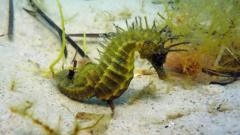
You spot a tiny, intricate seahorse bobbing gracefully near a coastal seagrass bed. Your first instinct might be to reach for your camera, flash on, or lean in for a closer look. Stop right there. Authorities are cracking down, and intentionally disturbing these fragile marine creatures can land you in serious legal trouble.
Recent spikes in human interference have forced wildlife protection agencies to issue strict legal warnings. Divers, snorkelers, underwater photographers, and even commercial film crews are finding out that ignorance of the law isn't a valid defense. If you're heading underwater anytime soon, you need to know where the line is drawn.
The Legal Reality Behind Seahorse Protection
In places like the United Kingdom, native species such as the spiny seahorse (Hippocampus guttulatus) and the short-snouted seahorse (Hippocampus hippocampus) receive strict legal backing. They are heavily guarded under major conservation legislation, including the Wildlife and Countryside Act.
What does this mean in plain English? You cannot legally dive or snorkel with the intent to disturb, track, handle, or photograph wild seahorses without holding an official wildlife licence. Jess Churchill-Bissett, Head of Marine Conservation at the Marine Management Organisation (MMO), points out that while public fascination is understandable, these animals are hyper-sensitive to human disruption.
Breaking these rules isn't just frowned upon. It can trigger formal enforcement action, hefty fines, or worse for repeat offenders and commercial operations.
Why Flash Photography and Touching Cause Harm
It's easy to assume that a quick snapshot or a gentle touch won't hurt an animal smaller than your hand. Reality tells a different story.
Seahorses are notoriously slow-moving and poor swimmers. When divers crowd them, chase them, or blast them with camera strobes, the biological cost is massive. Research indicates that repeated flash photography induces severe physiological stress. Stressed seahorses burn vital energy reserves, abandon critical feeding grounds, and suffer from disrupted breeding cycles.
When a seahorse feels threatened, it shows distinct warning signs:
- Curling its body tightly or lying flat against the seabed
- Adopting a downward, chest-hugging head posture
- Darkening its skin colour around body ridges
- Attempting erratic swims to escape
If you notice any of these behaviours, you're already too close.
How to Act Responsibly Underwater
Encountering a seahorse by pure chance while diving or swimming happens. The law doesn't punish accidental sightings, but it does hold you accountable for how you react. Conservation groups and agencies advocate for a strict code of conduct to keep both humans and marine life safe.
Keep your observation time under five minutes. Never touch, move, or try to pose a seahorse for a better frame. Keep your distance, avoid surrounding the animal with a group of divers, and keep dangling equipment like hoses and gauges tucked safely away from delicate habitats like seagrass beds.
If you stumble upon a stranded seahorse or accidentally haul one up in a crab net, act fast. Place it gently into a bucket of cold seawater, take a quick photo without a flash for record-keeping, and return it safely to the water away from surface predators. Report your sighting to local wildlife trusts or conservation databases so researchers can monitor population health.
Protecting fragile marine ecosystems relies entirely on daily choices. Give wildlife room to breathe, respect the legal boundaries, and leave the ocean cleaner and safer than you found it.