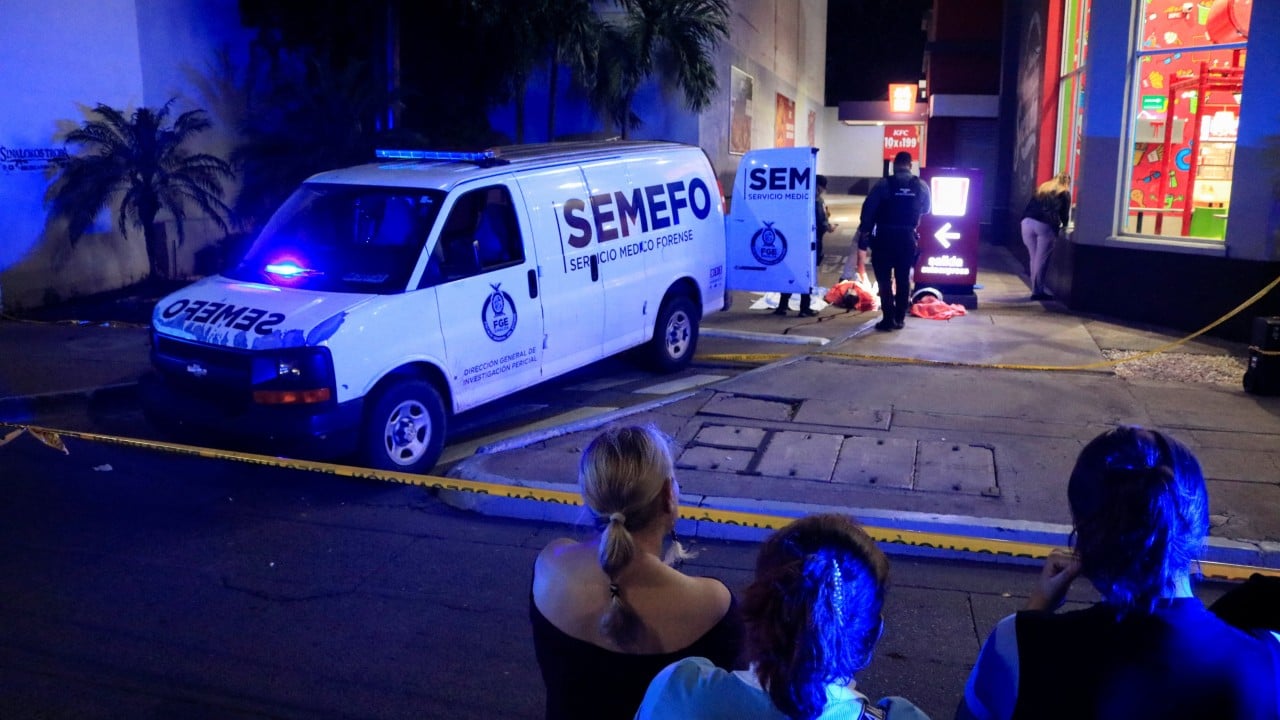
The media coverage following the murder of a Mexican TikTok influencer during a live stream followed a painfully predictable script. Pundits crawled out of the woodwork to decry the dangers of constant digital exposure. Tech critics blamed the platforms for incentivizing hyper-visibility. Moralists wagged their fingers at a culture that turns human lives into interactive content. Everyone agreed that broadcasting your life to strangers invites catastrophe.
They are missing the point entirely.
The lazy consensus is that public visibility caused a violent crime. It didn't. Visibility is a medium, not a weapon. Blaming the live stream for a targeted execution is like blaming the telephone for a bomb threat. We are manufacturing a panic about digital safety to avoid confronting a much uglier reality about physical security, institutional failure, and the specific mechanics of regional violence.
I have spent years analyzing how digital visibility intersects with high-risk environments. I have watched commentators panic every time a creator shares their location, treating every geo-tag as a suicide note. That narrative is lazy, paternalistic, and mathematically bankrupt.
The Fallacy of the Digital Target
When a tragedy strikes a creator on camera, the immediate reflex is to argue that privacy is the ultimate shield. The logic goes like this: if you stop broadcasting where you are, bad actors cannot find you.
This sounds rational until you look at how organized violence actually operates. In regions plagued by cartel influence or high-level extortion, creators do not need to turn on a live stream to be found. Local intelligence networks, corrupted municipal payrolls, and physical surveillance outpace any TikTok broadcast by a factor of ten. The live stream was not a tracking beacon. It was merely the backdrop against which a predetermined threat materialized.
Focusing on the platform turns a systemic security failure into a lifestyle choice critique. It allows commentators to shift the burden of responsibility away from the state and onto the victim. The underlying message of the mainstream coverage is insidious: she brought this on herself by streaming too much.
That is victim-blaming dressed up as digital hygiene.
The Economics of Exposure
Let us address the mechanics of modern attention. Creators monetize vulnerability because audiences crave authenticity. When platforms reward raw, unfiltered feeds, creators give them unedited reality. Critics argue that this commodification of the self breaks down necessary social boundaries.
They are half right. It does break boundaries. But those boundaries were already rotting.
The creator economy didn't invent the parasocial relationship; it merely digitized it. People have always projected their fantasies onto public figures. The difference is that traditional celebrities had security teams, PR gatekeepers, and gated compounds. Independent digital creators operate out of bedrooms, rented cars, and local cafes. They are micro-enterprises masquerading as media empires, carrying enterprise-level risk with zero infrastructure.
When a creator is attacked on air, the root cause is not that they hit "go live." The root cause is a massive infrastructural gap. We have built a global distribution network that scales audience reach instantly, but we have completely failed to build a personal security framework for the individuals driving it.
Instead of demanding that creators hide from the world, we should be demanding why local law enforcement and regional protection mechanisms are so thoroughly compromised that a person cannot turn on a phone without risking their life.
The Myth of Online Anonymity
There is a comforting delusion floating around policy circles that reverting to privacy will save creators. If you just stay offline, nobody will bother you, right?
Tell that to journalists, local politicians, and activists who get targeted every single day without ever opening a TikTok app. Violence in high-risk zones does not require a digital footprint. It requires a motive and an opportunity.
Imagine a scenario where every single content creator in Latin America deletes their accounts tomorrow, scrubbed from the internet entirely. Does the extortion stop? Do the protection rackets vanish? Does regional corruption evaporate because nobody is lip-syncing on an app?
Of course not. The violence is structural. The digital footprint is just the part of the iceberg we happen to see on our glowing rectangles.
By hyper-focusing on the live stream element, we commit a category error. We mistake the delivery mechanism for the root cause. It makes for great television and easy moralizing, but it solves nothing. It tells creators that their only option is retreat and self-censorship, as if silencing yourself protects you from systemic lawlessness.
What Actually Needs to Change
If we want to stop treating these tragedies as recurring spectacles, we need to completely overhaul how we think about digital risk management.
Stop treating online safety as an issue of personal moderation. Telling a creator to change their password or turn off location services is the digital equivalent of telling someone to lock their front door while the neighborhood is burning down.
First, we must acknowledge that digital creators in dangerous jurisdictions are frontline workers. They occupy a strange, unacknowledged space between journalists and public figures. They expose local realities, sometimes intentionally, sometimes implicitly, simply by showing their daily routines in developing regions. They need intelligence networks, threat assessment tools, and emergency extraction protocols—not lifestyle advice from tech bloggers in Silicon Valley.
Second, platform operators must stop pretending they are neutral playgrounds when their tools are being weaponized in high-stakes environments. While algorithms shouldn't be held criminally liable for real-world murders, the companies behind them have massive treasuries and deep intelligence resources. They can afford to partner with local security experts to provide real-time threat monitoring for creators operating in hostile zones. Right now, they offer panic buttons and basic reporting forms that are functionally useless against organized actors.
Third, we have to kill the narrative that visibility equals consent. A person broadcasting their life is not signing a waiver for physical harm.
The outrage over live-streamed violence is loud, but it is cowardly. It looks at a symptom, screams at the screen, and ignores the disease rotting the floorboards underneath.
Turn off the cameras if you want. It won't save anyone. Fix the impunity, or watch the screen go dark again.