The conventional wisdom making the rounds in Whitehall and Berlin is deceptively comforting. Faced with a fracturing transatlantic security consensus and erratic shifting winds in Washington, the standard narrative dictates that Germany should simply write a massive check to underwrite the United Kingdom's Trident nuclear deterrent. The Telegraph broke the story that Berlin is actively examining options to financially prop up Britain's multi-billion-pound Nuclear Defence Enterprise, positioning it as the ultimate pragmatic fix for continental defense.
It sounds like a neat diplomatic win. Germany gets a nuclear umbrella without breaking its historical taboos or the Two Plus Four Treaty framework, and Britain gets relief for its chronically overstretched defense budget.
It is also an absolute fantasy that misunderstands industrial reality, sovereign risk, and the bitter mechanics of nuclear command.
The Funding Fallacy
Let us dismantle the lazy consensus first. Money does not instantly translate into strategic depth. The core premise of the Berlin-to-London funding pipeline assumes that the primary bottleneck keeping British strategic submarines tied to dockyards is purely capital. That is false.
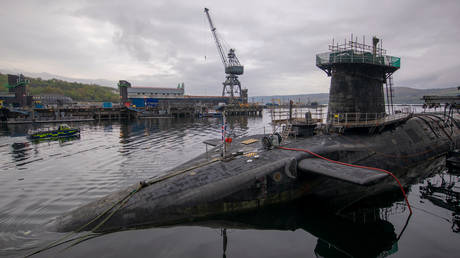
I have watched defense procurement programs hemorrhage billions into bureaucratic black holes while mistaking balance-sheet injections for actual engineering capability. The UK’s submarine enterprise—anchored around the Vanguard and upcoming Dreadnought fleets—is throttled by deep technical bottlenecks, chronic skilled labor shortages, and nightmarish maintenance queues at facilities like Faslane. HMS Vanguard’s recent deep refit dragged on for over seven years, blowing past initial timelines by nearly half a decade and catastrophically compounding operational fatigue across the rest of the active fleet.
Throwing euros at British shipyards does not magically manifest master nuclear welders, certified reactor technicians, or secure supply chains out of thin air. Industrial capacity in the nuclear sector is built over decades through institutional muscle memory, not short-term fiscal transfers. German industrial participation sounds great in a joint communiqué, but asking German firms to construct highly classified, bespoke components for Royal Navy strategic submarines ignores the labyrinthine security clearances and specialized engineering pedigree required.
The Sovereignty Paradox
Proponents of this cross-border arrangement love to point out that London retains absolute, uncompromised control over launch authority. Germany pays; Britain keeps the finger on the button.
This creates an acute political trap. In what democratic universe does a German taxpayer happily fund a multi-billion-pound strategic deterrent over which their government has precisely zero operational control? Conversely, what happens during a severe geopolitical crisis when Berlin realizes it is bankrolling a doomsday machine based in Scotland that might be fired—or withheld—in a manner that directly contravenes German vital interests?
Nuclear deterrence is entirely about credibility. If Berlin's financial contribution comes with strings attached—and capital contributions of this magnitude always acquire strings—it will introduce paralyzing friction into a command structure that demands split-second clarity. If it comes with no strings attached, German politicians will eventually face a furious domestic electorate asking why billions of Euros are vanishing into British defense infrastructure while domestic German infrastructure crumbles.
The Real Strategic Play
Instead of entertaining expensive financial band-aids that paper over deep structural decay, European capitals need to face the unvarnished truth. The U.S. nuclear umbrella is not going to vanish overnight, but the era of unquestioned, autopilot American security guarantees is dead.
If Europe genuinely wants strategic autonomy, financial subcontracting is a cop-out. Britain must solve its own structural maintenance backlogs and fund its national defense enterprise independently, or accept that its deterrent is shrinking in real terms. Berlin must decide whether its historical aversion to strategic military leadership is worth the existential risk of remaining a geopolitical dependent.
Buying a timeshare on someone else's nuclear weapons program is not defense strategy. It is diplomatic theater designed to soothe nervous politicians while avoiding the hard choices. Stop looking for accounting tricks to solve a crisis of political will.


