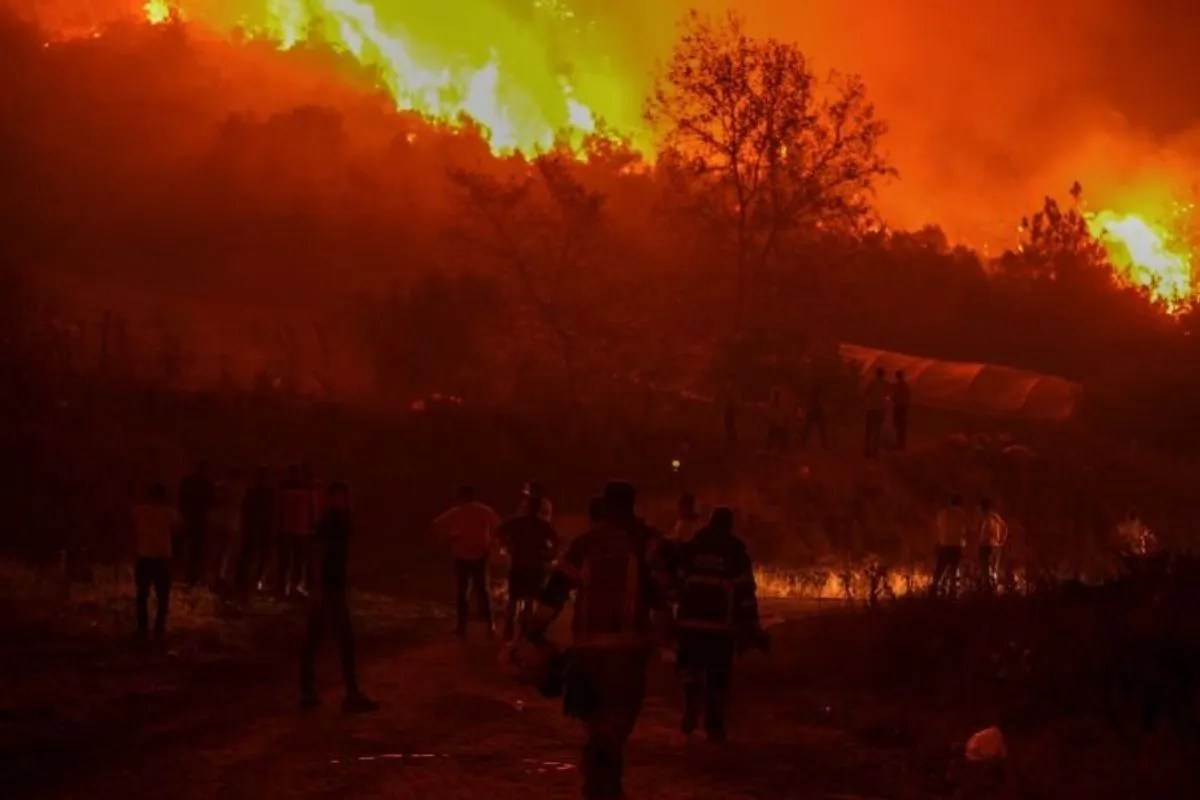
Twelve people are dead and fifty-four others are nursing severe burn injuries. That's the brutal toll after a massive cluster of 154 vegetation fires tore through northeastern Algeria in a single day. When a punishing late-summer heatwave collides with tinder-dry brush, emergency services face an impossible math problem.
Interior Minister Said Sayoud confirmed that the fatalities hit three specific northern provinces hard: five lives lost in Jijel, four in Béjaïa, and three in Tizi Ouzou. Six of the injured victims remain in critical condition under intensive care. This isn't just an isolated act of bad weather. It's a recurring nightmare for North Africa that demands a closer look at why these landscapes ignite so easily.
The Anatomy of the Blazes
Béjaïa bore the brunt of the chaos with 36 separate fires recorded in that province alone. Emergency crews managed to corral half of those by Wednesday evening, but the sheer volume of simultaneous outbreaks stretched civil protection units to their absolute limits.
Skikda, El Tarf, and other northern municipalities also fought stubborn flames around towns like Tamalous and Aïn Kerma. High winds act like bellows, pushing walls of fire across rugged terrain faster than local residents can evacuate. When temperatures soar to extreme levels across the region, vegetation turns into powder. Small sparks transform into roaring firestorms within minutes.
A Dangerous Trend Across North Africa
Algeria doesn't have a monopoly on summer heat, but its northern forests sit right in the crosshairs of climate volatility. Consecutive years of drought have left deep scars on the ecosystem.
Think back to the catastrophic seasons of 2021 and 2023, when dozens lost their lives and entire communities vanished behind thick plumes of smoke. Every single summer now brings a familiar cycle of dread. While authorities scramble to deploy equipment and mobilize ground personnel, the fundamental vulnerability of these forested slopes remains unchanged.
What Happens When the Smoke Clears
Right now, the immediate priority stays locked on containment and medical triage. Hospitals in affected provinces are treating severe burns while search teams clear charred outskirts.
The Algerian Interior Ministry has noted that investigations into the exact ignition sources take time. Whether sparked by accidental human activity, agricultural burning, or extreme natural conditions, the outcome exposes the harsh reality of living through escalating climate pressures. Preventing the next disaster means rethinking how rural communities manage brush clearance and early-warning evacuation protocols before the next heatwave hits.