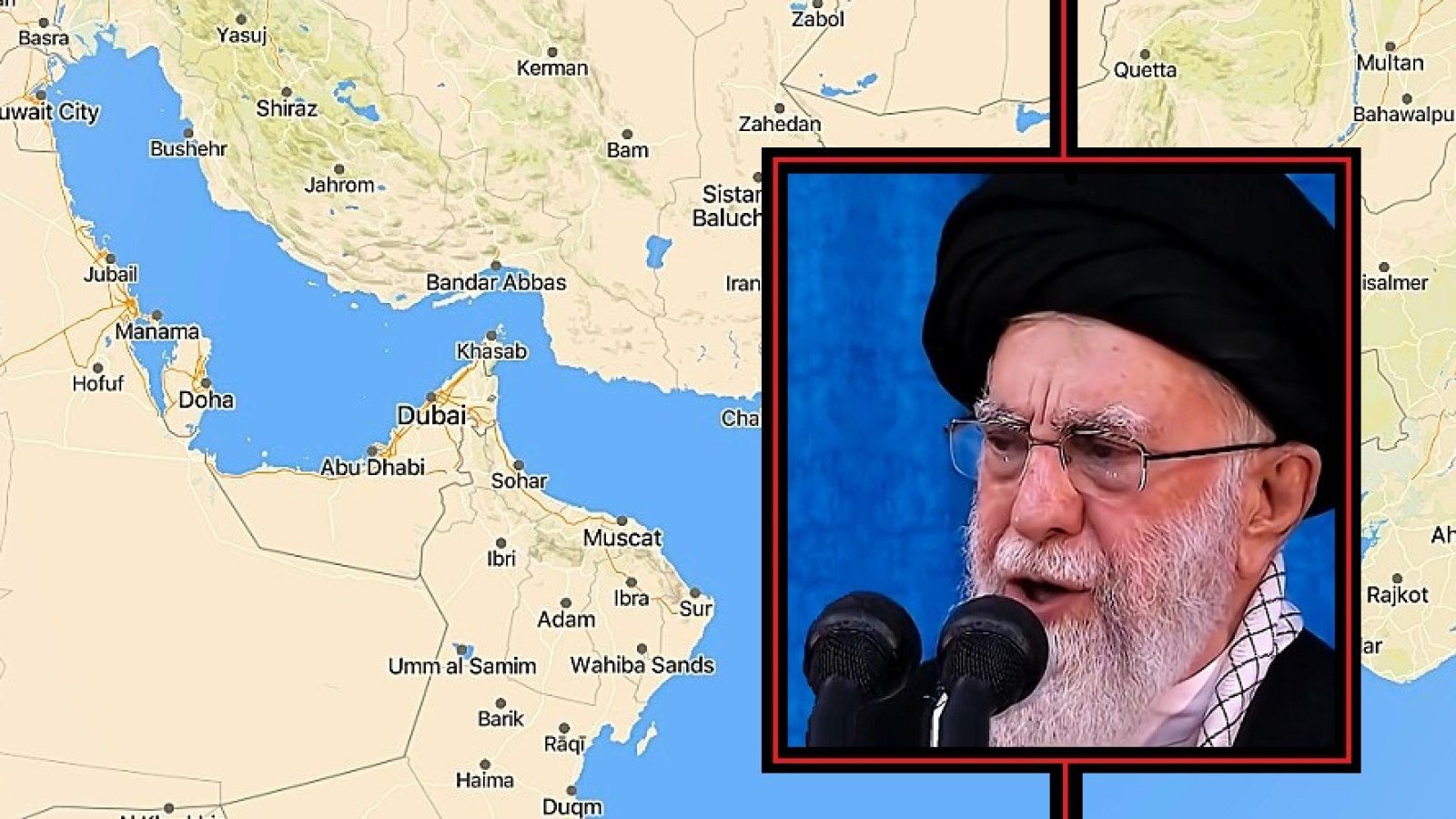
The shift in United States foreign policy toward Iran is not a humanitarian pivot but a calculated recalibration of resource allocation. The current administration’s move to "wind down" military efforts is a response to a diminishing rate of return on kinetic engagement in the Middle East. For decades, the US-Iran relationship has been governed by a cycle of maximum pressure and proxy retaliation, a framework that has reached a point of diminishing marginal utility. By identifying five core objectives—nuclear non-proliferation, regional maritime security, the cessation of proxy funding, the release of detainees, and the reduction of ballistic missile proliferation—the administration is attempting to move from an open-ended military commitment to a targeted, outcome-oriented containment strategy.
The Architecture of Strategic Retrenchment
The decision to scale back military presence requires a rigorous definition of what constitutes "victory" in a non-linear conflict. Traditional warfare seeks the total neutralization of an enemy’s capability; strategic retrenchment seeks the stabilization of an enemy’s behavior at the lowest possible cost to the hegemon. This transition is driven by three primary variables:
- The Opportunity Cost of Central Command (CENTCOM) Dominance: Every dollar and carrier strike group stationed in the Persian Gulf is a resource unavailable for the Indo-Pacific theater. The "pivot to Asia" has remained a theoretical aspiration precisely because the US could not solve the "Iran problem" through either total war or total diplomacy.
- The Evolution of Proxy Warfare: Iran’s "Axis of Resistance"—comprising Hezbollah, Hamas, and the Houthis—has demonstrated that asymmetric capabilities can nullify high-cost conventional advantages. The cost for Iran to disrupt global shipping via the Houthi rebels in the Red Sea is several orders of magnitude lower than the cost for the US Navy to protect that same shipping.
- Domestic Political Solvency: Public appetite for "forever wars" has eroded. A policy that maintains the appearance of strength without the casualty counts of a ground invasion is the only politically sustainable path for any modern US administration.
Quantifying the Five Objectives
The success of this de-escalation depends on the measurable achievement of five specific benchmarks. These are not merely talking points; they represent the friction points that, if left unaddressed, will inevitably trigger a return to kinetic conflict.
Nuclear Containment and the Breakout Timeline
The most critical metric is the "breakout time"—the duration required for Iran to produce enough weapons-grade uranium for a single nuclear device. Following the collapse of previous agreements, this timeline has shrunk significantly. The US objective here is a return to a verifiable monitoring regime that extends this window to at least twelve months. This is a technical challenge involving the number of active centrifuges (specifically IR-6 models) and the purity levels of stockpiled hexafluoride gas.
The Maritime Security Equation
The Persian Gulf and the Bab el-Mandeb strait are the world’s most sensitive economic chokepoints. Iran’s ability to seize tankers or utilize drone swarms creates a risk premium on global oil prices. The US strategy shifts from "policing" to "deterrence through partnership," attempting to offload the secondary security costs to regional allies while maintaining a "horizon-based" strike capability.
Proxy Kinetic Suppression
Iran’s influence is projected through its funding of non-state actors. The objective is to establish a financial "burn rate" for Iran that makes proxy support unsustainable. This involves tightening the enforcement of existing sanctions on "ghost fleets" (oil tankers operating under flags of convenience) to starve the Islamic Revolutionary Guard Corps (IRGC) of the hard currency required to pay foreign fighters.
Human Capital and Detainee Diplomacy
The release of US detainees serves as the necessary "proof of life" for diplomatic channels. In the logic of international relations, this acts as a signaling mechanism. It demonstrates that the Iranian leadership is capable of centralized decision-making and is willing to trade tactical leverage for strategic breathing room.
Ballistic and UAV Proliferation
The war in Ukraine has highlighted the global reach of Iranian drone technology (specifically the Shahed series). The US objective has expanded from regional containment to global non-proliferation. The strategy now targets the supply chain—the acquisition of dual-use electronic components—rather than just the finished platforms.
The Mechanics of the "Winding Down" Process
Winding down a military effort is more complex than a simple withdrawal. It involves the transition from Direct Kinetic Intervention to Integrated Deterrence. This requires a shift in the posture of the US Fifth Fleet and the redistribution of air assets.
The logistical reality of this shift is governed by the "Last Mile" problem of security. As the US pulls back, a power vacuum is created. The US strategy assumes that regional powers—specifically Saudi Arabia and the UAE—will fill this vacuum. However, this assumes a level of regional cooperation that has historically been absent. The risk is that instead of a "wind down," the US creates a "pull factor" for other actors, such as Russia or China, to increase their influence in the region.
The Structural Flaws in the De-escalation Thesis
The primary risk to this strategy is the "Credibility Gap." For deterrence to work without a physical presence, the threat of return must be absolute and immediate. If the Iranian leadership perceives the "winding down" as a sign of permanent retreat or terminal exhaustion, they have every incentive to accelerate their nuclear program or escalate proxy attacks to force further concessions.
The second limitation is the internal volatility of the Iranian regime. A strategy predicated on rational actor theory assumes the Iranian leadership prioritizes economic stability. If the hardline factions within the IRGC prioritize ideological expansion or regime survival through external conflict, the US's five objectives become unachievable through diplomatic or economic means alone.
Strategic Forecast: The Hybrid Containment Model
The US is moving toward a Hybrid Containment Model. This will likely manifest as:
- Financial Warfare: Continued use of the SWIFT system and secondary sanctions to control Iranian cash flow.
- Technological Sabotage: Increased reliance on cyber operations (similar to Stuxnet) to delay nuclear progress without the political fallout of a missile strike.
- Regional Integration: Forcing an alignment between Israel and Sunni Arab states to create a localized counterweight to Iran, effectively outsourcing the "boots on the ground" requirement.
The coming months will be defined by "Testing Events"—minor provocations by Iranian-backed groups designed to gauge the US's actual threshold for re-intervention. If the US fails to respond to a breach of maritime security, the "wind down" will be interpreted as a surrender. If the US over-responds, the diplomatic path closes.
The strategic play for the US is to maintain a "Dynamic Equilibrium" where Iran is too weak to dominate the region but just stable enough to avoid a total collapse that would necessitate a massive humanitarian and military intervention. The five objectives are the guardrails for this equilibrium. The failure of any single objective threatens the entire structure, likely resulting in a snap-back of military assets and a return to the high-cost status quo.
Establish a clear "Red Line" regarding the enrichment of uranium to 90% purity. This is the only binary metric that provides absolute clarity. Use the current diplomatic window to formalize a "Regional Maritime Task Force" that includes non-Western powers, thereby internationalizing the cost of protecting trade routes and reducing the specific burden on US taxpayers. Would you like me to analyze the specific economic impact of Iranian "Ghost Fleet" sanctions on global oil benchmarks?