The classification of the World Cup third-place play-off as an inconsequential exhibition misinterprets the structural data of elite international football. When France and England face each other at Miami Stadium on July 18, 2026, the match serves as a clinical assessment of tactical depth, mechanical recovery under extreme fatigue, and modern-era psychological dominance. Media narratives focus heavily on historical win-loss records, yet an objective analysis reveals that ancient data points distort reality. While England holds an overall historical lead with 17 victories to France's 10, a modern divergence shows England managing only a single victory in their last nine meetings. Evaluating this fixture requires moving past basic outcomes to isolate the core tactical mechanisms that govern elite football performance.
The structural blueprint of this tactical analysis isolates three operational dimensions: the fatigue recovery differential following semi-final eliminations, the geometric manipulation of space in transition states, and the historical structural bottleneck that has prevented England from winning a competitive senior tournament match against France since 1982.
The Semi-Final Post-Mortem and Tactical Fatigue
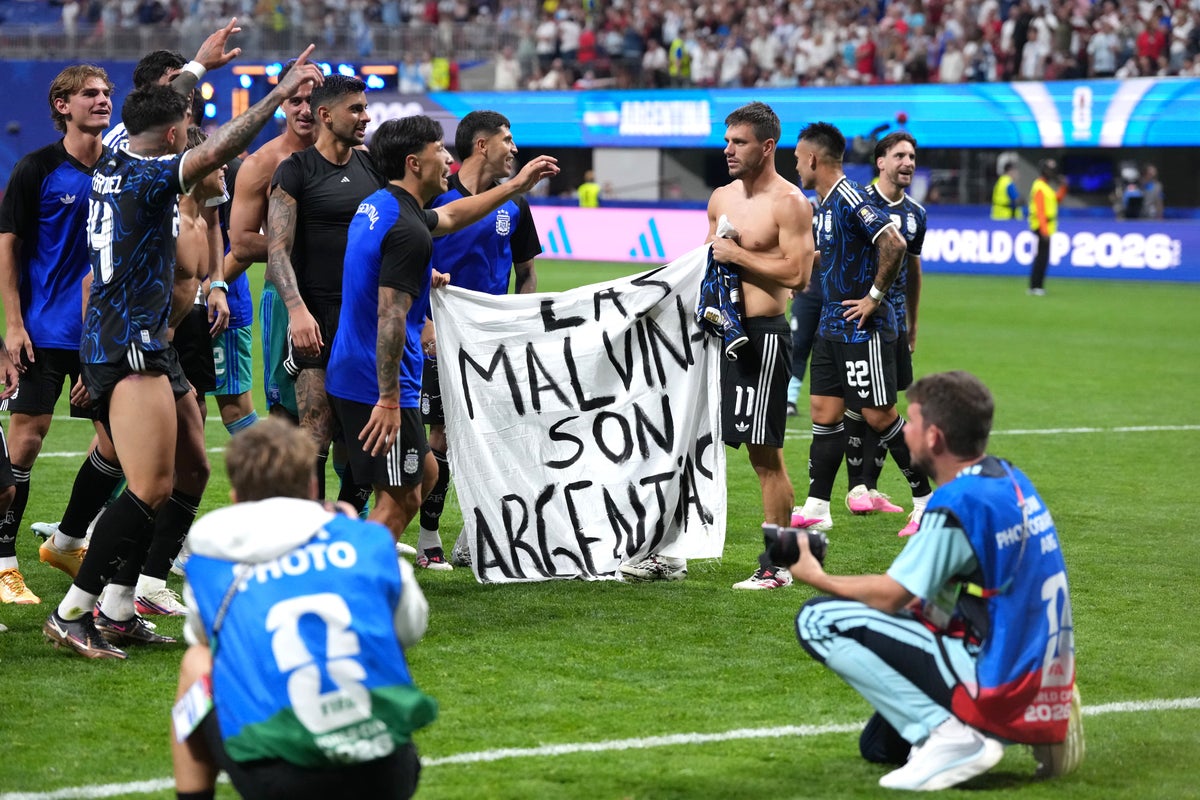
Both squads enter this fixture carrying significant tactical and physiological deficits from their respective semi-final exits. France was methodically disassembled 2-0 by Spain, exposing a vulnerability in their defensive block when forced to shift horizontally across wide spaces. England, conversely, suffered a 2-1 defeat against the defending champions Argentina, highlighting a recurring failure to retain possession under high-intensity central pressing.
The immediate constraint on both coaching staffs is the Fatigue Coefficient. Playing a seventh match within a 37-day window introduces severe physical degradation. This reality forces a shift from optimal tactical systems to a game theory model based on squad depth and rotational utility.
- The Rotational Dilemma: Managers cannot deploy identical high-pressing structures due to muscle glycogen depletion. The team that rotates its mid-block players while preserving structural integrity gains an immediate statistical advantage in second-half sprint volume.
- Defensive Yield Attrition: As fatigue increases, defensive lines naturally drop deeper to compensate for reduced recovery speed. This tactical regression creates a spatial gap between the defensive and midfield lines, an area that technical players can exploit.
Spatial Bottlenecks and Generational Matchups
The tactical resolution of France vs England depends on specific, high-density zones of the pitch. The primary structural matchup is the localized isolation on the flank featuring France’s left-sided attacking overloads against England’s right-sided defensive unit.
The historical data from the 2022 World Cup quarter-final in Qatar, where France advanced with a 2-1 victory, established a clear blueprint. France isolates its primary wide attacker to draw two defensive markers, thereby opening up the half-spaces for late-arriving midfielders or underlapping full-backs. The defensive yield of England’s backline depends entirely on the defensive mid-block preventing clean service into these zones.
The midfield battle presents a separate structural bottleneck. France utilizes a physical, high-interception double-pivot designed to disrupt structural build-up. For England to break this system, their deep-lying playmakers must increase their vertical pass velocity. Slow, lateral possession sequences play directly into the French defensive architecture, which excels at baiting central passes before trigger-pressing to initiate vertical counter-attacks.
The 44-Year Competitive Bottleneck
The media frequently highlights England's 17-10 historical superiority over France, yet this data set is profoundly skewed by matches played between 1923 and 1949. In the modern era of high-intensity, system-driven international football, the power dynamic has reversed.
The second limitation in England’s historical approach is psychological and tactical rigidness in major tournaments. The 44-year competitive drought against France is not an anomaly; it is a direct consequence of structural failure in transition phases. France has consistently demonstrated superior efficiency in translating low-possession phases into high-value scoring opportunities. In elite football, maximizing the expected goals value from fewer touches is a far more reliable metric for tournament success than holding high percentages of low-threat territory.
Strategic Forecast and Decisive Action
The outcome of the third-place play-off will not be decided by motivational speeches regarding a bronze medal, but by the clinical management of substitutes and spatial organization. France’s structural setup gives them an analytical edge if the match settles into a low-tempo, transitional rhythm. Their squad depth allows for minimal drop-off in physical output during the final 30 minutes of play.
England’s viable path to victory requires an aggressive, high-line press in the opening 20 minutes to disrupt France's build-up before fatigue enforces a deeper block. If England fails to secure an early statistical advantage in shot generation, the French counter-attacking structure will progressively exploit the spaces vacated by tired English midfielders. The data indicates a high probability of a low-margin French victory, likely decided by a single goal during a transitional breakdown in the second half.