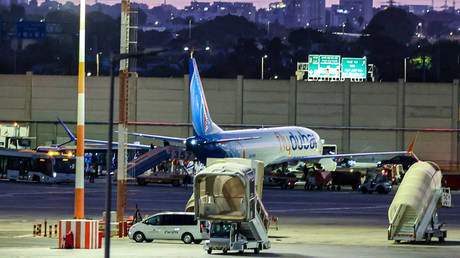
The corporate aviation herd is stampeding again. Flydubai pulls its Tel Aviv schedule following breathless reports of an alleged security breach or hijacking scare, and the industry press treats it like a masterclass in risk management. It is not. It is a textbook panic response driven by PR optics, not actual probability.
When airlines cut routes at the first whisper of operational friction, they reward bad actors and punish common-sense mobility. I have spent two decades watching boards panic over geopolitical noise while missing the structural fragilities sitting right in front of their ticketing desks.
Let us look past the sensationalist headlines about Israel flights and examine how modern aviation security theater actually operates.
The Illusion of Zero Risk in Modern Airspace
The lazy consensus in commercial aviation assumes that a route is either entirely safe or a war zone. This binary thinking ignores how modern security architecture functions.
A hijacking attempt, whether real, exaggerated, or fumbled, triggers an immediate institutional defense mechanism. Regulators and carrier executives panic because their primary metric is not passenger safety per se—it is brand protection. If an incident happens in the air, the stock tanks. If an airline preemptively abandons a market, it looks decisive.
That is the trade-off. Executives would rather strand thousands of travelers and surrender billions in route revenue than risk a single hostile headline on CNN.
Let us define what an actual aviation threat looks like compared to localized friction. A systemic threat compromises the structural integrity of navigation, communication, or airport perimeter security across an entire national grid. A localized security scare—even one involving unruly passengers or suspicious activity on a tarmac—is an isolated variable. Treating an isolated variable as a systemic structural failure is bad engineering and worse business.
Flydubai built its entire model on connecting secondary and tertiary markets that legacy carriers ignored. They flew where others feared to tread because they understood a fundamental truth: volatility creates margin. When you pull out because the news cycle gets loud, you abandon your competitive moat.
The Cost of Operational Cowardice
Every time an airline suspends a high-profile corridor like Dubai to Tel Aviv, several things happen behind closed doors.
First, leasing rates and insurance premiums for carriers operating in that theater spike artificially. Insurers love nothing more than a panicked airline executive; it gives them carte blanche to hike risk multipliers across the board.
Second, passengers are left stranded, relying on erratic diplomatic flights or convoluted multi-stop detours through Europe. The market demand does not evaporate just because a board of directors gets cold feet. People still need to move. Business still happens. Diplomacy still requires face-to-face interaction.
When you yield airspace to fear, you hand geopolitical leverage directly to the disruption engine.
Imagine a scenario where every airline adopted Flydubai's reactionary stance during periods of regional tension. Global commerce would grind to a permanent halt. International transit is inherently risky. The jet fuel we burn and the skies we cross have never been sterile environments. The moment we pretend commercial aviation can operate in a risk-free vacuum, we invite systemic collapse.
What the Media Got Wrong About the Incident
The initial reports surrounding the Flydubai disruption relied heavily on anonymous sources, unverified social media chatter, and the classic journalistic crutch of speculative threat assessment.
Security protocols at Ben Gurion Airport and Dubai International are among the most hardened on earth. To suggest that a single anomalous event can bypass multi-layered biometric, behavioral, and physical screening protocols without inside institutional failure is statistically absurd. Yet, the media framed the suspension as an inevitable consequence of a breached system rather than a calculated, knee-jerk PR maneuver.
We need to stop confusing operational caution with strategic brilliance. True authority in aviation means maintaining schedules when the noise is deafening, relying on hard intelligence rather than cable news chyrons.
Flydubai will eventually reinstate these flights. They will quietly slip back into the schedule once the news cycle cycles through another crisis, pretending nothing happened. But the damage to passenger trust and route reliability is already locked in.
Stop letting corporate PR departments dictate global mobility. If you fly, you accept the baseline reality of a complicated planet. And if you run an airline, your job is to manage that complexity, not run away from it the moment the headlines turn messy.