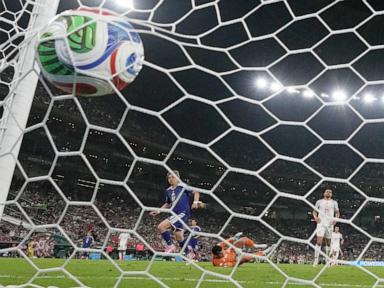
Every four years, mainstream media outlets dust off the exact same article. You know the one. It usually has a patronizing headline like "What's Offside? And All Your Other World Cup Questions, Answered." They drag out a digital chalkboard, use metaphors involving grocery store lines or highway traffic, and attempt to simplify a rule that they claim is baffling to the casual viewer.
They are asking the wrong question, and they are ruining the sport in the process.
The lazy consensus among sports journalists is that football has a "gatekeeping" problem—that the offside rule is a complex barrier preventing billions of potential fans from enjoying the beautiful game. The prescribed cure is always more explanation, more dumbing down, and more technological intervention to make the objective truth of a player's toenail visible to a guy drinking a beer on a couch in Ohio.
Here is the uncomfortable truth: the offside rule isn't complicated. If a teenager playing FIFA can grasp it in thirty seconds, a grown adult watching the World Cup can too. The obsession with constantly explaining, refining, and "fixing" offside isn't creating new fans. It is systematically stripping the joy out of the greatest spectacle on earth by treating a dramatic, fluid sport like a corporate compliance audit.
The Flawed Premise of the Explainer Industrial Complex
Mainstream previews love to treat Law 11 of the IFAB Laws of the Game as if it were a string of advanced calculus. It isn't. An attacker cannot be nearer to the opponent's goal line than both the ball and the second-last opponent at the exact moment the ball is played.
That is it. That is the entire mystery.
The media's mistake is assuming that when a casual viewer complains about an offside call, they are confused by the law itself. They aren't confused; they are frustrated by the interruption of human drama. When a broadcaster spends ten minutes of pre-game coverage explaining the geometric mechanics of the rule, they prime the audience to view the match through a lens of litigation rather than art.
I have spent two decades sitting in press boxes and stadium stands across Europe and South America. I have watched millions of dollars in broadcast revenue poured into graphic overlays meant to clarify the game for the uninitiated. The result? Total stagnation of fan experience. We have shifted the conversation from the brilliance of a playmaker's vision to a pixelated debate over whether a striker's armpit was in an active position.
Stop Trying to Make Football Fair
The underlying myth of the modern soccer explainer is that absolute fairness equals absolute entertainment. This is a lie.
Football is a game defined by its scarcity of scoring. A 1-0 match can be a masterpiece of tension precisely because goals are incredibly difficult to achieve. When the media demands that the offside rule be broken down and adjudicated down to the millimeter to ensure "perfect fairness," they destroy the natural rhythm that makes the sport global.
Consider the Semi-Automated Offside Technology (SAOT) used in major tournaments. It collects data points from stadium cameras to track player limbs. It is incredibly accurate. It is also an absolute vibe-killer.
Imagine a scenario where a midfielder executes a breathtaking, no-look through ball. The winger tracks it, leaves the defender for dead, and slots it into the bottom corner. The stadium erupts. The fans experience a pure, unadulterated spike of adrenaline. Then, a silent room of video assistant referees in a bunker three miles away spends two minutes analyzing a computer-generated skeleton to determine that the winger’s shoulder blade was two centimeters past the defender.
The goal is wiped off. The energy dies. The casual viewer doesn't feel enlightened because they now understand the rule better; they feel cheated out of a moment of human excellence.
By obsessing over the exact geometry of the offside rule, we are optimizing for a version of the game that pleases accountants, not sports fans.
The Real Reason the Rule Exists (And Why We Misrepresent It)
Every basic tournament guide tells you the offside rule exists to prevent "goal-hanging"—to stop a forward from simply standing next to the opposing goalkeeper and waiting for a long kick.
While historically true, this explanation misses the entire tactical reality of modern football. The offside rule does not just prevent cheap goals; it actively creates the space where beautiful football happens.
Without Law 11, defensive lines would collapse into their own penalty boxes to protect the space behind them. The midfield would expand into a vast, empty wasteland. The intricate passing triangles, the high-pressing systems popularized by managers like Pep Guardiola and Jürgen Klopp, and the high-wire act of a defensive line stepping up in unison would completely vanish.
The offside rule is not a bureaucratic restriction; it is the engine of the game's tactical creativity.
When explainer articles treat it as a confusing chore that viewers must tolerate, they miss the point entirely. The tension between a world-class striker timing their run and a world-class backline holding their shape is one of the most thrilling subplots of any match. It shouldn't be explained away like a tax loophole. It should be celebrated as a high-stakes game of chicken.
The Brutal Truth About "Growing the Game"
Let's address the "People Also Ask" elephant in the room: How can we make soccer more appealing to audiences who didn't grow up with it?
The traditional answer is to make it more like American sports—more breaks, more video reviews, more clarity, more statistics. This approach is fundamentally broken. Soccer's global dominance relies on its continuous, unstoppable flow. It is ninety minutes of a shifting, living canvas where players must solve problems in real-time without a coach calling a timeout.
Every time a referee stops the match to look at a monitor to see if an attacker's kneecap was offside, soccer loses a piece of its soul. We are sacrificing the sport's greatest asset—its relentless momentum—on the altar of pedantic accuracy.
If you want a new fan to love football, stop sending them links to explanatory diagrams. Stop telling them to look at the lines drawn on the screen. Tell them to look at the defender's hips. Tell them to watch the panic in the goalkeeper's eyes. Tell them to feel the collective intake of breath in the stadium when a pass splits a defense open.
The Downside of Disruption
To be completely transparent, embracing this contrarian view means accepting a level of injustice. If we prioritize the flow of the game over millimeter-perfect officiating, referees will make mistakes. Assistant referees will miss an offside call that leads to a crucial goal. Teams will get knocked out of tournaments because a human being couldn't see a microscopic gap in real-time.
That is a feature, not a bug.
Human error is part of the narrative tapestry of sport. Diego Maradona's "Hand of God" or Geoff Hurst's ghost goal in 1966 are not blemishes on football history; they are the myths and legends that fans argue about in pubs fifty years later. Nobody ever bought a pint to argue about a semi-automated computer graphic.
Delete the Explainers
The next time a major international tournament rolls around, ignore the inevitable flood of articles attempting to demystify the rules for you. They are treating you like an idiot, and they are treating football like a boardroom presentation.
The rules are fine. The game is fine. The only thing that needs to change is our obsession with sterilizing it.
Turn off the analysis panels. Stop looking at the frozen frames. Let the game breathe, let the mistakes happen, and accept that a sport defined by human passion cannot—and should not—be governed by a laser level.