The tactical reality on day 18 of the expanded conflict between the United States, Israel, and Iran has shifted from symbolic posturing to a high-frequency war of attrition centered on integrated air defense capacity and precision-guided munition (PGM) inventories. While media narratives often focus on the political rhetoric of "red lines," the operational constraint governing the current theater is the Interceptor-to-Missile Exchange Ratio. Israel and its coalition partners are currently processing a multi-vector threat environment where the cost of defense—both in fiscal terms and interceptor stock—is significantly higher than the cost of the offensive saturation salvos launched by Iranian-backed proxies and the Islamic Revolutionary Guard Corps (IRGC).
The Triad of Kinetic Friction
To understand the current state of the conflict, one must analyze the three distinct layers of engagement that define this 18-day window. These layers operate on different timelines and with different strategic objectives, yet they converge on a single bottleneck: the physical limit of regional logistics. Read more on a similar issue: this related article.
1. The Attrition of Integrated Air Defense Systems (IADS)
The primary objective of recent Iranian drone and cruise missile swarms is not necessarily the destruction of high-value hardened targets, but the forced depletion of the Arrow-3, David’s Sling, and Iron Dome interceptors.
- Cost Asymmetry: An Iranian Shahed-series loitering munition costs approximately $20,000 to $50,000. In contrast, a single Tamir interceptor (Iron Dome) costs roughly $40,000 to $50,000, while long-range interceptors like the Arrow-3 exceed $2 million per unit.
- Sensor Saturation: By launching low-slow-small (LSS) targets alongside high-speed ballistic missiles, Iran forces the Israeli Defense Forces (IDF) to make split-second resource allocation decisions. If the IADS logic fails to prioritize correctly, a low-cost drone could theoretically mask the signature of a high-speed maneuverable reentry vehicle (MaRV).
- Logistical Lead Times: Interceptor missiles are not "plug-and-play" commodities. They require specialized manufacturing chains. Day 18 marks the point where initial theater stocks are likely being supplemented by emergency US sealift and airlift operations, creating a political dependency that Iran seeks to exploit.
2. The Maritime Chokepoint Constraint
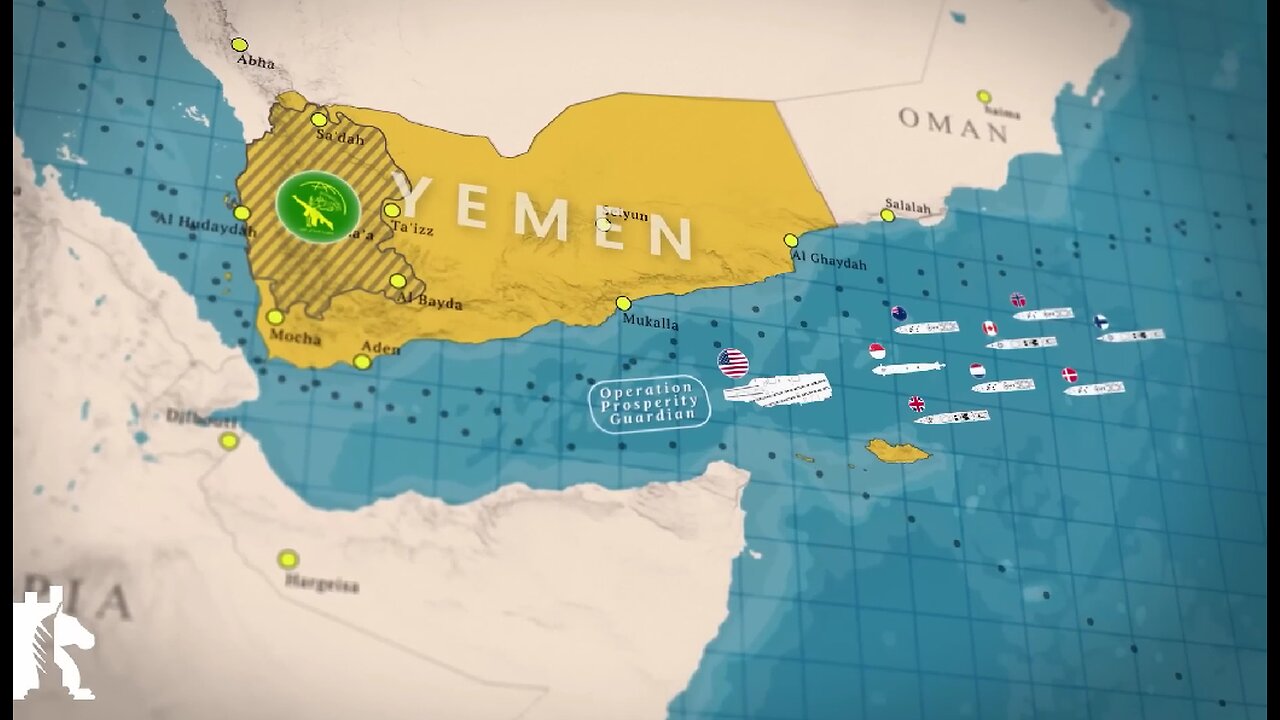
The conflict has effectively bypassed traditional naval engagement in favor of "denial through risk." The Bab el-Mandeb and the Strait of Hormuz are no longer governed by international maritime law but by the effective range of shore-based anti-ship cruise missiles (ASCMs). This creates a Risk Premium Feedback Loop where insurance costs for commercial shipping dictate regional stability as much as troop movements do. The US-led Operation Prosperity Guardian faces a structural deficit: using $2 million RIM-162 ESSM missiles to down $10,000 Houthi drones is a losing economic proposition over a sustained 18-day period. Additional reporting by BBC News highlights related views on the subject.
3. The Infrastructure Vulnerability Matrix
Israel’s shift toward targeting Iranian energy and dual-use infrastructure represents a move from "Counter-Force" (targeting the military) to "Counter-Value" (targeting the state's ability to function). This escalation is governed by the Proportionality of Resilience. Iran’s decentralized internal economy is arguably more resilient to localized infrastructure hits than Israel’s highly centralized, tech-dependent economy. A single successful strike on a desalination plant or a high-tech manufacturing hub in Haifa has a disproportionate impact on Israel’s GDP compared to an equivalent strike on an Iranian refinery.
Measuring Strategic Depth in a Non-Linear War
Standard military metrics like "territory gained" are irrelevant in this context. Instead, the conflict must be measured through Functional Persistence—the ability of a state to maintain essential services under constant kinetic pressure.
- The Electronic Warfare (EW) Envelope: On day 18, GPS jamming and spoofing have become persistent features of the Levantine and Persian Gulf regions. This affects more than just missile guidance; it degrades the "Just-in-Time" logistics that modern economies rely on.
- The Cyber-Kinetic Bridge: There is a documented increase in attempts to breach Supervisory Control and Data Acquisition (SCADA) systems within the Israeli power grid and Iranian water management systems. These are "force multipliers" that allow a state to inflict civilian-grade damage without launching a single missile.
- The Proxy Elasticity: Iran’s "Axis of Resistance" functions as a shock absorber. By utilizing Lebanese Hezbollah and various militias in Iraq and Syria, Iran can project power while maintaining a degree of plausible deniability that prevents a direct, total war on its home soil. Israel’s challenge is that it cannot "defeat" a proxy through traditional means; it can only raise the cost of the proxy's existence until the patron (Iran) decides the investment is no longer viable.
The Bottleneck of US Intervention
The United States’ role on day 18 is defined by the Deterrence Paradox. The presence of two Carrier Strike Groups (CSGs) in the region is intended to prevent a wider regional war. However, that very presence provides Iran with a high-density target environment for its unconventional "swarm" tactics.
The US military's primary constraint is not fire-power, but Theater Breadth. If the US commits too heavily to the Levant, it creates a vacuum in the Indo-Pacific. This global force posture requirement means that US support is likely capped at defensive interception and intelligence sharing, rather than a sustained offensive campaign against Iranian sovereign territory. Any shift toward offensive operations would require a massive reallocation of assets that would take weeks, not days, to materialize.
Intelligence Cycles and the OODA Loop
The conflict has entered a "High-Frequency Intelligence" phase. Both sides are operating within compressed OODA (Observe, Orient, Decide, Act) loops.
- Observation: Synthetic Aperture Radar (SAR) satellites provide 24/7 visibility regardless of cloud cover, meaning that large-scale troop movements are impossible to hide.
- Orientation: AI-driven analysis of SIGINT (Signals Intelligence) allows the IDF to predict launch windows from IRGC sites minutes before they occur.
- Decision: The human element is increasingly being removed from the terminal phase of defense, with automated systems making the final "engage" decision for incoming threats.
- Action: The result is a clinical, almost robotic exchange of fire where the winner is the side with the most robust software and the deepest magazine.
The Strategic Play
The transition from day 18 to the next phase of the conflict depends on whether Israel chooses to initiate a Systemic Decapitation strategy—targeting the top-tier IRGC leadership—or a Economic Asphyxiation strategy—targeting the oil terminals at Kharg Island.
For Iran, the move is to maintain the current level of "boiling the frog," keeping the intensity high enough to drain Israeli resources and international patience, but low enough to avoid a direct US kinetic response on Tehran. The pivot point occurs when the interceptor stockpile hits a critical threshold (estimated at 30-40% of initial theater capacity). At that moment, the defender must choose between protecting military assets or protecting civilian population centers.
Strategic priority must now be placed on hardening civilian infrastructure and diversifying interceptor technology to include directed-energy weapons (lasers) which offer a "near-zero" cost per shot. Without a transition away from expensive chemical-propellant interceptors, the defensive posture of the US-Israel alliance will face a mathematical point of failure regardless of tactical successes in the field. The current trajectory suggests a protracted stalemate where the primary casualty is the regional stability required for global energy markets, forcing a long-term realignment of trade routes away from the Middle East.
Monitor the delivery of Aegis Ashore components and the deployment of "Iron Beam" prototypes. These are the only variables that can reset the broken economic equation of the current air defense model.