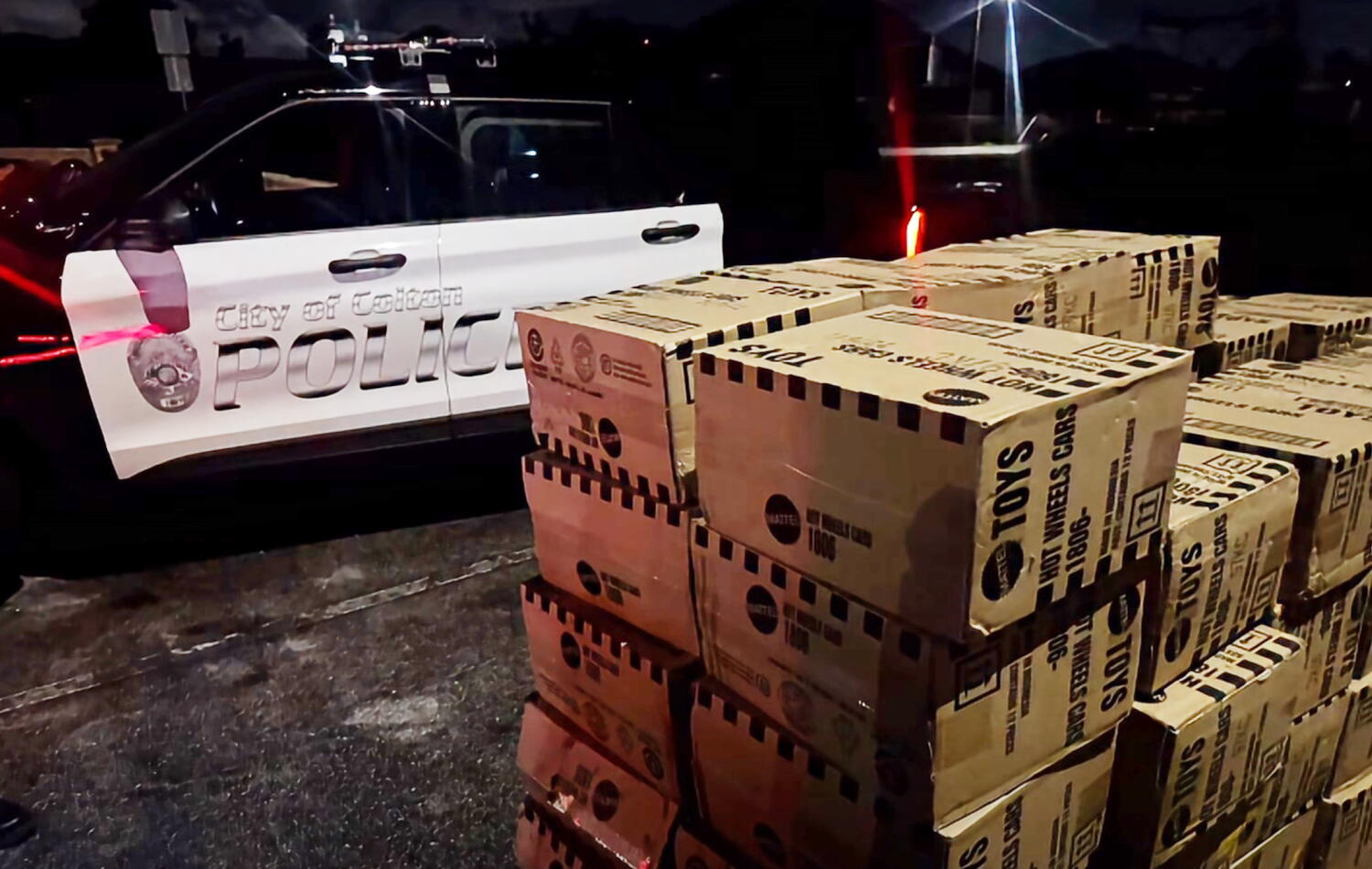
Cargo vulnerability in transcontinental rail networks represents a persistent security failure driven by geographical expanse, low line-of-sight monitoring, and high-value consumer goods transit. The October recovery of 350 boxes of Hot Wheels miniature vehicles valued at approximately $54,000 by the Colton Police Department provides an empirical case study in rail freight interception, municipal-civilian reporting loops, and asset recovery economics.
The Vector of Vulnerability: Rail Transit Nodes
Freight transit corridors operating through Southern California face unique infrastructural pressures. Rail networks such as BSFN or Union Pacific move thousands of intermodal and boxcar shipments across sprawling industrial zones, creating vast geographic exposure. Slow-moving or temporarily stationary trains passing through urban bottlenecks serve as prime targets for opportunistic theft.
Unlike highway transport, where a semi-truck features a continuous driver-controlled telemetry loop, rail cars rely on passive mechanical seals and intermittent yard inspections. This structural deficit creates a wide window of vulnerability. Perpetrators exploit the low frequency of patrols between checkpoints, using mechanical breach methods or pre-planned stopping points to access cargo containers.
Quantifying the Asset: Miniature Value Concentration
The seizure of 350 boxes yielding a valuation of $54,000 highlights an evolving trend in cargo theft: the targeting of high-density consumer collectables. Traditional cargo theft models prioritized bulk commodities, electronics, or apparel. However, specialized niche markets—such as rare editions, hobbyist collector sets, and high-turnover toys—offer distinct secondary market advantages.
- High Unit Value to Weight Ratio: A single pallet of miniature consumer goods can carry an outsized retail value compared to raw industrial materials, lowering transport and storage friction for illicit actors.
- Liquidation Velocity: Online peer-to-peer marketplaces and secondary hobby platforms provide immediate liquidity channels, allowing stolen merchandise to be dispersed before supply chain audits flag the discrepancy.
- Lack of Serialized Tracking: Unlike consumer electronics, which frequently feature unique IMEI numbers or hardware-level asset tracking, mass-market retail toys rarely carry individual unit-level serialization, complicating provenance verification during recovery.
The Response Mechanism: Temporal Efficiency in Interception
The Colton intervention underscores the critical dependency of law enforcement on civilian surveillance loops. Operating at approximately 3 a.m., the initial 911 call established a vital temporal baseline.
In freight theft scenarios, the success rate of recovery is inversely proportional to elapsed time. As the delay between the breach event and police notification increases, the probability of asset fragmentation rises exponentially. In this instance, the early notification allowed tactical deployment along likely transit vectors, resulting in the interception of a pickup truck containing the complete inventory.
Systemic Limitations and Supply Chain Countermeasures
Relying on reactive municipal policing remains an inefficient baseline defense for national rail operators. True risk mitigation requires structural overhauls in transit security architecture.
First, physical hardening of rail car locking mechanisms must evolve beyond traditional tinplate seals. Integrating electronic tamper-evident sensors provides real-time telemetry alerts directly to dispatch centers when a container is breached.
Second, predictive routing and geofencing can identify anomalous dwell times in high-risk zones, dispatching private security assets before local municipal units are forced to intervene reactively.
Deploy resources toward automated optical surveillance arrays at known urban rail bottlenecks to reduce dependency on midnight civilian reporting.