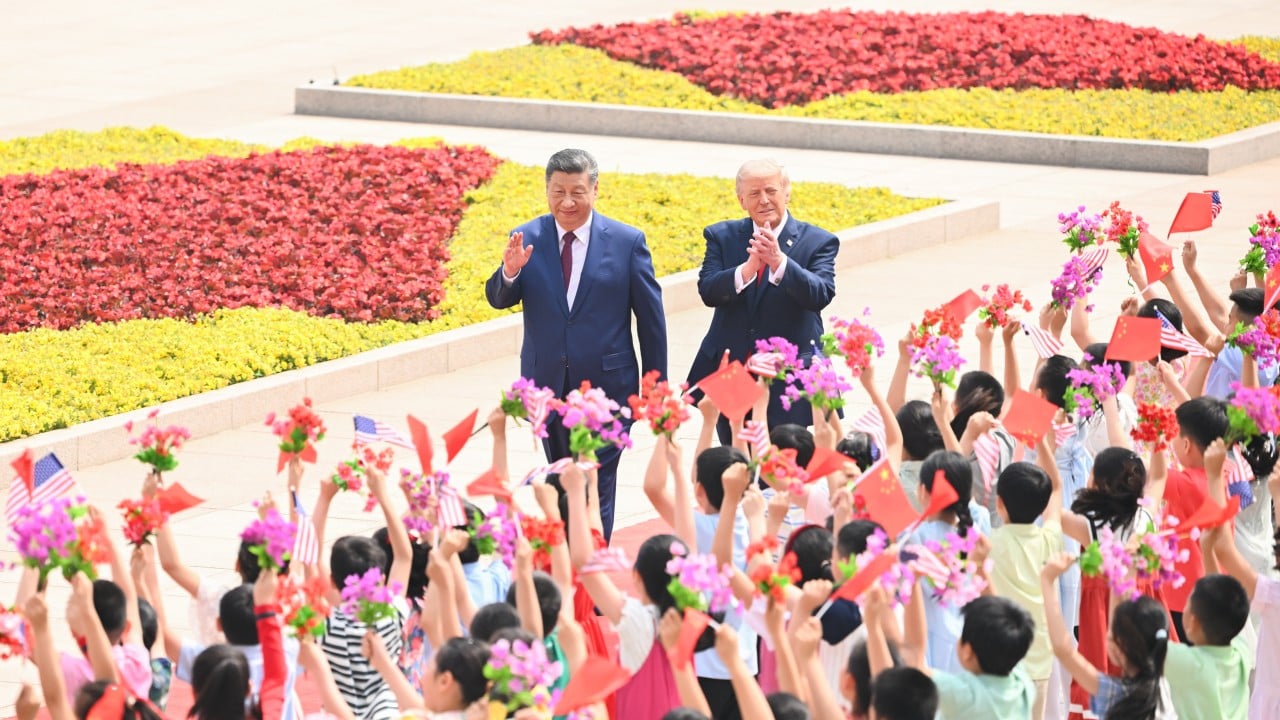
The intersection of international sanctions and linguistic transliteration creates a unique friction point in global diplomacy. When China opted to invite Marco Rubio to the Trump summit despite existing sanctions, it did not merely "change a name." It executed a calculated exploitation of the Transliteration Variance Gap. This mechanism relies on the phonetic flexibility of Mandarin characters to create a legal and administrative buffer between a sanctioned individual’s identity and their physical presence on sovereign soil.
The Architecture of Phonetic Arbitrage
International sanctions function through a rigid, text-based matching system. Most global financial and diplomatic watchlists are indexed via the Standardized Romanization of names. When an individual like Marco Rubio is placed on a Chinese sanctions list, the entry is tethered to a specific sequence of Chinese characters, typically based on the standard Xinhua News Agency transliteration guidelines.
The "loophole" observed here is not a failure of law, but a strategic application of Linguistic Ambiguity. In Mandarin, a single English syllable can be represented by dozens of distinct characters, each carrying the same or similar phonetic value but possessing different Unicode identifiers and semantic roots. By selecting a non-standard character set for the invitation—essentially a "homophonic alias"—the host state creates a technical mismatch within its own administrative databases.
The Three Pillars of Administrative Plausible Deniability
- Systemic Decoupling: Database queries for "Sanctioned Entity A" (represented by Character Set X) return a negative result when checked against "Invitee B" (represented by Character Set Y). This allows entry-exit bureaus to process visas without triggering automated red flags.
- Semantic Redirection: In the Chinese bureaucratic context, the name used for a foreign dignitary defines their official status. Using a variant transliteration signals that the individual is being received in a capacity distinct from the persona under sanction.
- Jurisdictional Insulation: By altering the orthographic representation of the name, the state provides a defensive narrative for internal hardliners. They can argue the "sanctioned person" remains barred, while this "newly identified guest" is permitted entry.
The Cost Function of Sanctions Enforcement
Sanctions are only as effective as the Verification Friction required to bypass them. For a superpower hosting a high-stakes summit, the cost of enforcing a sanction against a key negotiator (Rubio) often outweighs the diplomatic utility of the restriction. The decision to manipulate the transliteration is a calculation of Minimum Viable Compliance.
Logic of the Workaround
China’s sanctions on Rubio were originally a reciprocal response to U.S. actions. However, the arrival of a new U.S. administration shifts the strategic priority from posture to engagement. The transliteration shift acts as a Diplomatic Pressure Valve. It permits the physical presence of the individual while technically leaving the legal sanctions framework intact on paper.
- Fixed Variable: The Sanction List (Legal reality).
- Independent Variable: The Phonetic Representation (Linguistic reality).
- Outcome: Physical Access without Legal Rescission.
This creates a bottleneck for international law. If identity is defined by a specific string of characters, changing that string effectively "reboots" the identity within the system. This is a form of Identity Hashing where the input (the person) remains constant, but the output (the name on the ledger) is intentionally corrupted to avoid a match.
Data Fragmentation in Global Watchlists
The Rubio case highlights a critical vulnerability in how global security data is structured. Most automated screening tools utilize Fuzzy Matching algorithms (such as Levenshtein Distance) to catch spelling variations (e.g., "Mohammad" vs. "Muhammad"). However, these algorithms struggle with cross-script transliteration, particularly between logographic systems (Chinese) and alphabetic systems (English).
When a name is converted from English to Chinese, it passes through a "Phonetic Bottleneck." The English name "Rubio" is broken into syllables: Ru-bi-o. In Mandarin, Ru could be 卢, 鲁, or 路. Bi could be 比, 毕, or 必. If the official sanctions list uses 卢比奥 (Lú bǐ ào) but the invitation uses 鲁比奥 (Lǔ bǐ ào), the database requires a specific cross-referencing layer that many internal administrative systems lack—or are instructed to ignore.
Mapping the Technical Vulnerabilities
- Character Encoding Mismatches: Traditional vs. Simplified Chinese characters can be used to bypass simplistic scrapers.
- Tonal Variance: Changing the tone of a character can technically change the word, even if the Romanized spelling remains similar, creating a "legal" distinction in a tonal language.
- Honorific Integration: Embedding the name within a title so that the primary string is broken up, preventing exact-match detection.
The Geopolitical Utility of Linguistic Flexing
This is not a "mistake" by a low-level clerk. In the realm of high-stakes diplomacy, every character choice is scrutinized by protocol departments. The use of an alternative name is a Signal of Intent. It tells the visiting party: "We are willing to ignore our own rules for this specific interaction, but we reserve the right to reinstate them at any moment."
The second limitation of this strategy is its non-transferability. While China can use this linguistic sleight of hand within its own borders to facilitate a meeting, it does not clear the individual's "record" in any international sense. It is a localized suspension of reality designed for a specific duration (the summit).
Administrative Discretion vs. Algorithmic Rigor
The shift toward algorithmic governance usually implies that rules are applied without bias. However, the Rubio transliteration case proves that Human Overrides are built into the very fabric of how identities are encoded. When a state controls the dictionary, it controls the law.
This creates a tiered system of identity:
- The Primary Identity: The one held by the individual.
- The Sanctioned Identity: A static string of characters in a government database.
- The Tactical Identity: A transient string of characters created to facilitate a specific geopolitical objective.
The conflict between these three layers is where modern diplomacy operates. The host nation is essentially performing a "Soft Fork" of its own legal code. By creating a temporary branch where "Rubio-B" exists instead of "Rubio-A," they navigate the summit without the domestic political cost of formally lifting sanctions.
Structural Implications for Future Diplomacy
The precedent set here suggests that the future of international restrictions will not be found in the "Real World" but in the Metadata Layer. If names are malleable, sanctions must transition from being "Name-Based" to "Biometric-Based" or "Unique ID-Based" to remain effective.
The current reliance on text-string matching is an analog relic in a digital age. As long as identity is verified through characters rather than immutable biological markers or global blockchain identifiers, the "Transliteration Pivot" will remain the preferred tool for states that need to balance performative hostility with pragmatic cooperation.
The strategic play for the U.S. delegation in this scenario is to accept the tactical identity for the duration of the summit while refusing to acknowledge the validity of the underlying sanctions. By ignoring the linguistic gymnastics, the U.S. forces the host to carry the administrative burden of the "alias." This maintains the status of the dignitary while allowing the host to save face—a classic example of Asymmetric Protocol Management.
Future negotiations involving sanctioned individuals will likely see an increase in these "orthographic exemptions." Organizations must now prepare for a world where an individual's legal status is determined not by who they are, but by which specific character set is being used to describe them at the border.