The mainstream media is reading the script completely wrong.
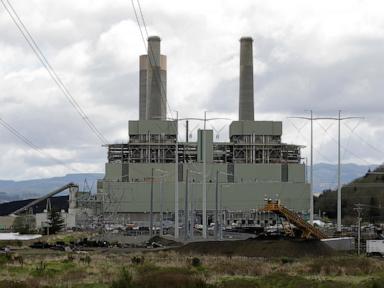
When the White House announced it is invoking the Defense Production Act to dump $700 million into the supposedly dying coal industry, the predictable factions sprinted to their respective corners. Outraged environmental groups immediately labeled it a corrupt handout to fossil fuel billionaires. Populist politicians cheered it as a long-awaited rescue mission for the American blue-collar worker.
Both narratives are completely divorced from reality.
This isn't a political favor. It isn't a sentimental rescue mission for a legacy industry.
It is an act of sheer desperation.
The administration is deploying a Cold War-era emergency statute because the American electric grid is rapidly approaching a state of structural failure. We are currently witnessing an unprecedented collision between aggressive regulatory targets and an absolute explosion in domestic power demand. The tech sector is building massive artificial intelligence data centers at a pace that the current energy infrastructure cannot support.
By pretending this is merely a story about political optics or environmental degradation, observers miss the underlying crisis: America is running out of reliable baseload power, and the government is using wartime powers to keep the lights from going out.
The Myth of the Clean Energy Transition
For the past decade, the dominant economic narrative has been simple: natural gas and renewables have won, and coal is obsolete. The data seemed to back this up. According to the U.S. Energy Information Administration, coal generated over half of the nation's electricity in 1990. By last year, that share slipped below one-fifth.
On paper, utilities were happily transitioning to cleaner, cheaper alternatives. But the clean energy transition narrative relies on a massive, structural lie: the conflation of nameplate capacity with actual grid reliability.
I have spent decades analyzing energy infrastructure investments, and I have watched corporations burn billions of dollars chasing regulatory favors rather than physical grid stability. The fundamental law of electrical engineering does not care about political mandates. Electricity generated must exactly match electricity consumed in real-time. If it does not, the grid collapses.
Renewable energy sources like wind and solar are intermittent. They produce power when the weather cooperates, not necessarily when the grid demands it. To balance this volatility, a modern grid requires robust baseload power—generation sources that can run continuously, day and night, regardless of atmospheric conditions.
Historically, natural gas and nuclear power stepped into this role as coal retired. But the current regulatory environment has made building new nuclear plants a financial impossibility, and political opposition has choked the construction of new natural gas pipelines.
Meanwhile, the demand profile of the United States has fundamentally shifted. For twenty years, domestic electricity demand was flat. Efficiency gains in appliances and lighting offset population growth. That era of stability is officially dead.
The AI Power Crunch
The sudden, explosive growth of generative artificial intelligence has fundamentally broken the utility sector's long-term planning models. A single AI-driven query requires up to ten times more electricity than a traditional Google search. The data centers required to train and run these massive large language models are not standard office buildings. They are industrial-scale power sinks.
Consider the sheer scale of the infrastructure currently under construction. Data centers in northern Virginia alone already consume nearly three gigawatts of power. Tech giants are planning new clusters that will require one to two gigawatts per facility. To put that in perspective, a single gigawatt is enough to power roughly 750,000 homes.
The tech sector loves to issue press releases touting its commitment to matching its energy consumption with 100% renewable energy credits. But these credits are an accounting trick. A data center cannot run on a solar array when the sun goes down at 8:00 PM, yet the servers must continue spinning to process global workloads. When the wind stops blowing and the sun sets, these data centers pull directly from the regional grid.
This reality has broken the back of regional transmission organizations. In the Midwest and the Mid-Atlantic, grid operators have warned for months that power plant retirements are out可靠pacing the deployment of new, reliable generation. The system is cannibalizing its own safety margin.
During severe winter storms earlier this year, emergency orders were quietly issued to force aging fossil fuel plants to run at maximum capacity just to prevent catastrophic blackouts across major metropolitan areas. The grid did not survive on wind turbines; it survived because operators burned every scrap of hydrocarbon they could find.
Dismantling the Seven Hundred Million Dollar Allocation
The $700 million allocation under the Defense Production Act is targeted with surgical precision at the exact points where the grid is fraying.
The money is split into three distinct buckets, and each tells a story about our current energy vulnerability:
- $425 million for existing plant upgrades: This capital is being directed to 13 existing coal-fired facilities across ten states, including West Virginia, Kentucky, Indiana, and North Carolina. This is not money to expand operations; it is cash to pay for critical maintenance and equipment modernizations that utilities had deferred because regulators were forcing them to shut these plants down. The government is essentially paying the penalty to keep these assets online.
- $185 million for new construction and restarts: This funding is earmarked for matching corporate capital to construct two brand-new coal plants in Alaska and West Virginia—the first new coal facilities built in the United States since 2013—and to restart a dark facility in Maryland. Building new coal infrastructure in an era of decarbonization mandates is a direct admission that localized grid pockets are facing immediate structural deficits.
- $75 million for the West Gateway export terminal: Located in Oakland, California, this project has been blocked by local litigation for nearly two decades. By injecting federal defense funds, the administration is bypassing local environmental roadblocks under the guise of national security, aiming to open a direct corridor to ship domestic coal to Asian markets.
Critics look at these numbers and call it corporate welfare. They argue that if coal were economically viable, private equity would fund these projects.
That argument completely ignores the distorting effect of government regulation. Private utilities are not shuttering coal plants because they want to; they are shuttering them because compliance with shifting environmental mandates has made them artificially expensive to operate. By using the Defense Production Act, the White House is effectively overriding its own regulatory apparatus to force a baseline of grid reliability.
The Cost of the Counter-Intuitive Approach
Admitting that coal is necessary to prevent grid failure does not mean there are no downsides. A sharp analysis requires acknowledging the severe long-term costs of this strategy.
Coal is the most carbon-dense fossil fuel on the planet. Reviving dead plants and constructing new ones will undeniably increase carbon emissions, setting back international climate targets. Furthermore, the localized environmental impacts—such as coal dust from rail transport to the Oakland terminal and particulate emissions from older plants—present real, quantifiable public health risks to surrounding communities.
But the alternative is not a clean, pristine grid fueled by sunshine. The alternative is rolling blackouts, industrial curtailments, and the potential loss of American dominance in the global artificial intelligence race.
Imagine a scenario where the United States strictly enforces scheduled coal retirements over the next twenty-four months without a viable baseload replacement. Tech companies would be forced to halt the expansion of domestic data centers. They would build their infrastructure in nations with fewer regulatory restrictions and abundant, cheap energy—countries like China, which is currently building coal-fired power plants at a rate of multiple facilities per week.
From a national security perspective, a nation that cannot power its own advanced computational infrastructure cannot defend its economic sovereignty. That is why the administration is invoking a wartime production act. It views the AI race through the same lens as the arms races of the twentieth century.
The Flawed Questions of the Energy Debate
The public discourse surrounding this announcement proves that we are asking the wrong questions entirely.
People frequently ask: "When will clean energy completely replace fossil fuels?"
This question is fundamentally flawed because it assumes that energy sources are perfectly interchangeable. They are not. A megawatt of intermittent solar power generated at noon in the desert does not have the same systemic value as a megawatt of dispatchable coal power available at 4:00 AM during a blizzard in Chicago. Until utility-scale battery storage can store weeks of energy rather than hours—a technology that is still decades away from commercial viability at scale—the complete replacement of baseload fossil fuels is a mathematical impossibility.
A more honest question would be: "How much economic pain and grid instability are we willing to accept in the pursuit of rapid decarbonization?"
The current answer from the executive branch, despite its public rhetoric, is clear: none. When the threat of actual blackouts and the throttling of the tech sector became a reality, the administration dropped the green talking points and reached for the most reliable, dense, and readily available fuel source at its disposal.
The Unconventional Reality for Investors and Enterprise
For businesses and industrial power consumers, the takeaway from this federal intervention is stark. The era of cheap, reliable, uninterrupted power in the United States is over. Federal intervention can patch the holes in the system, but it cannot fix the structural supply-demand mismatch overnight.
Enterprises can no longer assume that the utility company will always be able to fulfill their expanding power requirements. Companies building heavy digital or physical infrastructure must adapt immediately:
- Prioritize behind-the-meter generation: Do not rely on local utilities to guarantee uptime. Large-scale operations must invest directly in on-site, dedicated generation assets—such as natural gas microturbines or small modular reactors—to insulate themselves from grid volatility.
- Disregard purely financial green certificates: If your operations require 24/7 reliability, virtual power purchase agreements will not keep your machinery running during a regional grid emergency. Secure physical power delivery contracts tied to reliable baseload assets.
- Expect escalating structural costs: The capital required to keep inefficient, aging plants online via emergency mandates will ultimately be passed down to ratepayers. Budget for structural increases in energy tariffs over the next decade.
The $700 million injection is not a permanent solution to the energy crisis. It is a financial tourniquet applied to a bleeding grid. The fact that the government had to resort to emergency defense powers to sustain an industry it has spent years trying to eliminate is the ultimate proof that our national energy policy is fundamentally broken. The system is running out of options, and the fantasy of a frictionless transition has finally collided with the cold, hard physics of the electrical grid.