Stop looking at video as a tool to keep people clicking on your website.
For years, digital publishers treated video like a flashy side project. They chased Facebook algorithms, pivoted to formats that failed, and wasted millions producing low-value clips that people muted immediately. But a few media companies took a completely different path.
Look at The New York Times. They didn't build a massive visual operation just to pad their time-on-site metrics. They did it because they realized a fundamental truth about modern media. Some stories cannot be told through text alone.
By looking closely at how they run their operation, we can see exactly how they changed the playbook. They didn't just survive the digital shift; they built a subscription engine that relies heavily on high-value visual journalism. Here is what most media executives get wrong about their model, and what you should actually learn from it.
The Myth of the Uniform Video Style
Most corporate media operations insist on a strict, unified aesthetic. They want every clip to look like it came from the exact same template. The Times does the exact opposite.
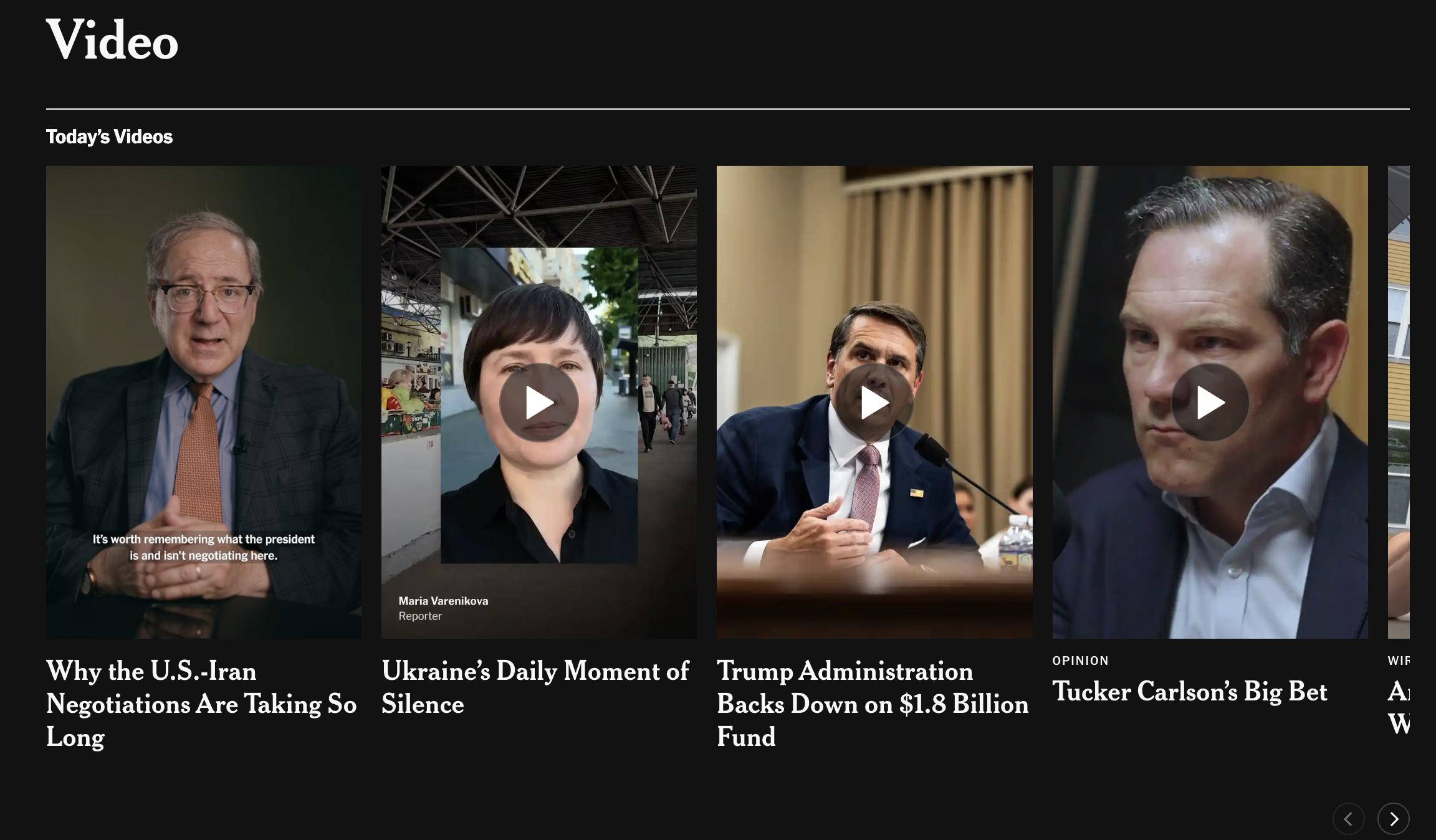
If you browse their archive, you will see a chaotic mix of formats. One day it's a slick, cinematic short documentary. The next, it's an animated series designed for parents. Then you have Diary of a Song, an ongoing series that actively embraces low-quality Google Hangouts or Skype footage, mixing it with frantic animation to show how a pop track gets made.
[Cinematic Docs] ----> High Production, Traditional Reporting
[Diary of a Song] ----> Low-Fi Video Calls, High-Energy Graphics
[Visual Investigations] -> Satellite Data, Open-Source Verification
They don't care if the footage has a slight lag. Honestly, that raw texture sometimes makes the story feel more authentic. The format matches the subject. When a songwriter in Australia collaborates with a producer in Los Angeles via their phones, using pristine 4K studio cameras to interview them later feels fake. The low-fi digital artifacting fits the narrative.
The lesson here is simple. Stop forcing every story into a corporate style guide. Let the topic dictate the format.
Visual Investigations Aren't Just B-Roll
In traditional newsrooms, video teams are treated like support staff. A reporter writes a 3,000-word piece, and a video producer is handed the text and told to find some footage to go with it.
The Times inverted this power structure. Their Visual Investigations team operates as an independent, powerhouse reporting unit. They use open-source intelligence, satellite imagery, cell phone footage, and advanced 3D reconstruction to break stories.
They aren't illustrating the news; they are uncovering it.
When you watch their analysis of a missile strike or a protest, the video is the reporting. This kind of work requires deep collaboration across desks that traditionally stayed separate, including features, news, and opinion. While the editorial lines between straight news and opinion remain strictly walled off to preserve objectivity, the technical and strategic execution of video happens across the entire organization.
The Short-Form Friction
It hasn't all been a smooth ride. The company recently faced a wave of criticism from media purists when they introduced a dedicated "Watch" tab to their mobile app. The feature functions a lot like the vertical scrolling feeds you see on TikTok, Instagram, or LinkedIn, pulling hand-selected, chopped-up snippets from lifestyle, news, and podcasts.
Critics immediately claimed the format cheapens the brand, arguing that vertical scrolling caters to short attention spans and destroys the gravity of serious journalism.
But there's a strategic reason behind it. The media market is brutally competitive. To capture younger audiences who grew up on vertical video, you have to meet them where they are. The crucial difference in their execution? No public comment sections, no algorithmic chaos, and entirely human curation. It's an attempt to build a gateway drug for long-form subscriptions.
Moving Beyond the Views Metric
If you're still measuring the success of your media strategy by total views, you're playing a dead game. Raw traffic doesn't pay the bills anymore unless you're operating at a scale that normal companies can't touch.
The Times shifted their primary focus away from desktop video streams and toward building brand loyalty that drives paid subscriptions. They want serialized content that triggers binge-watching behavior. When someone stumbles upon a series like Conception—a deeply personal profile series pitched by producer Margaret Cheatham Williams—they want the viewer to watch all six episodes in one sitting.
That deep engagement builds an emotional connection. And emotional connections make people pull out their credit cards.
How to Apply This to Your Strategy
You don't need a New York Times budget to execute this philosophy. You just need to change your approach to production.
- Audit your stories first: Before you hit record, ask yourself if the narrative actually benefits from visuals. If text and a single photo can do the job, don't waste time making a video.
- Embrace technical flaws for authenticity: Don't kill a great interview just because the remote video quality is grainy. If the speaker is compelling, the audience will accept the aesthetic.
- Build repeatable formats: Stop inventing a new style for every single project. Create distinct, recognizable series concepts (like a "diary" or an "investigation" format) that you can produce consistently.
- Integrate your creators early: Stop treating video as an afterthought. Bring your visual producers into the room at the ideation phase of a project, not when the writing is already finished.
The future of digital content isn't about making everything shorter or flashier. It's about recognizing that execution is everything. You can have the most important data in the world, but if you don't find the exact right visual framework to bring it to life, your audience will simply scroll past it.