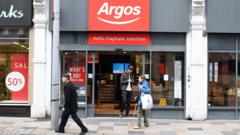
J Sainsbury has finally surrendered. Ten years after paying 1.4 billion pounds for Argos in a breathless bid to construct a dominant retail empire, Britain's second-largest supermarket chain has agreed to offload the catalogue titan to Swift Partners for a meager 120 million pounds.
This is not merely a corporate divestment. It is a humiliating post-mortem on a strategic delusion that cost shareholders dearly and exposed the severe limits of high street conglomeration. Expanding on this theme, you can find more in: The Anatomy of Fiscal Overreach: A Structural Critique of Burnhamism.
When chief executive Simon Roberts claims the move allows management to focus entirely on core food and grocery operations, market analysts hear a translation of a different reality. The multi-channel experiment failed. The promised cross-selling utopia never materialized. Instead, a low-margin supermarket became shackled to a volatile general merchandise business that could not withstand the structural shifts of modern e-commerce.
The Anatomy of a Billion-Pound Mistake
Back in 2016, corporate logic dictated that scale was the ultimate shield against Amazon. Buying the Home Retail Group—which brought Argos and Habitat under the Sainsbury umbrella—was heralded as a masterstroke of multi-channel synergy. Customers would buy their weekly groceries while simultaneously picking up flat-pack furniture or consumer electronics ordered online hours earlier. Observers at Bloomberg have provided expertise on this matter.
The execution was far messier than the boardroom PowerPoint presentations suggested.
Supermarket margins are notoriously razor-thin, often hovering around one to two percent. General merchandise, conversely, relies on consumer discretionary spending that fluctuates wildly with economic headwinds. When inflationary pressures squeeze household budgets, flat-screen televisions and kitchen appliances are easily deferred. Groceries are not.
Sainsbury discovered that operating high-street stores and digital distribution networks for non-food items required massive capital expenditure with diminishing returns. By the time the accounts reflected a drastic write-down of the asset's value to just over 300 million pounds, the writing was on the wall. A fire sale was the only exit strategy left.
Why the Math Finally Broke
Look closely at the mechanics of the Swift Partners deal, and the sheer desperation of the separation becomes transparent. Swift—backed by retail veterans Richard Pennycook and Trevor Strain—is acquiring hundreds of standalone shops, hundreds of stores embedded within Sainsbury supermarkets, logistics hubs, and international sourcing offices. Yet the headline cash proceeds sit at a paltry 120 million pounds, with only 70 million pounds delivered upfront upon completion.
For a business that generated billions in annual sales, valuing the equity at such a fraction highlights how much structural liability came attached to the balance sheet. Approximately 250 million pounds of lease obligations are clearing out of Sainsbury's consolidated accounts.
The grocery giant is effectively paying to clean its own house.
To soften the blow, long-term commercial agreements will keep Argos collection points and store-within-store footprints operational, while Nectar loyalty data links remain intact. Sainsbury wants the foot traffic and the data without the operational headache of managing inventory, supply chain volatility, and digital app updates for a massive catalogue retailer.
The Broader High Street Warning
The collapse of the Sainsbury-Argos marriage sends a chilling signal across the retail sector. The era of building sprawling conglomerates under a single corporate umbrella to fight digital native competitors is officially dead.
Specialization is winning. Generalists are drowning in overhead costs.
Consider the hypothetical example of a legacy department store chain attempting to absorb an electronics specialist. While the theory assumes shared overhead and logistics optimization, the reality introduces cultural friction, incompatible technology stacks, and conflicting supply chain demands. Groceries move on hours-and-days logistics; big-ticket general merchandise requires complex warehousing, warranty management, and reverse logistics for returns that eat straight into profitability.
Swift Partners now faces an uphill battle. Turning Argos around requires a complete overhaul of its digital experience to genuinely rival frictionless online competitors, all while managing a hybrid physical footprint of standalone stores and embedded supermarket counters. Pennycook and his team have deep retail turnaround experience, but nostalgia for thumbing through the iconic Christmas wish-book will not pay the leases.
Sainsbury has cut the anchor loose. Whether the grocery core can sprint forward alone without the deadweight of a multi-billion-pound acquisition mistake remains the defining test of its leadership.


