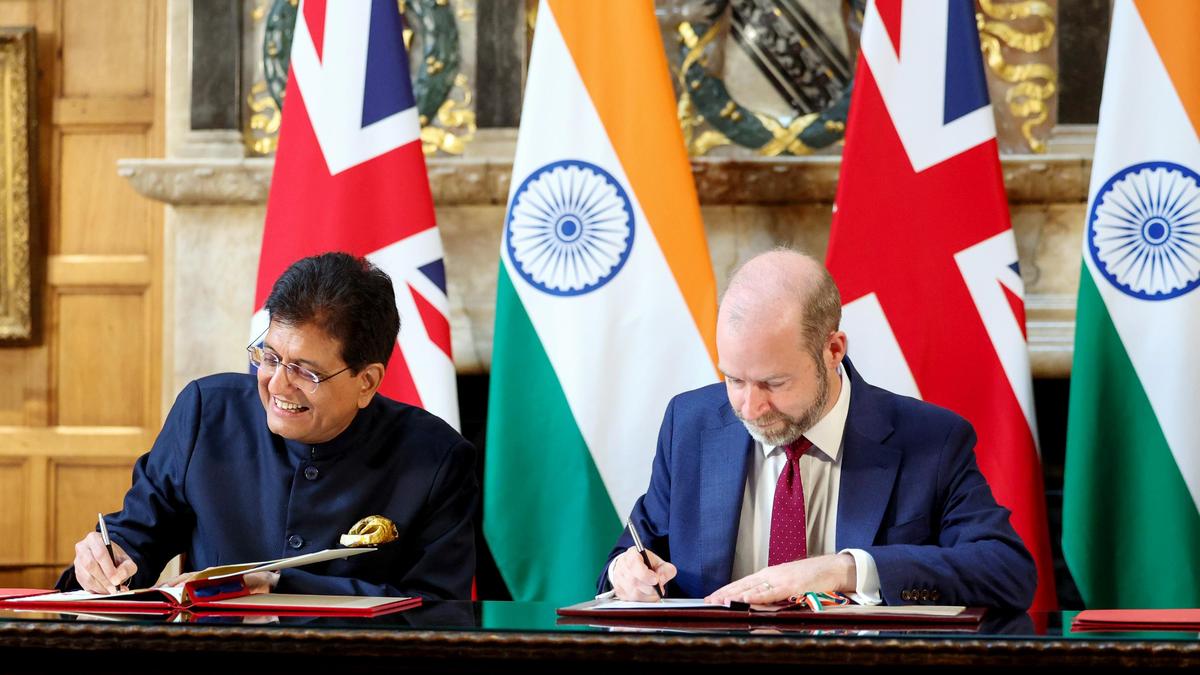
You thought the ink was dry. After years of post-Brexit posturing, endless rounds of bureaucratic wrangling, and a formal signing back in July 2025, the India-UK Comprehensive Economic and Trade Agreement (CETA) was supposed to go live this month. Commerce Minister Piyush Goyal practically guaranteed a May 2026 rollout.
Then London changed the rules of the game at the absolute last minute.
It turns out that a trade pact covering 99% of Indian exports and billions in bilateral trade can still be brought to a grinding halt by a single commodity. In this case, it's steel. Commerce Secretary Rajesh Agrawal admitted that the trade deal has hit a severe late-stage snag. The culprit? A surprise protectionist pivot by the British government that wasn't on the table when negotiators shook hands last year.
If you're wondering why a sudden regulatory tweak in London matters to businesses in Mumbai or Delhi, it comes down to a massive $893 million headache.
The 60 Percent Quota Cut That Broke the Timeline
Here's exactly what went wrong. Earlier this month, the UK government dropped a bombshell as part of its updated Steel Strategy. Starting July 1, 2026, London is slashing its tariff-free steel import quotas by a staggering 60%.
To make matters worse, once an exporter blows through that tiny remaining quota, the financial penalty doubles. The UK is raising the above-quota tariff from 25% to a punitive 50%.
Indian trade officials are furious, and honestly, they have every right to be. This policy targets 20 specific categories of steel—the exact kinds of hot-rolled sheets and industrial components that India aggressively exports to the British market. Iron, steel, and related products made up nearly $893.4 million of India’s $13.4 billion merchandise exports to the UK over the last fiscal year.
By shrinking the duty-free window by more than half, the UK is effectively gutting the commercial value of the trade deal before it even starts. New Delhi expected open access. Instead, they got a protectionist wall.
Copying the European Playbook
The real worry for Indian trade strategists isn't just a temporary quota dip. It's the philosophy behind it. Think tanks like the Global Trade Research Initiative (GTRI) point out that London is simply mimicking the European Union’s playbook.
The UK is combining these aggressive safeguard quotas with its upcoming carbon border taxes, mirroring the EU's Carbon Border Adjustment Mechanism (CBAM). Even if an Indian steel exporter manages to squeeze a shipment into the UK under the new, restricted tariff-free quota, they aren't out of the woods. Estimates suggest carbon-linked border penalties could add roughly $38 in compliance costs for every $100 of steel exported.
When you compound a $38 carbon penalty with a potential 50% tariff for exceeding the quota, exporting steel to Great Britain becomes financially impossible. It undercuts the core promise of the trade deal, which was supposed to eliminate duties on 99% of Indian goods.
Hunting for a Creative Solution
So, where do things stand right now? The trade deal isn't dead, but the May implementation timeline is completely toast. Agrawal says both teams are scrambling in New Delhi to find a "unique and creative solution" to bypass the steel dispute.
What does a creative solution look like in high-stakes diplomacy? It usually means carving out an explicit, country-specific exemption for India. New Delhi wants its steel exports completely insulated from the July 1 restrictions, arguing that a signed trade treaty should override generic domestic safeguard laws.
But London is stuck in a political tightrope. If the British government grants India a free pass on steel, domestic British steel producers will accuse the state of abandoning them to foreign dumping. Furthermore, other major trading partners will immediately demand the exact same leniency.
The Broader Fallout for Whisky and Cars
While negotiators argue over metal quotas, corporate execution plans are stuck in limbo. The delayed rollout stalls major wins for British exporters too. Under the signed agreement, India agreed to systematically lower its notoriously high tariffs on British Scotch whisky and automotive imports.
The goal was ambitious: double bilateral trade to $56 billion by 2030. That target looks a lot more distant when the baseline framework can't even get past the domestic ratification phase. In India, trade agreements only require executive action and Union Cabinet approval. In contrast, the UK Parliament already finished its scrutiny of the text back in March. The technical infrastructure is ready, but the political will is jammed at the border.
Exporters on both sides need to prepare for a summer of friction rather than a season of free trade. If your business relies on shipping industrial metals, precision components, or tariff-sensitive consumer goods between these two hubs, don't expect a smooth ride until late Q3 or Q4 at the earliest.
The immediate next step for cross-border logistics firms is clear: audit your current quota allocations before the July 1 UK deadline hits. Do not price in CETA tariff reductions for any inventory moving before the end of the year. Treat the UK market under the old rules, assume the higher 50% penalty tariff for safety calculations, and watch the diplomatic wires closely for a formal announcement of an "Entry into Force" date.