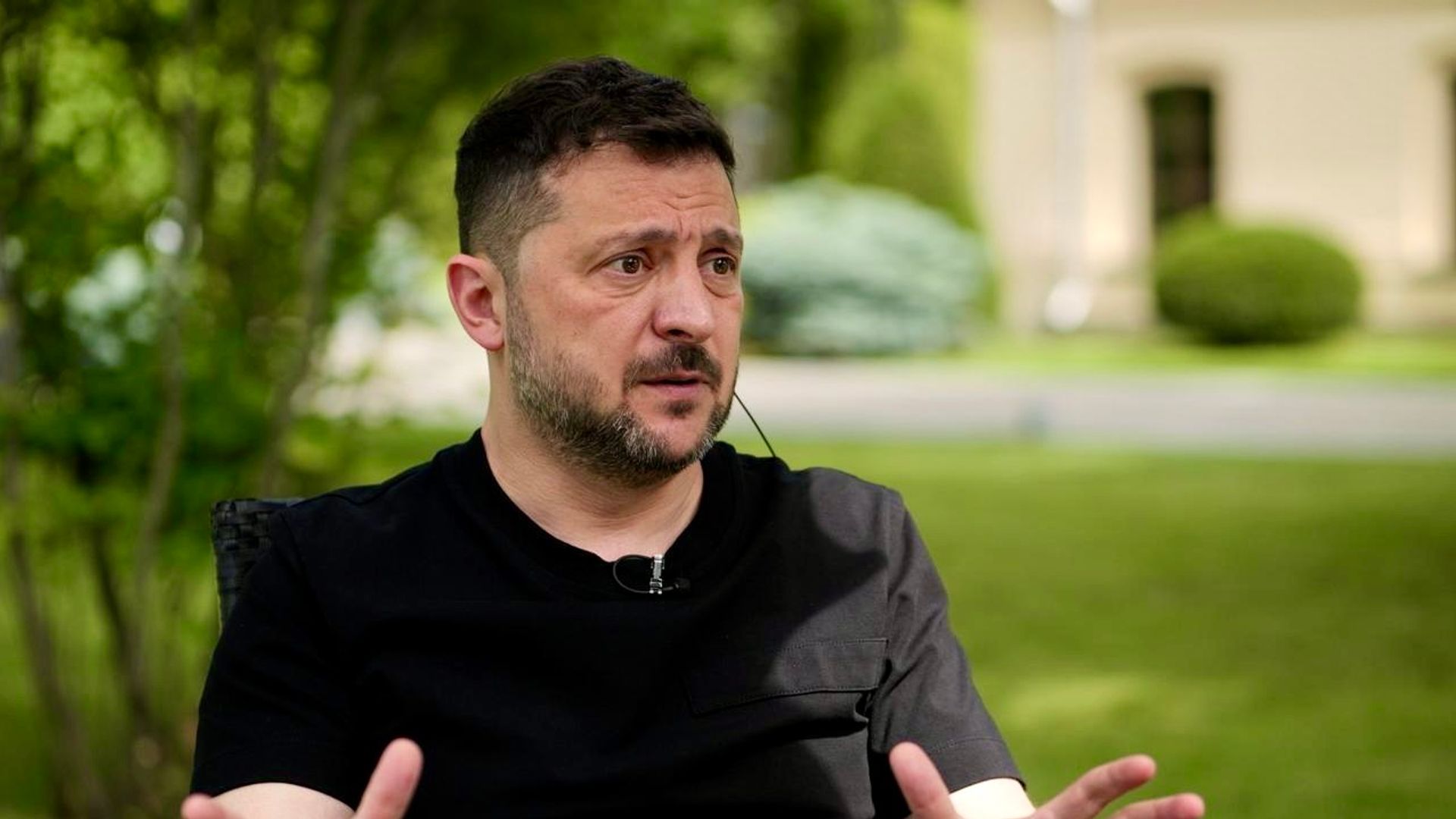
President Volodymyr Zelenskyy recently sat down with international broadcasters to address a fractured geopolitical reality, directly confronting the hard truths of high-level sackings, elusive defense procurement agreements, and the grinding realities of a protracted military campaign. The core premise centers on an administration forced to adapt its internal machinery while managing international fatigue. Yet the public statements miss the underlying structural strain currently testing the limits of state capacity.
Years of unrelenting conflict have fundamentally transformed the institutional architecture of Eastern Europe. What began as a mobilization driven by immediate survival has matured into a grueling test of endurance. When leadership reshuffles occur at the top echelons of government, they are rarely administrative housekeeping. They signal strategic pivots, friction points between political survival and operational efficiency, and the desperate search for solutions to bottlenecks that threaten the entire defensive line. For a different look, check out: this related article.
The Cost of Structural Purges
Internal purges and cabinet shakeups inside wartime governments carry a heavy price. When ministers and military commanders rotate out during active hostilities, institutional memory fractures. New appointments require an adjustment period. That is a luxury no active defense sector possesses.
The rationale behind these changes usually stems from an urgent need for accountability. Public frustration mounts as supply chains stutter and mobilization quotas create domestic friction. Leaders respond by replacing personnel to demonstrate motion. Related coverage on this matter has been published by NPR.
Yet moving figures around a chessboard does not automatically solve systemic shortages. The industrial base supporting the defensive operations faces chronic limitations. Shell production quotas remain unmet across Western partner nations. Specialized components for critical tactical systems arrive in trickles rather than torrents.
Changing the face at the podium does not manufacture artillery barrels. It simply shifts the burden of failure onto a fresh set of shoulders.
Procurement Realities and the Drone Economy
Military analysis reveals a stark divergence between traditional heavy hardware and modern technological adaptation. The promised high-value procurement deals often capture headlines, but the actual battlefield runs on decentralized manufacturing.
Unmanned aerial systems have rewritten modern tactical doctrine. Both sides utilize cheap, commercially available quadcopters modified for explosive payload delivery alongside long-range strategic assets. This creates an economic imbalance. A multi-million-dollar air defense missile intercepting a low-cost loitering munition represents an unsustainable financial attrition rate for the defender.
Zelenskyy’s emphasis on joint production agreements with international partners highlights a desperate scramble to localize manufacturing. Relying solely on foreign aid shipments leaves domestic strategy vulnerable to political shifts in donor capitals. Elections abroad introduce volatility. Budget stalemates in allied legislatures translate directly into ammunition rationing on the front lines.
Localization is the only viable path forward. Building domestic drone fabrication facilities underground, decentralizing supply hubs, and scaling up indigenous engineering talent represent the true metrics of state survival.
The Attrition Trap
A protracted conflict tests the social fabric of a nation differently than a short-term crisis. The psychological toll on the civilian population accumulates silently. Initial patriotic fervor gives way to exhaustion.
Mobilization laws spark fierce internal debates. Balancing the desperate need for fresh frontline rotations with the economic necessity of keeping domestic infrastructure functioning requires precise calculations. Pull too many workers from the civilian economy, and tax revenues collapse alongside critical municipal services. Leave too few soldiers on the line, and defensive positions fracture under relentless pressure.
There is no clean solution to this dilemma. Every policy choice involves severe trade-offs.
International fatigue compounds the internal strain. Foreign leaders face domestic pressures, economic headwinds, and competing geopolitical crises in other regions. Attention spans wane. The daily reality of trench warfare turns from breaking news into background noise for global audiences.
Maintaining diplomatic momentum requires constant engagement, precise messaging, and stark reminders of what a failure of containment means for broader regional stability.
The Strategic Horizon
The trajectory of the conflict depends entirely on industrial mobilization capacities and political endurance. Rhetoric from leadership briefings provides a window into official priorities, but the ground truth is dictated by factories, supply lines, and demographic realities.
As the war enters its subsequent phases, the margin for error narrows significantly. Strategic miscalculations carry immediate, irreversible consequences. The ability to sustain high-intensity operations while simultaneously reforming internal governance structures will determine whether the state can weather the storm or buckle under the weight of accumulated pressures.
Endurance is not merely a virtue. It is the definitive metric of modern statecraft.


