Every time a drone buzzes within a mile of the Zaporizhzhia Nuclear Power Plant, the global media machine undergoes a collective nervous breakdown.
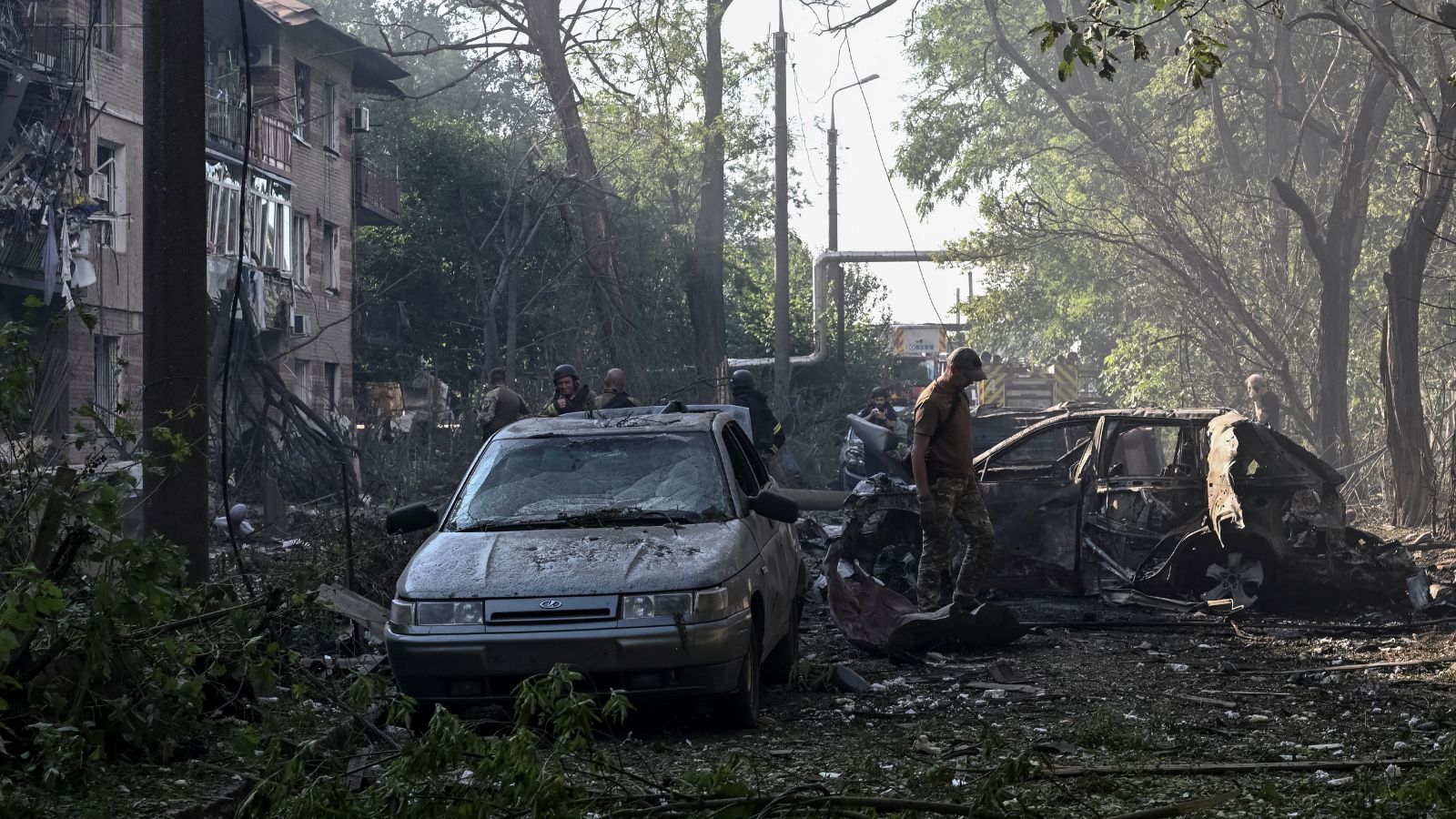
The script is wearyingly predictable. A targeted strike occurs, a security official or engineer is assassinated in a car bombing, or a quadcopter clips a cooling tower. Within minutes, Western newsrooms scream about "nuclear terror," while Moscow and Kyiv exchange frantic accusations of flirting with a second Chornobyl.
It is high-yield theater. It is also an intellectual insult.
The lazy consensus across mainstream defense and energy reporting is that the Zaporizhzhia Nuclear Power Plant (ZNPP) is a fragile glass house, perpetually one stray spark away from rendering half of Europe uninhabitable. This narrative is built on a fundamental ignorance of nuclear physics, structural engineering, and the cold logic of modern asymmetric warfare.
The death of a Russia-appointed chief of security or a plant engineer is a tragedy of human-level betrayal and retribution. It is not, however, a precursor to an atomic apocalypse. The threat at ZNPP is real, but it is not the Hollywood-style meltdown you are being sold. It is time to dismantle the panic and look at the actual chess board.
The Physics the Headlines Ignore
To understand why the "imminent meltdown" narrative is a lie, you must understand what ZNPP actually is. This is not Chornobyl.
Chornobyl utilized Soviet-designed RBMK reactors. Those machines had no containment structures, used flammable graphite as a moderator, and possessed a positive void coefficient—meaning that as cooling water turned to steam, the nuclear reaction accelerated. It was a design waiting to explode.
ZNPP utilizes VVER-1000 pressurized water reactors. The difference is night and day.
- The Containment Dome: Each of the six reactors at ZNPP is housed inside a massive, prestressed concrete containment vessel. The walls are over one meter thick, lined with heavy steel, and engineered to withstand the direct impact of a crashing commercial airliner or a heavy artillery shell. A localized drone strike carrying a few kilograms of high explosives cannot penetrate this shield. It is physical impossibility.
- The Cold Shutdown Reality: As of late 2024, all six reactors at ZNPP have been placed into cold shutdown. This state is critical. In a cold shutdown, the fission process has stopped. The temperature of the coolant is well below boiling, and the pressure inside the system is minimal.
- The Decay Heat Fallacy: While the fuel still produces "decay heat"—the residual heat from the decay of radioactive fission products—this heat output decreases exponentially over time. The thermal load of fuel that has been cooling for over a year is a tiny fraction of what it was when the reactors were operational. The time window required to intervene in a cooling failure has stretched from hours to weeks.
When a drone hits a training facility, a cooling tower, or a security vehicle outside the perimeter, the structural integrity of the reactors remains entirely unaffected. Sensationally linking these tactical strikes to an impending continental radioactive plume is scientific illiteracy masquerading as journalism.
The War of Administrative Decapitation
If the drones are not going to blow up the reactors, why are they flying? Why did a car bomb kill Andrey Korotky, a security chief at the plant, in late 2024? Why are engineers targeted?
This is not a battle of physics. It is a battle of administrative capture.
[Mainstream Media Narrative] -> Focuses on: Accidental reactor breach, radioactive clouds, global fallout.
[The Actual Battle]          -> Focuses on: Grid integration, personnel coercion, legal ownership of energy assets.
When Russian forces occupied ZNPP in March 2022, they did not just occupy a physical site; they attempted to steal an industrial empire. The plant is the largest nuclear station in Europe. Before the invasion, it generated roughly one-fifth of Ukraine's electricity.
Moscow’s objective has been to legally and technically sever ZNPP from the Ukrainian grid (Ukrenergo) and integrate it into the Russian grid operated by Rosatom. To do this, they need more than soldiers; they need the brains of the plant. They need the highly specialized licensed operators who understand the specific quirks of these VVER-1000 units.
This has created a brutal, low-visibility intelligence war inside the facility:
- The Staffing Crisis: Out of the original Ukrainian workforce of over 10,000, only a fraction remains. Rosatom has attempted to force Ukrainian workers to sign contracts with the Russian operating entity.
- The Collaborator Hunt: To Kyiv, any senior engineer or security official who signs a Russian contract and facilitates the transfer of the plant to Rosatom is not just a worker surviving under occupation—they are a high-value state traitor.
- The Decapitation Strategy: The targeted killings of staff members are calculated execution operations. They are designed to send a chilling, unmistakable message to the remaining technical staff: Do not sign Rosatom contracts. Do not help Russia run this plant.
By framing these assassinations as "reckless attacks on nuclear safety," international observers miss the point entirely. This is a targeted counter-collaboration campaign. It is an HR war fought with explosives. Kyiv is willing to risk the administrative paralysis of the plant to prevent Russia from successfully stealing and restarting its crown jewel.
The Actual Vulnerability is Exceptionally Boring
If you want to worry about ZNPP, stop looking at the reactor domes and start looking at the transmission lines and the water pumps.
The real vulnerability of ZNPP is not a dramatic explosion. It is a tedious, mechanical failure known as a Station Blackout (SBO).
Even in cold shutdown, the residual decay heat of the fuel must be removed. This requires pumps. Pumps require electricity.
ZNPP is currently dependent on a fragile, dwindling number of external power lines to keep these pumps running. During the war, the plant has been forced onto emergency diesel generators multiple times.
If the external power lines are severed, and the backup diesel generators fail or run out of fuel, the water in the reactor vessels and spent fuel pools will eventually boil away. If left unaddressed for weeks, the fuel cladding could melt, leading to a localized release of radiation within the containment building.
But even this worst-case scenario is a far cry from Chornobyl.
- No Atmospheric Lofting: Without a massive graphite fire or a high-pressure steam explosion to loft radioactive particles high into the jet stream, any radiological release would be largely contained within the local exclusion zone. It would be an expensive, devastating industrial disaster, but it would not contaminate grain fields in France or milk supplies in Germany.
- The Logistics of Prevention: Preventing a meltdown during an SBO does not require high technology; it requires diesel fuel and water trucks. The International Atomic Energy Agency (IAEA) mission on-site, led by Rafael Grossi, exists primarily to monitor these mundane logistics.
The threat is an infrastructure grind, not a tactical nuclear strike. Yet, infrastructure maintenance does not generate click-bait headlines.
The Symbiotic Cynicism of the Nuclear Scarecrow
Why does this hysteria persist? Because the terror of a nuclear accident is the most valuable diplomatic currency on the market. Both sides of the conflict know this, and both exploit it ruthlessly.
                  ┌──────────────────────────────┐
                  │    THE ZNPP PANIC FEEDBACK   │
                  └──────────────┬───────────────┘
                                 │
         ┌───────────────────────┴───────────────────────┐
         ▼                                               ▼
┌─────────────────────────────────┐             ┌─────────────────────────────────┐
│       KYIV'S NARRATIVE          │             │       MOSCOW'S NARRATIVE        │
├─────────────────────────────────┤             ├─────────────────────────────────┤
│ • "Russia is holding Europe     │             │ • "Ukraine is conducting        │
│    hostage with nuclear terror" │             │    reckless terror strikes"     │
│ • Leverages panic to demand     │             │ • Uses threat to justify        │
│    air defense and sanctions    │             │    occupation and control       │
└─────────────────────────────────┘             └─────────────────────────────────┘
For Ukraine, ZNPP is a permanent monument to Russian recklessness. By highlighting every drone strike, Kyiv can scream to Western allies that the war is not a localized border dispute, but a global threat to ecological security. It is a highly effective leverage point to demand advanced air defense systems, tighter sanctions on Rosatom, and direct diplomatic intervention.
For Russia, ZNPP is a hostage. Moscow understands that the West is deeply, pathologically allergic to nuclear risk. By keeping the plant in a state of perpetual gray-zone tension, Russia signals to Europe that pushing too hard could result in an "uncontrolled incident." It is strategic blackmail.
Both sides benefit from the panic. The media, eager for clicks, plays the role of the useful idiot, amplifying the terror without ever explaining the engineering safeguards that make a catastrophic release highly improbable.
Look at the Real Threat
We must stop treating every incident at Zaporizhzhia as an existential crisis for the human race.
When we focus exclusively on the phantom menace of a continent-spanning radiation cloud, we blind ourselves to the actual, devastating realities of the conflict: the systematic destruction of Ukraine's conventional energy grid, the brutal coercion of captive civilian workers, and the slow-motion theft of billions of dollars of industrial infrastructure.
The engineers and security personnel dying at ZNPP are not victims of "nuclear recklessness." They are casualties of a cold-blooded, administrative war of attrition.
Stop looking at the sky for a mushroom cloud. The real war is on the ground, in the wiring, and in the contracts.