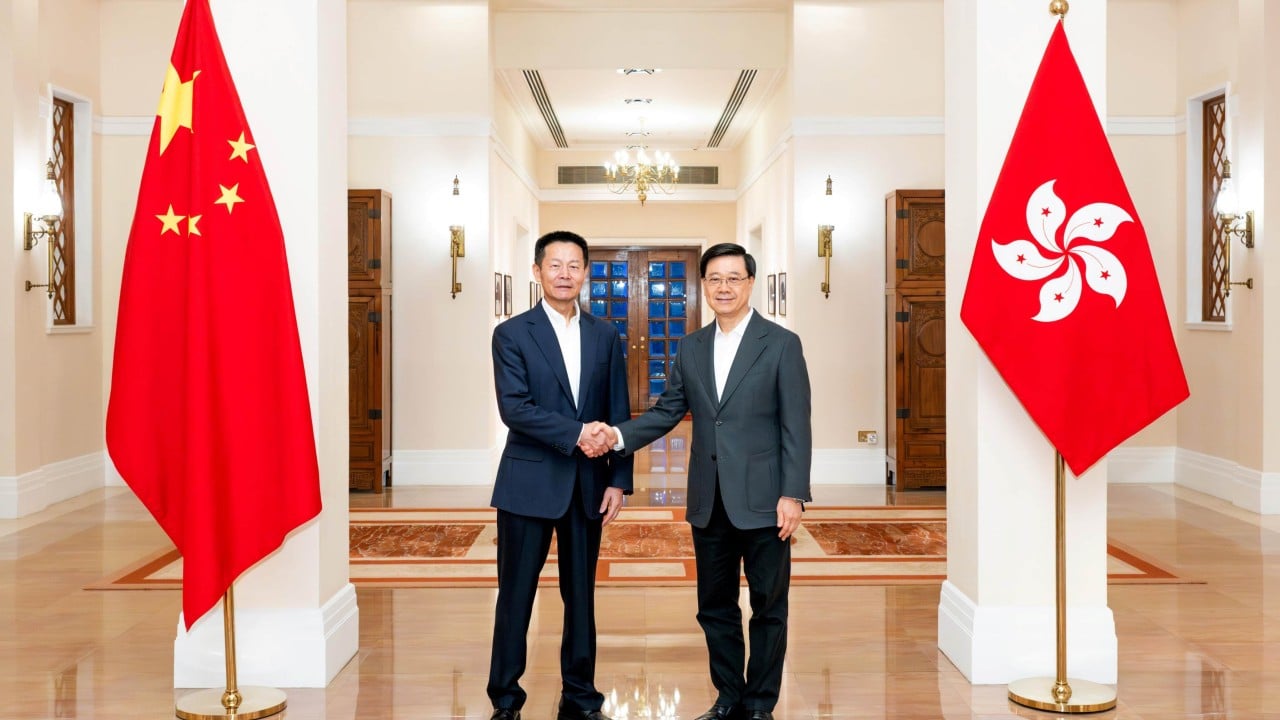
Every financial desk in Central and Wan Chai is popping champagne over the impending launch of yuan bond futures. The narrative being peddled is clean, predictable, and entirely missing the point. Regulators tell us this is the golden bridge connecting onshore mainland debt to offshore global capital, deepening financial ties with Beijing, and cementing Hong Kong as the indispensable super-connector.
It is a comforting bedtime story. It is also a delusion.
I have spent twenty years watching markets chase structural workarounds while ignoring the foundation rotting beneath their feet. Adding a derivatives layer onto a rigidly controlled capital account does not fix the underlying plumbing. It just gives institutions faster tools to hedge risks that should not exist in a functioning open market.
Let us tear down the lazy consensus.
The Mirage of Deeper Financial Ties
The mainstream financial press treats the China Securities Regulatory Commission and Hong Kong regulatory bodies locking arms as a breakthrough. The consensus argument claims that foreign investors clamor for yuan-denominated fixed-income derivatives to hedge interest rate risk as they pile into mainland bonds via Bond Connect.
Look closer at the actual order flow.
Foreign holdings of onshore Chinese government bonds have experienced prolonged bouts of stagnation and capital flight whenever the yield spread flips against the currency. Why? Because a futures contract is only as good as the cash market liquidity backing it, and the cash market for mainland debt remains handcuffed by structural capital controls.
Giving international macro funds a futures contract to manage duration risk while they struggle with repatriation friction is like handing someone a carbon-fiber paddle for a sinking canoe. You can trade all the volume you want, but you cannot escape the room when the exit door is bolted from the outside.
I have seen trading desks blow millions trying to arbitrage structural currency mismatches under the assumption that official policy coordination equals market freedom. It never does.
Defining the Mechanics They Refuse to Explain
To understand why this launch is a symptom of a deeper constraint rather than a cure, we need to strip away the PR gloss and look at the market structure.
Bond futures are supposed to provide price discovery and hedging efficiency. In a market like US Treasuries or German Bunds, that works because the underlying asset flows freely across borders, repo markets function without central bank micromanagement, and arbitrageurs can close mispricings instantly.
None of those conditions apply here.
- Closed-Loop Capital Controls: Offshore yuan exists in a parallel universe to onshore yuan. Liquidity does not pool organically; it is managed through quotas, swap lines, and administrative fiat.
- The Basis Risk Trap: When you try to run cash-and-carry trades or basis trades between offshore Hong Kong futures and onshore China Interbank Bond Market cash yields, you run straight into administrative friction. If the People's Bank of China decides to pinch offshore liquidity to defend the currency, your funding costs spike overnight, obliterating your model.
- The Counterparty Illusion: International investors want true risk transfer. But when the clearing mechanism relies on cross-border regulatory harmonization that can pause during geopolitical stress, your hedge is just paper.
The Wrong Questions Are Being Asked
If you type into any search engine right now, you will see the same repetitive queries echoing through financial forums:
How will yuan bond futures impact foreign investment in China?
Are Hong Kong financial ties with the mainland strengthening?
These are the wrong questions. They accept the premise that more financial products equal a healthier, more integrated market.
The real question you should be asking is this: Why does a market require an engineered derivative product to compensate for the fact that participants cannot freely move their principal in and out of the underlying assets?
The answer exposes the truth nobody in the regulatory ecosystem wants to admit. Yuan bond futures are being rushed out not because the natural ecosystem demands them, but because Beijing needs a pressure valve. When direct capital inflows slow down, you create synthetic avenues to keep institutional interest alive without opening the capital account wide enough to trigger domestic flight.
It is financial engineering disguised as market liberalization.
The Brutal Truth About the Off-Shore Playbook
Let us look at the playbook. Hong Kong’s historical mandate is clear: act as the controlled conduit for capital flowing into and out of the mainland. It is a brilliant model for a command economy looking to tap global liquidity pools while keeping its own currency fortress guarded.
But let us be honest about the limitations.
True international financial centers do not require special mutual access schemes, quotas, or restricted futures contracts to function. They win because of rule of law, predictable judicial recourse, and unhindered capital mobility. The moment you introduce political discretion into market clearing, the asset class ceases to be a global safe haven and becomes a tactical trade for fast-money macro tourists.
The downside of my perspective is simple: if you ignore the derivative hype and look strictly at the macro constraints, you miss out on short-term momentum trades. There is money to be made around the launch date. Volatility creates opportunity, and speculators will ride the headline wave.
Play the momentum if your mandate requires it. Just do not confuse a tactical trading vehicle with a structural evolution of global finance.
When the next liquidity squeeze hits and the cross-border channels tighten, your shiny new futures contract will not save your portfolio from the reality of capital controls.