The next pandemic is already out there. It’s hiding in a bat cave in Southeast Asia or circulating in a pig farm in the Midwest. We love to pretend COVID-19 was a once-in-a-century fluke that gave us our "lesson for the day," but that’s a dangerous lie. Pathogens like Ebola and hantavirus are constantly testing our borders, and honestly, our defenses are still full of holes.
If you think the global health system is a well-oiled machine now, you haven't been paying attention to the data. While we’ve made some strides in vaccine tech, the actual infrastructure for catching a spillover event before it hits a major airport is still shockingly primitive in most of the world. We’re reactive, not proactive. That’s how you get a global shutdown.
The Reality of Ebola and the Myth of Containment
Ebola used to be something that happened in remote villages. It burned out because it killed people too fast and had nowhere to go. That changed in 2014 during the West Africa outbreak. It hit urban centers like Monrovia and Freetown, and suddenly the "remote" virus was a global flight away.
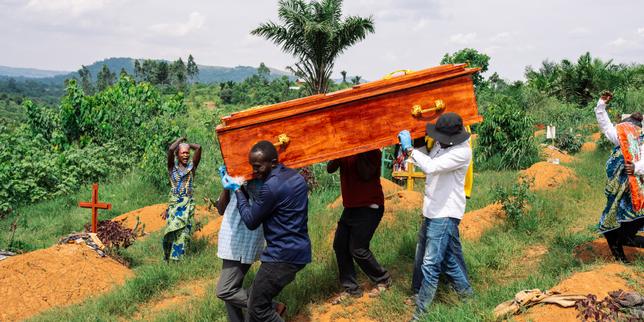
The World Health Organization (WHO) and various national governments talk a big game about surveillance. Yet, every time a new case pops up in the Democratic Republic of Congo, there’s a frantic scramble. We rely on heroic local doctors and "boots on the ground" instead of a digitized, interconnected early warning system. Ebola has a high mortality rate—sometimes up to 90%. If a strain with that kind of lethality ever learns to spread as easily as a common cold, we’re done.
Current efforts focus on the rVSV-ZEBOV vaccine. It’s a miracle of science. But a vaccine in a freezer in Geneva doesn't help a person in a rural village with no electricity. The "last mile" of healthcare is where we fail. We focus on the high-tech lab work but ignore the basic reality that many parts of the world lack clean water and basic PPE. You can't stop a pandemic with an app if people don't have gloves.
Hantavirus is the Sleeper Threat We Ignore
Hantavirus doesn't get the headlines Ebola does. It should. It’s primarily spread by rodents, and as climate change pushes animals into new territories, the risk of human contact skyrockets. We’ve seen Hantavirus Pulmonary Syndrome (HPS) in the Americas with a death rate around 38%.
Unlike COVID-19, hantavirus isn't typically spread person-to-person. But viruses evolve. That’s their entire job. Scientists at the CDC and researchers studying the Andes virus strain have already seen evidence of limited human-to-human transmission. If that becomes efficient, we face a respiratory virus that kills a third of the people it touches.
The terrifying part? There is no specific treatment, cure, or vaccine for hantavirus infection. We provide "supportive care," which is medical speak for "we put you on a ventilator and hope your body survives the internal damage." Our global strategy for hantavirus is basically just keeping our fingers crossed that it doesn't mutate. That isn't a strategy. It's a gamble.
The Funding Trap and Why We Stay Vulnerable
Public health funding follows a predictable, stupid pattern. It's called the "panic-neglect cycle." When a virus is killing people, governments throw billions at it. As soon as the news cycle moves on, that funding dries up.
Take the Global Health Security Index. It measures how prepared countries are for an emergency. In 2021, the world average was a dismal 38.9 out of 100. By 2024, many countries actually saw their scores drop. We didn't get better after COVID. We got tired. We stopped caring.
We need "hot" labs and genomic sequencing in every major city on every continent. Right now, if a strange pneumonia breaks out in a small town in South America, those samples might have to be shipped halfway across the world just to be identified. That delay is where the pandemic wins. We need decentralized diagnostics. We need to stop treating global health like a charity project and start treating it like a national security priority.
Climate Change is the Great Accelerator
We can't talk about pandemics without talking about the environment. Deforestation is essentially poking a hornet's nest. When we tear down forests, we force bats, primates, and rodents into human spaces. This is how "spillover" happens.
Most new infectious diseases are zoonotic. They jump from animals to us. Organizations like EcoHealth Alliance have spent years warning that the rate of these jumps is increasing. As the planet warms, mosquitoes carrying Zika, Dengue, and Malaria move further north. Permafrost is melting, potentially releasing pathogens that have been frozen for millennia.
We aren't just waiting for a new virus to appear. We are actively inviting them in. We spend trillions on military hardware to fight human enemies but pennies on the environmental protections that could prevent the next biological catastrophe. It's a massive failure of imagination.
What Real Preparedness Looks Like
If we want to actually survive the next decade without another 2020-style disaster, the "standard" approach has to go. We need to move beyond just stockpiling masks.
First, we need universal genomic surveillance. Every hospital should be able to sequence a pathogen and upload it to a global database in real-time. This allows us to spot a mutation the second it happens.
Second, we have to fix the supply chain. During the last crisis, countries were literally hijacking shipments of medical supplies from each other. We need regional manufacturing hubs for vaccines and medicines so that South America, Africa, and Southeast Asia aren't at the back of the line.
Third, we need to empower local communities. Trust is a medical tool. If people don't trust their local health officials, they won't report symptoms or take vaccines. You build that trust by investing in primary care during the "quiet" years, not by showing up in hazmat suits once the bodies start piling up.
Stop Waiting for the Miracle
The idea that science will just "fix it" at the last minute is a myth that gets people killed. Science did its part with COVID-19 by delivering vaccines in record time, and millions still died because of logistics, politics, and a lack of basic preparation.
You can take individual steps. Support policies that fund pandemic prevention. Stay informed through reliable sources like the Johns Hopkins Center for Health Security. Demand that your leaders treat biological threats with the same urgency as economic ones.
Don't buy into the "preparedness" theater of a few extra bottles of hand sanitizer in the cupboard. Real safety comes from a global system that catches the fire when it’s just a spark. Right now, the world is still just staring at the matches and hoping they don't light. We've been warned by Ebola. We've been warned by hantavirus. We've been warned by a global lockdown. The next move is ours, and "wait and see" is no longer an option.
Get involved in local community health initiatives. Push for transparent reporting from your local health department. Make sure your own household has a basic emergency plan that doesn't rely on a functional grocery store for two weeks. It's not about being a "prepper." It's about being a realist in a world that's increasingly small and increasingly prone to viral shocks.