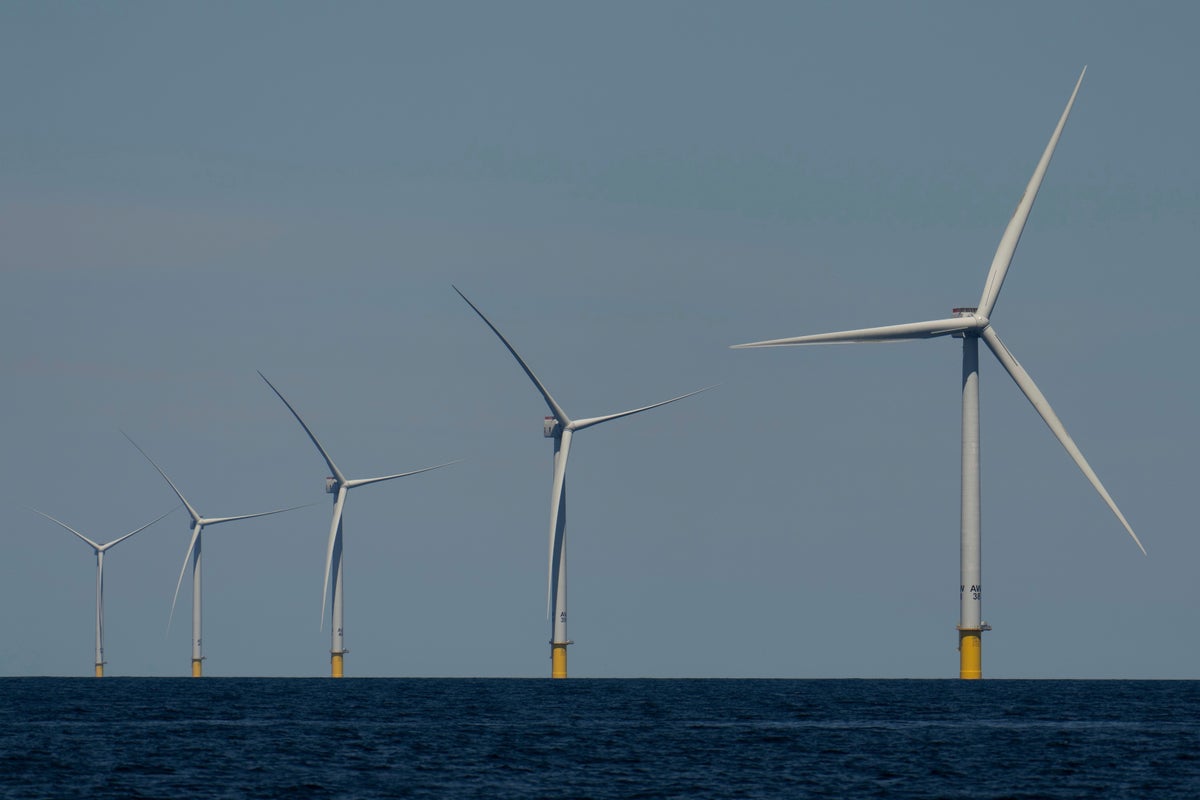
The Pacific ocean off the coast of Vandenberg Space Force Base doesn't care about politics. It is a place of brutal, unyielding kinetic energy. The wind there isn't a breeze; it is a resource, a heavy and invisible weight that has the potential to power hundreds of thousands of homes without burning a single ounce of coal. For years, engineers and local planners looked at those white-capped waves and saw the future.
Then, the paperwork stopped moving.
To understand why the California State Lands Commission is now digging through the wreckage of a dead deal between the Trump administration and a private energy firm, you have to look past the press releases. You have to look at the silence. In the world of high-stakes infrastructure, silence usually means someone is getting paid, or someone is being blocked. In this case, it might be both.
The Ghost Turbines of Lompoc
Imagine a technician named Elias. He’s spent twenty years climbing cell towers and working on traditional grids, but he’s been retraining for the offshore boom. He lives in a town where the transition to green energy isn't a slogan—it’s a lifeline. He expects to see the horizon filled with the slow, rhythmic rotation of blades. But instead, the horizon stays empty. The project he was told would bring "certainty" to the local economy has evaporated into a cloud of litigation and non-disclosure agreements.
This isn't just about a failed business venture. It’s about a $20 million "settlement" that looks, to the trained eye, like a payoff to go away quietly.
The core of the investigation centers on a proposal by a company called CADEMO. They wanted to build a small-scale, four-turbine floating wind farm. It was meant to be a laboratory for the future. Floating offshore wind is the holy grail of California’s energy goals because the continental shelf drops off too quickly for fixed towers. We need these floating platforms. We need the data they provide.
But as the Trump administration neared its end, the Department of Defense—specifically the Air Force—abruptly intensified its opposition. They claimed the turbines would interfere with radar and launch operations at Vandenberg. On the surface, national security is an unbeatable argument. Who wants to risk a missile launch for a few windmills?
But the story curdles when you look at the exit strategy.
The Price of Silence
The federal government didn't just deny the permit. They entered into a peculiar arrangement. While the specifics were shrouded in the kind of bureaucratic fog that makes your eyes glaze over, the result was clear: the project was killed, and a specific set of interests was protected. California officials, including Lieutenant Governor Eleni Kounalakis, are now asking a blistering question: Was this a legitimate security concern, or was it a targeted strike against California’s climate ambitions?
The state is currently examining whether the Trump administration used the military as a shield to systematically dismantle renewable energy projects.
Think about the math of a payout. When a government pays a developer millions of dollars not to build something, the taxpayer loses twice. You lose the money, and you lose the energy. It’s like paying a baker to throw away the bread while the village is starving. The "settlement" essentially functioned as a gag order, preventing the developers from challenging the military's claims or seeking alternative sites.
This creates a chilling effect that ripples through the entire industry. If you are an investor looking at the California coast, you aren't just looking at wind speeds and depth charts anymore. You’re looking at the ghost of the CADEMO project. You’re wondering if a sudden, unexplained "security concern" will vaporize your capital three years into development.
The Invisible Stakes of the Power Grid
The grid is a living thing. It requires a constant, delicate balance. When a major project like this is scuttled behind closed doors, the pressure doesn't disappear; it just shifts. It shifts to the aging natural gas plants that have to run longer. It shifts to the consumer’s monthly bill. It shifts to the lungs of children living near those gas plants.
The "human element" here is the cost of delay.
We often talk about climate change in terms of centuries and melting ice caps. But for a state like California, which faces rolling blackouts and an increasingly fragile electrical backbone, the timeline is much shorter. It’s next August. It’s the next heatwave. Every megawatt that isn't generated by the wind is a megawatt that must be scraped together from somewhere else, often at a higher price and a higher carbon cost.
The investigation by the State Lands Commission isn't just a political witch hunt against a former administration. It is a necessary autopsy. They are trying to find out if the "radar interference" was a solvable engineering problem or a convenient lie.
In many cases, radar and wind turbines can coexist. Software patches, hardware upgrades, and strategic spacing usually bridge the gap. In the CADEMO case, the transition from "let's find a solution" to "here is a check to disappear" happened with startling speed.
The Language of Obstruction
Bureaucracy has a specific dialect. It uses words like "unmitigatable" and "incompatibility" to end conversations. If you can label a project as a threat to national security, you don't have to show your work. You don't have to provide the data. You just close the folder.
But California is refusing to let the folder stay closed.
The investigators are looking into the communications between the Department of the Interior and the Pentagon during those final months of 2020. They are looking for the fingerprints of political appointees who might have overridden the career scientists and engineers who saw a path forward.
There is a specific kind of frustration that comes from knowing the solution to a problem exists but is being held hostage by a signature. For the people of the Central Coast, the wind is a constant presence. It rattles the windows. It shapes the trees. It is a massive, untapped battery sitting just offshore. To see that potential traded away in a secret deal feels like a betrayal of the land itself.
The Long Shadow of the Deal
This investigation serves as a warning shot. California is signaling that it will no longer allow the federal government to use "secret" reasons to block the state’s transition to a decarbonized economy.
But the damage is already done in the short term. The CADEMO project is dead. The specialized vessels aren't coming. The jobs for people like Elias have been pushed back by years. The knowledge we would have gained about how floating platforms handle the unique Pacific swells has been lost.
We are left with a series of depositions and a trail of redacted emails.
When you stand on the bluffs near Lompoc today, the air is clear and the wind is howling. It is a raw, physical power that could be lighting up the hospitals in Los Angeles or the schools in San Francisco. Instead, it just blows past. It hits the cliffs and dissipates into nothing, a reminder that the greatest obstacle to progress isn't the difficulty of the science, but the opacity of the men in the rooms where the deals are made.
The water remains deep, the wind remains strong, and the truth remains buried somewhere in a filing cabinet in Washington D.C., waiting for someone with enough leverage to pry it open.