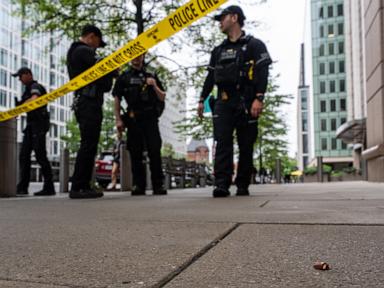
A security checkpoint breach near the White House on May 24, 2026, quickly escalated into a fatal shooting, leaving a suspect dead and an innocent bystander fighting for survival in critical condition. While initial reports framed the incident as a localized law enforcement response to an immediate threat, a deeper investigation into the geography of Secret Service checkpoints reveals a compounding systemic issue. The physical layout of these security zones increasingly forces the public into high-risk bottlenecks where crossfire becomes an inevitability rather than an anomaly.
Law enforcement officials confirmed that Secret Service Uniformed Division officers engaged an armed individual who attempted to bypass a vehicle checkpoint. The suspect died at the scene. However, the true failure of the afternoon lies in the stray rounds that struck a pedestrian hundreds of feet away, exposing a stark reality about the shifting defensive perimeter surrounding the executive mansion.
The Illusion of the Hard Buffer Zone
For two decades, the security strategy protecting the President has relied on expanding the physical distance between potential threats and the White House itself. Streets that once carried public traffic, like Pennsylvania Avenue and E Street, have been transformed into pedestrian plazas bounded by heavy concrete bollards, steel gates, and armed checkpoints.
The logic seems sound on paper. By pushing the perimeter outward, security forces create a buffer zone designed to absorb a kinetic threat, such as a vehicle-borne improvised explosive device or an armed assailant, before it can breach the inner sanctum.
But this strategy ignores a basic law of urban fluid dynamics. Pushing a perimeter outward does not make the threat disappear. It merely compresses the civilian population against the outer edge of the security apparatus.
The checkpoints themselves have become high-density choke points. Tour groups, commuter traffic, government employees, and street vendors are corralled into narrow corridors directly adjacent to heavily armed, highly stressed security personnel. When a crisis erupts at these exact intersections, the distinction between the secure zone and the public sphere collapses instantly.
Anatomy of a Checkpoint Confrontation
The incident began at a vehicle screening point positioned well outside the White House gates. A driver approached the barrier, refused to comply with verbal commands, and brandished a weapon, according to preliminary investigative briefs. Within seconds, officers opened fire.
The engagement lasted less than a minute. In a controlled environment, a swift tactical response minimizes casualties. In a dense urban core, a short firefight carries catastrophic external risks.
Modern law enforcement sidearms and patrol rifles carry significant wallop. Rounds that miss their target, or over-penetrate a vehicle chassis, do not simply vanish. They travel down asphalt corridors lined with stone buildings, which act as ballistic shooting galleries.
The Physics of Urban Crossfire
When a round hits concrete at an angle, it rarely deforms and stops. It skips. This ricochet effect means that a stray bullet can change trajectory unpredictably, zipping around corners and striking individuals who believed they were safely behind cover.
Consider the layout of the streets radiating outward from the executive complex. They are wide, straight avenues designed for grand processions, offering virtually no natural defilade for a pedestrian caught unawares.
- Primary target zone: The immediate 15-foot radius around the security barrier where the suspect is engaged.
- Secondary danger zone: The 300-yard linear trajectory behind the suspect, where missed rounds retain lethal velocity.
- The ricochet corridor: Side streets and alcoves where deflected bullets bounce off historic granite structures.
The bystander in this week's shooting was not standing next to the suspect. They were walking along a public sidewalk, compliance-verified, going about their day, completely oblivious to the fact that they had entered a functional kill zone created by the geometry of the checkpoint.
The Over-Reliance on Kinetic Force at the Outer Edge
Secret Service training emphasizes absolute control over the tactical environment. This works well within the fenced interior of the White House grounds, where variables can be strictly managed. At the outer perimeter, however, the agency must interact with an unpredictable public.
Interviews with former tactical officers reveal a growing unease with how these outer checkpoints are managed. Officers stationed at these outer posts are expected to act simultaneously as tourist guides, traffic cops, and anti-terrorist operators.
"You are sitting in a booth or standing in the street for eight hours handling mundane queries," notes a retired protection specialist who spent twelve years on the Uniformed Division. "Then, in a fraction of a second, you have to transition to a maximum-force mindset. The cognitive load is immense, and the temptation to solve a compliance issue with a firearm is heightened when you are defending a high-value asset."
This structural tension creates a bias toward rapid, overwhelming kinetic force. Non-lethal options, such as spike strips, remote vehicle interdiction technologies, or ballistic shields, are often bypassed in favor of service weapons when an individual shows hostile intent. The priority is stopping the threat before it moves an inch closer to the inner perimeter, regardless of what lies behind that threat.
The Failure of Inter-Agency Ballistic Coordination
Washington, D.C. features the most dense concentration of competing law enforcement jurisdictions in the world. On any given block near the executive complex, you might find Metropolitan Police officers, Secret Service agents, Park Police, and federal protective forces.
Each agency operates under its own distinct use-of-force continuum. They communicate on different radio frequencies, utilize different tactical doctrines, and train for different outcomes.
When a shooting occurs at a perimeter checkpoint, response units from adjacent agencies naturally flood the zone. This creates an immediate coordination deficit. Who commands the outer perimeter while the inner perimeter is locking down? Who is responsible for clearing civilians from the line of fire?
During the May 24 incident, local Metropolitan Police units were blocks away when the first shots echoed down the avenue. By the time they arrived to establish a secondary perimeter and divert pedestrian traffic, the crossfire had already claimed its victims. The lack of a unified, instantaneous alert system for civilians within a two-block radius of a checkpoint breach is a glaring administrative oversight.
Re-Engineering the Boundary
Fixing this vulnerability requires a fundamental shift in how urban fortification is designed. The current model relies on hard lines in the sand—a gate, a bollard, a guard with a rifle.
A modern, defensive architecture must incorporate soft mitigation strategies that protect the public while isolating threats.
Ballistic Deflection Barriers
Instead of flat concrete blocks that bounce bullets back into the street, outer checkpoints should utilize angled, energy-absorbing materials designed to trap stray rounds. Angled masonry can direct ricochets downward into the pavement or upward into the air, away from pedestrian walkways.
Staggered Approach Corridors
Vehicles approaching a checkpoint should be forced through a series of sharp, low-speed turns before reaching the final security gate. This physical configuration prevents a suspect from gaining speed, reducing the urgency for officers to use lethal force immediately to halt a vehicle's momentum.
Automated Civilian Warnings
The technology exists to push instantaneous, localized emergency alerts to mobile devices within a specific geographic geofence the moment a weapon is drawn at a federal checkpoint. Giving civilians even five seconds of warning to drop to the ground or seek cover inside a building would drastically reduce bystander casualties.
Implementing these changes involves navigating a bureaucratic nightmare of historical preservation boards, municipal transport authorities, and federal security agencies. It is a slow, expensive process that lacks the political appeal of deploying more armed personnel to the streets.
The cost of inaction is written on the pavement. As long as the federal government treats the outer perimeter as a simple line to be defended by gunfire, the citizens walking the streets of the nation's capital will remain acceptable collateral damage in the calculus of executive protection.