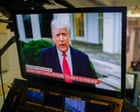
Major television networks briefly pulled their pooled camera crews from the White House following an unprecedented administration ban on specific journalistic outlets, exposing a fragile information ecosystem that treats constitutional protections like negotiable terms of a licensing agreement.
When the administration barred reporters from CNN, Politico, and MS Now from setting foot on executive grounds under the banner of combating critical coverage, the reaction from the broader press corps was initially swift. The rotating television pool—the shared logistical engine that feeds presidential video to domestic and international audiences—shut down its operations. For a brief window, the presidency existed in a broadcast vacuum, visible only through official, state-sanctioned feeds where audio was routinely drowned out by helicopter rotors.
Yet, looking at this confrontation merely as an old-fashioned political brawl misses the deeper systemic rot. The institutional press did not mount a sustained campaign of resistance; they paused until a federal judge handed down a temporary restraining order, and then quietly plugged back into the machine. This temporary suspension was not an act of revolutionary defiance. It was a corporate calculation.
For decades, the relationship between the executive branch and the white house press corps has operated on a quiet, transactional compromise. Access is traded for proximity. Journalists get the visual authority of standing on the lawn, and the administration gets a guaranteed pipeline for its messaging. But this architecture was built for an era before digital platforms and direct-to-consumer executive broadcasting fundamentally altered political communication.
When a modern administration decides that critical reporting constitutes a national security threat or disqualifying fiction, traditional press credentials become vulnerable leverage points. The executive branch understands precisely how much commercial pressure legacy media companies face. Maintaining a 24-hour news operation requires continuous access to power. Shutting out outlets is no longer just about punishing individual reporters; it is about establishing a regulatory framework where the government chooses its own inquisitors.
The legal challenge mounted by the banned organizations relied heavily on Fifth Amendment due process and First Amendment protections, securing temporary judicial relief. Constitutional lawyers cheered the speed of the court's intervention. But leaning on the judiciary to police executive manners is a precarious long-term strategy for an independent press. Courts can issue temporary restraining orders, but they cannot compel an administration to respect the normative boundaries of democratic governance. Every time the press corps relies on a judge to force open the executive gates, the baseline of what is acceptable executive behavior shifts a little further.
Consider the mechanics of the pool system itself. The five major networks share the immense cost and operational burden of filming the president. When one member is expelled, the collective shutdown of the pool is designed to show solidarity. However, solidarity among corporate competitors is notoriously fragile. The moment legal avenues opened and credentials were provisionally restored, the economic imperative to resume normal broadcasting overrode any sustained institutional reckoning. The cameras went back on because silence is expensive.
This dynamic exposes the vulnerability of modern journalism. Newsrooms are corporate entities answerable to balance sheets, audience retention metrics, and shareholder expectations. An administration with a hostile posture toward the press knows this vulnerability intimately. By weaponizing access, officials can induce self-censorship long before a reporter ever sits down to draft a story. Editors and producers are forced to weigh the aggressive pursuit of a tough story against the catastrophic commercial disadvantage of being locked out of the room entirely.
The episode also highlights a profound shift in how the public consumes political reality. Alternative digital channels and direct social media broadcasts allow modern executives to bypass traditional gatekeepers altogether. When the White House attempted to replace the independent television pool with its own controlled streams, it offered a glimpse of a post-journalistic future. In this environment, traditional networks are no longer essential intermediaries. They are simply optional tenants on federal property, subject to eviction whenever their coverage displeases the landlord.
Relying on temporary legal victories provides a false sense of security. A court order is only as powerful as the executive's willingness to respect judicial authority, and an administration testing the limits of institutional power views court battles as standard operating procedure. Appeals wind through appellate courts while the daily news cycle marches forward, steadily normalizing the exclusion of independent voices.
If the press corps wishes to protect its constitutional mandate, episodic boycotts followed by a quick return to business as usual will not suffice. True journalistic independence requires an absolute refusal to let the state curate its own watchdogs. As long as access remains the primary currency of political journalism, the power to grant that access remains the power to silence dissent.
The gates of the executive complex opened back up, the anchors returned to their anchor desks, and the daily ritual resumed as though nothing fundamentally had broken. But the blueprint for how to silence an independent press in plain sight has already been drawn, tested, and normalized.