Cry me a river over a 50-kilometer train ride.
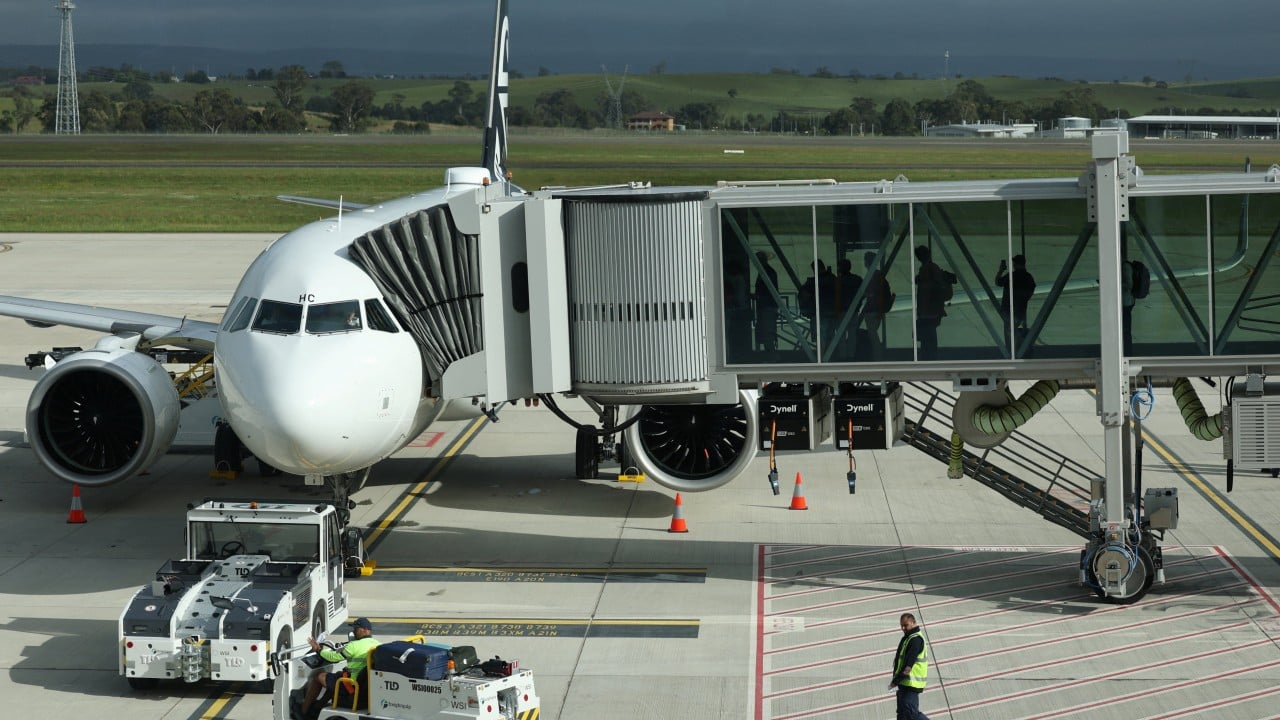
The hand-wringing around Western Sydney International (Nancy-Bird Walton) Airport has reached peak absurdity. Every travel column, suburban commuter forum, and armchair urban planner in New South Wales seems locked in a competition to see who can whine loudest about the "inconvenience" of flying out of Badgerys Creek instead of Mascot. They call it a detour. They say it blows passengers off course. They treat the absence of a 24-hour curfew as a personal insult rather than the single biggest economic lifeline Sydney has received since the Harbor Bridge opened. If you liked this article, you should check out: this related article.
Here is the blunt reality: if you think Western Sydney Airport is an inconvenience, you are not the customer it was built for.
For decades, Sydney Kingsford Smith Airport (SYD) has operated with one hand tied behind its back. A strict 11:00 PM to 6:00 AM curfew, combined with a rigid cap of 80 aircraft movements per hour, created an artificial bottleneck that choked global connectivity, inflated ticket prices, and turned Mascot into a slot-hoarding cartel for legacy carriers. Meanwhile, Western Sydney’s population boomed past two million people—residents who were forced to trek east across gridlocked motorways just to catch a domestic hop to Melbourne. For another perspective on this story, check out the latest coverage from Travel + Leisure.
The critics claiming passengers are being "blown off course" are suffering from terminal Harbour-centric myopia. They view Sydney through the lens of Bondi, the CBD, and the Lower North Shore. They completely miss the structural shift happening in global aviation, freight logistics, and multi-airport metropolitan economics.
The Myth of the "Inconvenient" Second Airport
Let’s dismantle the geography argument first. Whenever a major global city opens a secondary greenfield airport, the initial reaction from downtown elites is always identical: It’s too far.
They said it about Tokyo Narita, sitting 60 kilometers outside central Tokyo. They said it about London Stansted and Luton. They screamed bloody murder when Denver moved Stapleton out to the plains, and they mocked Washington Dulles for decades. Yet in every single instance, the critics failed to grasp a fundamental rule of infrastructure planning: airports do not follow cities; cities follow airports.
Badgerys Creek is not in the middle of nowhere. It sits squarely in the demographic center of gravity of Greater Sydney. For a traveler living in Parramatta, Penrith, Liverpool, or Campbelltown, Mascot was never "convenient." Mascot was an expensive, congested nightmare requiring a $20 airport station access fee or a $90 Uber ride through the M5 East tunnel.
For nearly half of Sydney's population, Western Sydney Airport cuts travel time in half. Calling it a detour is like calling Parramatta a rural outpost. It reveals a staggering ignorance of where people actually live and work in 2026.
The Slot-Hoarding Cartel at Mascot
Why do legacy airline executives and inner-city business travelers subtly reinforce the narrative that WSI is a second-tier alternative? Follow the money.
At Kingsford Smith, slot scarcity is a moat. Under Australia’s demand management scheme, incumbent airlines holding historical slots at SYD enjoy a protected oligopoly. When capacity is capped at 80 movements an hour, upstart low-cost carriers and ambitious international rivals cannot simply add peak-hour flights to drive down fares. Scarcity keeps yields artificially high.
I have watched aviation consultants spend millions advising airlines on how to defend fortress hubs through slot-sitting—flying half-empty regional turboprops just to retain valuable takeoff and landing rights. Western Sydney International blows that protectionist racket wide open.
With zero curfew and no arbitrary hourly movement cap, WSI introduces genuine price elasticity back into the Sydney market. Low-cost carriers like Jetstar, Bonza’s spiritual successors, and aggressive Asian budget airlines like Scoot, AirAsia X, and VietJet suddenly have an unconstrained, 24/7 gateway into Australia’s largest economy. When capacity floods a constrained market, fares drop. The passengers complaining about the commute will stop complaining the exact second they see a $350 return ticket to Singapore or Tokyo.
What Everyone Gets Wrong About The 24-Hour Curfew
The mainstream coverage treats WSI's 24-hour operation as a mere technicality—a footnote for cargo planes and red-eye masochists. That is a catastrophic misreading of how modern long-haul aviation actually works.
Time zones dictate flight schedules, not passenger preferences.
Because of the geographic distance between Australia and major hubs in North America, Europe, and East Asia, aircraft arriving from or departing to the Northern Hemisphere operate within narrow temporal windows. At Mascot, the 11:00 PM curfew creates a brutal operational cliff. A single thunderstorm in Brisbane, a delayed baggage loader in Los Angeles, or a minor mechanical sensor fault on the tarmac turns into a domino-effect cancellation. Once the clock strikes 11:00 PM, aircraft are stranded, crews time out, and thousands of passengers sleep on terminal floors.
The Economics of Aircraft Utilization
Commercial airliners only make money when their wheels are in the air. A widebody Boeing 787 Dreamliner or Airbus A350 costs hundreds of millions of dollars; leaving it parked on the tarmac for seven hours overnight because a local council banned night flights is financial malpractice.
At Western Sydney International, an airline can land a widebody from Doha or Seoul at 2:00 AM, turn it around in 90 minutes, and have it airborne back to Asia before Mascot even opens its runways at 6:00 AM.
- Higher asset utilization: Airlines squeeze an extra leg out of their fleet every 48 hours.
- Lower airport charges: WSI doesn't carry the bloated debt structure or monopolistic pricing power of Sydney Airport Corporation Limited (SACL).
- Zero curfew diversions: Flights delayed by headwinds over the Pacific no longer have to divert to Brisbane or Melbourne at 10:55 PM, saving carriers tens of thousands of dollars per incident in fuel, crew overtime, and hotel vouchers.
Think about what that means for reliability. The "convenient" airport by the bay routinely strands travelers when weather hits. The "inconvenient" airport out west actually gets you home.
Why Passengers Are Asking the Wrong Question
If you scan travel forums or search queries around Sydney’s second airport, people keep asking the same flawed questions: "How do I get from Western Sydney Airport to the Sydney Opera House?" or "Should I fly into SYD or WSI?"
You are asking the wrong question. You are treating two fundamentally different economic engines as interchangeable substitutes.
Kingsford Smith and Western Sydney International are not competing for the exact same trip. They represent a classic multi-airport system segmentation, a model proven across London, New York, Tokyo, and Shanghai. If you are an investment banker flying from Melbourne for a 9:00 AM meeting on Martin Place, you fly into Mascot, hop on the Airport Link, and you are at your desk in 20 minutes. You pay the premium because your time is worth $500 an hour.
If you are a family of four flying to Bali, a migrant visiting relatives in Manila or New Delhi, an e-commerce exporter shipping temperature-controlled pharmaceuticals, or a tourist renting a campervan to explore the Blue Mountains, flying through Mascot was always an expensive tax on your journey.
People Also Ask — Dismantled
Is Western Sydney Airport connected to the city by train?
Yes, via the Sydney Metro Western Sydney Airport line connecting to St Marys on the T1 Western Line. Critics love pointing out that you have to change trains at St Marys to reach the CBD, claiming this proves poor planning. They miss the point entirely. The Metro isn't designed to funnel everyone east to Circular Quay; it’s designed to stitch together the Western Parkland City—connecting St Marys, Luddenham, the Aerotropolis, and Bradfield. Expecting a direct express bullet train from Badgerys Creek to Bondi Junction misunderstands the entire masterplan.
Will airlines abandon Kingsford Smith for Western Sydney?
No. Full-service network carriers like Qantas, British Airways, and United will keep their flagship business-heavy routes anchored at SYD because corporate contracts demand CBD proximity. Instead, airlines will run a split-hub strategy: high-yield corporate frequencies at Mascot, high-volume leisure, VFR (Visiting Friends and Relatives), and cargo frequencies at WSI.
Isn't the noise going to ruin Western Sydney?
Let’s be brutally honest: aircraft noise is real, and communities under the flight paths in places like Blaxland and Erskine Park have legitimate grievances regarding overnight overflights. Unlike Mascot, where decades of urban sprawl encroached on an existing airport, WSI was designed with modern noise-abatement flight paths and strict land-use zoning around the Aerotropolis. Even so, living under a 24-hour flight corridor comes with acoustic trade-offs. Pretending nobody will hear a 777 freighter at 3:00 AM is dishonest. The difference is that Western Sydney is capturing the multi-billion-dollar job creation and infrastructure investment in exchange, rather than bearing the burden of Sydney’s growth without the upside.
The Freight Revolution Nobody Is Talking About
If you want to understand why the Australian federal government poured over $5 billion into Badgerys Creek, stop looking at passenger terminals and start looking at cargo aprons.
Australia is an island economy at the bottom of the world. High-value agricultural exports—chilled beef, live lobsters, Tasmanian cherries, dairy, and pharmaceuticals—live and die by belly-hold cargo capacity and dedicated freighter schedules.
Under Mascot’s curfew, air freight was strangled. If a Qantas or Cathay Pacific cargo flight missed its evening departure slot, perishable goods sat in warehouses losing shelf life and market value. Imagine a scenario where a Hunter Valley exporter misses a cold-chain connection to Tokyo because a passenger jet had a hydraulic leak at 10:40 PM and shut down the main runway until curfew hit. That wasn't a hypothetical risk at SYD; it was a weekly occurrence.
Western Sydney International changes the math for Australian exporters overnight. With dedicated 24-hour freighter aprons, direct motorway access to the M7 and M12, and zero curfew restrictions, WSI immediately becomes the premier air cargo hub in Australasia.
Passengers generate headlines, but freight pays the bills. Even if passenger growth at WSI takes five years to hit peak stride, the logistics and cold-chain ecosystem surrounding the Aerotropolis makes the airport indispensable from day one.
The Brutal Truth About Greenfield Airport Rollouts
Let’s admit the downsides, because pretending a massive greenfield airport opens without friction is pure fantasy.
For the first 24 to 36 months, flying through Western Sydney International will feel sparse compared to a mature mega-hub.
- Thin route networks initially: You won't have hourly shuttles to every regional town or direct flights to every European capital out of the gate. Early adopters will face limited flight frequencies; if you miss the single daily departure to your destination, you’re waiting 24 hours.
- Incomplete surrounding infrastructure: While the terminal and Metro link are ready, the broader Bradfield city center and surrounding commercial precincts will remain active construction zones for years. Don't expect Michelin-star dining and luxury hotels outside the perimeter fence immediately.
- Last-mile gaps for eastern suburbs travelers: If you live in Randwick or Mosman and book a cheap ticket out of WSI without checking the airport code, you are going to hate your life when you realize how much an Uber across the entire Sydney basin costs at peak hour.
But these are teething pains, not structural flaws. Every major airport disruption follows the exact same curve: early mockery from traditionalists, initial friction during route ramp-up, rapid adoption by price-sensitive travelers and logistics operators, and finally, total integration into the city's economic DNA.
How Smart Travelers Will Exploit the Split
Stop treating Western Sydney Airport like a trap to avoid and start using it as leverage. If you travel in or out of New South Wales, adjust your booking playbook right now:
- Always search the metropolitan code (YQY / broad Sydney search), never just SYD. Filtering strictly by Kingsford Smith hides the aggressive introductory fares airlines are deploying to stimulate demand at WSI.
- Use WSI for international red-eyes and leisure hauls. When flying to Southeast Asia, the Middle East, or the Pacific, departing late at night from a curfew-free airport eliminates the single biggest source of evening flight cancellations in Australia.
- Match the airport to your ground destination, not your habit. Heading to the Blue Mountains, Southern Highlands, Hunter Valley via the M7/NorthConnex, or anywhere west of Strathfield? Landing at Mascot and fighting east-to-west traffic is self-sabotage.
- Watch the loyalty point sweet spots. Whenever airlines launch routes from a secondary hub, frequent flyer award seat availability spikes because corporate algorithms haven't absorbed the inventory yet.
The pundits claiming Sydney’s second airport blows passengers off course are measuring progress with a broken compass. They want a 21st-century global metropolis with 1970s infrastructure limits.
Mascot belongs to the past—protected, capped, expensive, and asleep by 11:00 PM. Western Sydney International belongs to the future—unconstrained, relentless, and wide awake while the rest of the city sleeps. Adapt your itinerary, or keep paying the Mascot tax.