Mainstream media outlets love a predictable script. Every time a cluster of Ebola virus disease cases emerges in the Democratic Republic of the Congo, the editorial machines in London, Paris, and New York spin up the exact same narrative. They ask: "What is the risk of the virus spreading beyond the DRC?" They track flight maps. They interview biosecurity talking heads. They induce a mild, comfortable panic in Western audiences who view Central Africa as a permanent reservoir of biological hazards.
This entire premise is fundamentally flawed.
The lazy consensus among global health commentators is that the primary danger of an Ebola outbreak in the DRC is its potential to jump borders and spark a global pandemic. This view is not only scientifically inaccurate; it is structurally dangerous. By framing Ebola as a global threat waiting to happen, international observers misallocate resources, distort public health priorities, and ignore the actual, systemic failures that allow these outbreaks to persist locally.
Stop worrying about an international Ebola apocalypse. It is not going to happen. Instead, start looking at how the obsession with global containment is actively killing the people on the ground.
The Containment Myth and the Reality of Transmission
To understand why the fear of a global Ebola pandemic is a fantasy, we have to look at the basic virology and epidemiology of the filovirus. Mainstream articles routinely conflate Ebola with respiratory pathogens like influenza or SARS-CoV-2. They talk about international travel hubs as if Ebola could slip through an airport unnoticed and infect a city subway system by lunchtime.
This ignores how the virus actually moves. Ebola is not highly contagious in the way the public imagines; it is highly lethal, which is a very different metric.
The basic reproduction number ($R_0$) for Ebola typically hovers between 1.5 and 2.0 in community settings without intervention. Compare that to measles, which boasts an $R_0$ exceeding 12, or even standard seasonal flu variants. More importantly, Ebola requires direct contact with the bodily fluids—blood, vomit, feces—of a symptomatic or deceased individual.
Pathogen Transmission Dynamics:
[Respiratory Pathogens] -> Airborne/Droplets -> Rapid, asymptomatic community spread
[Ebola Virus]           -> Direct fluid contact -> Localized, symptomatic-only transmission
You cannot catch Ebola from someone coughing next to you on a plane if they are asymptomatic. And if they are symptomatic, they are far too incapacitated to board a flight, pass through customs, and navigate an international terminal. The historical data bears this out. During the massive 2014–2016 West Africa outbreak—the largest and most chaotic in history—the virus did manage to reach Western soil via a handful of imported cases. What happened? It fizzled out instantly. The secondary transmission chains in the United States and Europe amounted to a grand total of a few isolated infections among heavily exposed healthcare workers.
The infrastructure of modern international travel is fundamentally hostile to a virus that requires its host to be visibly, violently ill to transmit efficiently. The risk of a catastrophic global spread beyond the region is effectively negligible.
How the Global Panic Machine Starves Local Medicine
When the Western press frames Ebola through the lens of international vulnerability, the funding follows the fear. Millions of dollars are funneled into biosecurity measures, border screening technologies, and stockpiles of experimental therapeutics in wealthy nations that will almost certainly never use them.
Meanwhile, the actual drivers of Ebola mortality in the DRC go unaddressed.
I have spent years analyzing health crisis responses, and the pattern is maddeningly consistent. We see international agencies deploy massive, top-heavy intervention teams that set up highly specialized Ebola Treatment Centers (ETCs). These centers are often built like fortresses, isolated from the existing local healthcare framework. They pull scarce local doctors and nurses away from primary care clinics by offering inflated international salaries.
The result is a devastating counter-effect. While a highly localized Ebola outbreak is brought under control with experimental vaccines like Ervebo, the surrounding healthcare system collapses.
During the 2018–2020 Kivu outbreak in the eastern DRC, while international attention was hyper-focused on every single Ebola case, thousands more people died quietly of preventable diseases.
- Measles: Over 6,000 people died in a concurrent measles outbreak in the DRC—more than double the death toll of the headline-grabbing Ebola epidemic.
- Malaria: Malaria continued to claim tens of thousands of lives, mostly children, because routine clinics were underfunded or avoided by terrified locals.
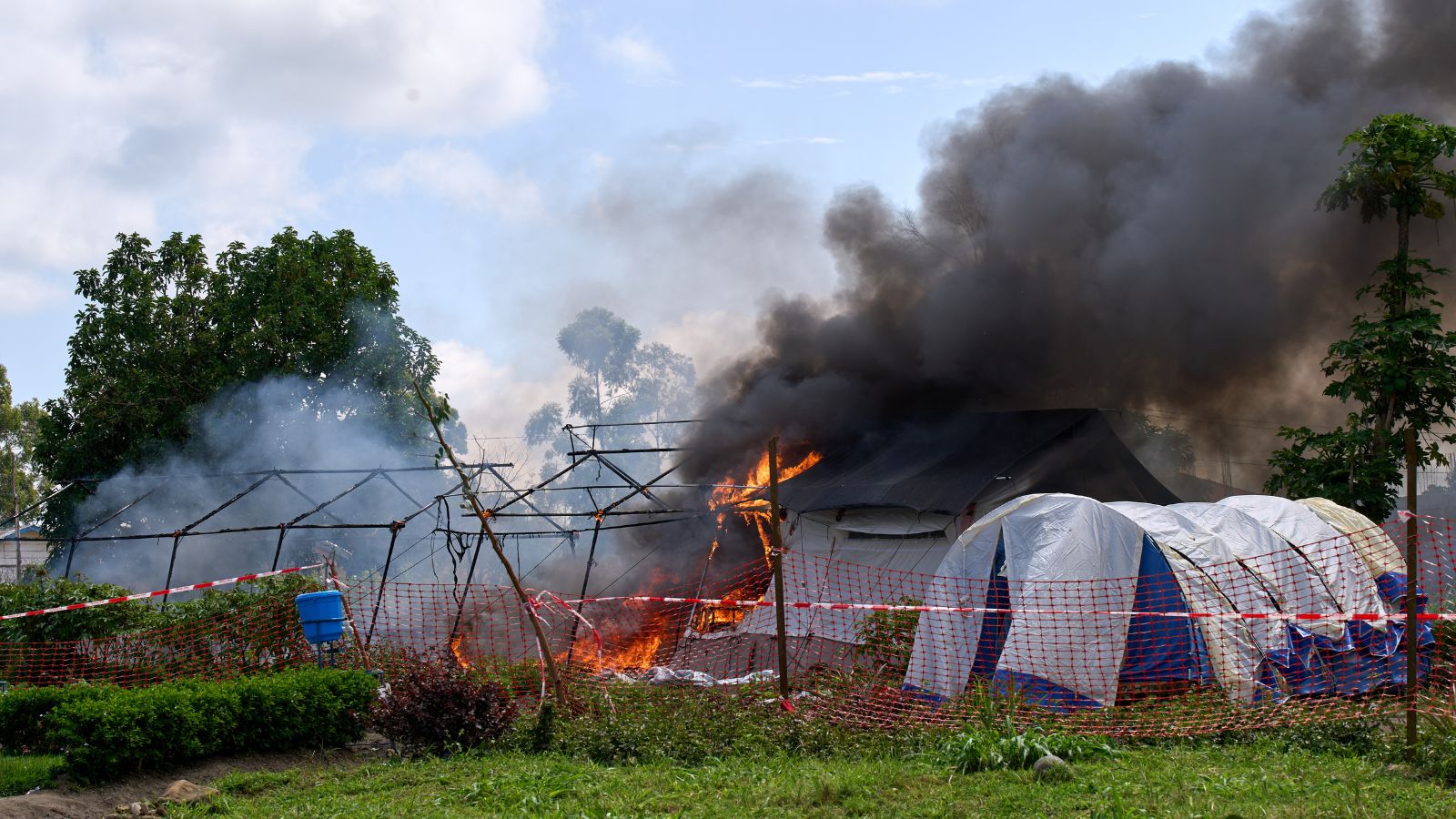
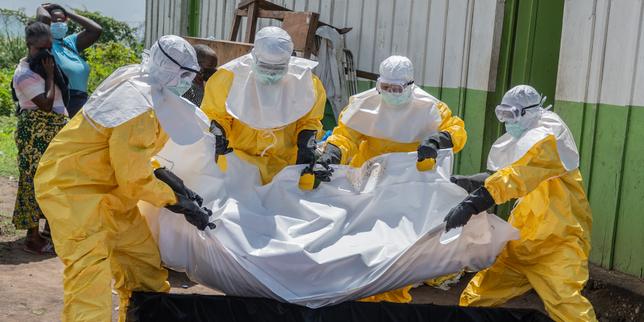
When you treat a regional outbreak as a global security threat, you militarize the response. You send armed escorts, build isolation tents, and treat the local population as potential biological vectors rather than patients. This destroys community trust. When the World Health Organization (WHO) and local ministries focus exclusively on one virus while ignoring the fact that children are dying of dirty water and lack of basic antibiotics twenty yards away, the community rebels. They hide their sick. They attack clinics. The outbreak prolongs not because the virus is unstoppable, but because the intervention strategy is tone-deaf.
Dismantling the "People Also Ask" Flawed Premises
If you look at public inquiries regarding Ebola in Central Africa, the questions reflect a deep misunderstanding of the region's epidemiological landscape.
"Can Ebola mutate to become airborne?"
This is a favorite trope of Hollywood screenwriters and sensationalist journalists. From a genetic standpoint, the probability of Ebola changing its fundamental mechanism of transmission from fluid-borne to airborne is close to zero. Viruses do not completely rewrite their structural biology and cellular entry mechanisms overnight. The evolutionary pressure on Ebola is to optimize its replication within internal organs, not to survive in aerosolized droplets hanging in mid-air. Stop asking this question; it is a scientific distraction.
"Why can't the DRC just eradicate the virus permanently?"
This question assumes that an Ebola outbreak is a failure of basic hygiene that can be scrubbed away with enough bleach and political will. It ignores the reality of the zoonotic reservoir. The virus lives naturally in fruit bats (specifically species like Hypsignathus monstrosus) and periodically spills over into non-human primates and humans.
Short of ecologically destroying the entire Congo Basin rainforest—a move that would trigger catastrophic environmental consequences—the virus will always exist in nature. Eradication is an impossible goal. The objective must change from an unrealistic eradication campaign to building resilient, localized primary care systems that can spot a spillover event and contain it before it requires an international task force.
The Real, Uncomfortable Threat: The "Ebola Inc." Economy
There is an uncomfortable truth that anyone working within the global health architecture knows but rarely says out loud: an Ebola outbreak is highly profitable for a very specific subset of international organizations and non-governmental organizations (NGOs).
When an outbreak is declared an Emergency of International Concern, the floodgates of emergency funding open. Millions of dollars flow from USAID, the European Commission, and global philanthropies. This creates a temporary, artificial economy—often dubbed "Ebola Inc." by cynical local observers.
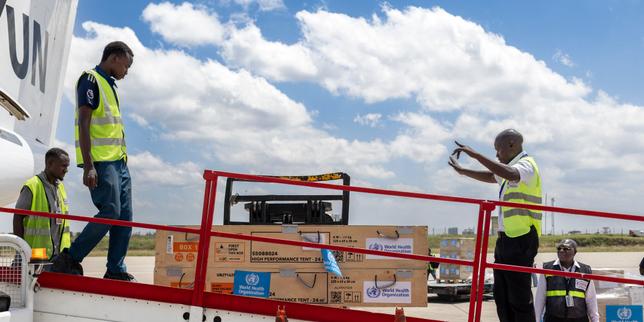
Land cruisers are rented at exorbitant rates. Local hotels are booked solid with international consultants. High-tech equipment is imported, used for three months, and then left to rust in warehouses because the local staff lacks the training or parts to maintain it once the international circus packs up and leaves.
This model of intervention creates a dependency cycle. It gives local political actors little incentive to invest their own national budgets into permanent healthcare infrastructure. Why spend domestic tax revenue on building functional hospitals when you can rely on international donors to bail you out with emergency funds every time a viral outbreak hits the headlines?
The downside of my contrarian stance is clear: if we stop hyping the international threat of Ebola, the funding will dry up. Western nations do not cut checks out of pure altruism; they cut checks out of fear. If the public realizes that Ebola in the DRC poses zero threat to a citizen in Paris or New York, the political pressure to fund African health initiatives will evaporate. That is a grim reality we must confront. But continuing to lie about the nature of the threat to sustain a broken funding model is ethically indefensible.
Shifting the Burden of Proof
The current framework of global health security is obsessed with external defense. It treats the global south as an unruly wilderness from which pathogens escape, and the global north as a castle that must be defended.
We must reject this model completely.
The strategy should not be the deployment of reactive, specialized biosecurity teams every time a dozen cases appear in a remote province. The strategy must be the boring, unglamorous funding of basic health infrastructure. If a clinic in rural North Kivu has reliable electricity, clean running water, personal protective equipment (PPE) as a standard baseline, and well-paid nurses who don't have to strike to feed their families, an Ebola outbreak is snuffed out in week two. It never becomes an epidemic. It never makes the front page of an international news site.
Stop clicking on articles tracking flight routes from Kinshasa. Stop reading panicked op-eds written by biosecurity experts looking for their next government grant. The next time you read about an Ebola outbreak in the DRC, ask yourself how many children in that same district died of diarrhea that morning because the local clinic lacked rehydration salts. That is the real crisis, and it is entirely of our own making.