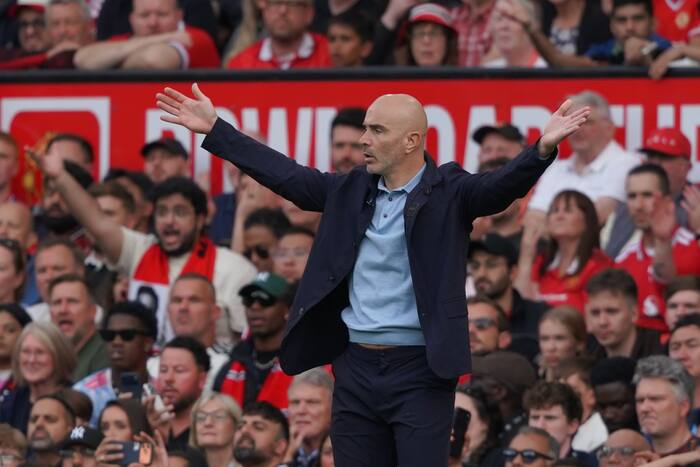
The air inside a modern football stadium smells of damp grass, expensive cologne, and a brand of collective anxiety that only seventy thousand people holding their breath can manufacture.
You stand on the touchline, or you sit four rows back, and you watch a twenty-five-year-old human being try to run while carrying the financial and emotional expectations of a global empire on his shoulders. Every stride he takes is measured in millions of euros. Every misplaced pass is dissected by pundits who have never kicked a ball harder than a plastic water bottle. And when he misses—because mortals miss, because physics and fatigue are democratic forces that do not care about transfer fees—the silence that falls over the stands is heavy enough to crack concrete. For a closer look into similar topics, we recommend: this related article.
Enter José Mourinho.
He does not do gentle. He does not do diplomacy. When the noise surrounding Kylian Mbappé reached a pitch that crossed the line from tactical critique into outright absurdity, Mourinho did what Mourinho has always done. He stepped in front of the firing squad. To get more details on this issue, detailed reporting can be read on Bleacher Report.
To understand why that defense matters, you have to look past the tabloid headlines and step into the psychology of the dressing room at Real Madrid.
The Arithmetic of Expectations
Imagine waking up every morning knowing that a mediocre performance from you will lead to a breakfast television segment analyzing your psychological state.
Mbappé did not ask for the myth to precede him, but he inherited it anyway. He arrived in the Spanish capital trailing a wake of cinematic childhood dreams—drawings of Cristiano Ronaldo on bedroom walls, posters taped over study desks, the sacred white jersey pulled over his head in a stadium that has seen gods walk its turf.
Football fans are notoriously impatient creatures. We demand immediate divinity. We pay our hard-earned money for tickets, merchandise, and subscriptions, and in exchange, we want a literal manifestation of our own fantasies. When a player who is supposedly capable of defying gravity merely plays like an elite athlete having a bad Tuesday, the collective disappointment curdles into something toxic.
Ridiculous criticism is a specific kind of violence. It is not tactical analysis. It is not an observation that a winger is drifting too far inside or failing to track back fast enough to cover his fullback. Tactical critique is surgical. Ridiculous criticism is a witch hunt disguised as journalism.
Mourinho saw it happening. He recognized the pattern because he is a man who has lived inside the pressure cooker of Madrid, Stamford Bridge, and Old Trafford. He knows how easily a media cycle can eat a player alive from the inside out.
Why the Noise Gets Louder
The modern sports media ecosystem operates on a terrifying engine of escalation. Calm assessment does not generate clicks. Nuance does not trend on social media platforms.
Consider what happens when a generational talent goes three matches without scoring from open play. In a rational world, this is a statistical anomaly. A blip. A temporary adjustment period to a new league, new teammates, and a different defensive block structure.
In the hyper-accelerated vacuum of modern football commentary, however, it is treated as a moral failing. Pundits begin to question his attitude, his commitment, his compatibility with the club's culture. They exhume old transfer sagas and frame them as prophecies of doom.
This is where the human element gets completely lost. We talk about players as if they are PlayStation characters with static durability bars. We forget that they bleed, that they read their phones in hotel rooms late at night, that they feel the cold weight of doubt creeping into their muscles during a sprint.
When Mourinho lashed out at the critics, he was not just defending Mbappé. He was defending the sanity of the sport itself.
The Mourinho Doctrine
Mourinho is polarizing by design. He wears his arrogance like medieval armor because he discovered decades ago that if he absorbs the lightning, his players don't have to.
When he looked at the cameras and dismissed the critics as ridiculous, he was shifting the gravitational pull of the room. He took the target off Mbappé's back and planted it squarely on his own chest. It is a masterclass in psychological shield-bearing.
A great manager understands that man-management is eighty percent emotional protection and twenty percent tactics. You can draw arrows on a tactical board all night long, but if a player's confidence has evaporated under the heat of a thousand hostile microphones, those tactical arrows are just lines on paper.
Mbappé does not need instruction on how to finish past a goalkeeper. He has been doing that since he was a teenager tearing up French pitches. What he needs—what any artist under siege needs—is permission to be human. Permission to struggle without being condemned. Permission to find his rhythm without every misplaced touch being weighed on a gold scale.
The Long Shadow of History
Real Madrid is different from every other club on earth. It is an institution built on ghosts and legends. The ghosts do not sleep.
When you wear that crest, you are not just playing for the three points on a weekend. You are playing against Alfredo Di Stéfano, against Ferenc Puskás, against Zinedine Zidane, against Cristiano Ronaldo. Every historical great stands behind you in the tunnel, watching to see if you are worthy of the cloth.
That heritage is a double-edged sword. It elevates ordinary men into legends, but it also crushes those who show a moment of vulnerability.
When Mourinho defended Mbappé, he was reminding the public of a fundamental truth that we continually choose to forget: greatness is not a straight line. It is jagged. It is messy. It involves cold nights, missed chances, tactical adjustments, and moments where the legs feel heavy and the mind feels crowded.
The critics want a machine. Mourinho reminded everyone that they are watching a human being navigate the hardest job in global sports.
The noise outside the stadium will not stop. The pundits will return to their desks tomorrow morning, the clickbait headlines will refresh, and the social media feeds will continue their relentless churn of hot takes and manufactured outrage.
Yet somewhere in Valdebebas, on a pristine training pitch bathed in the afternoon sun, a young man laced up his boots, took a deep breath, and remembered that he does not have to fight the world alone.