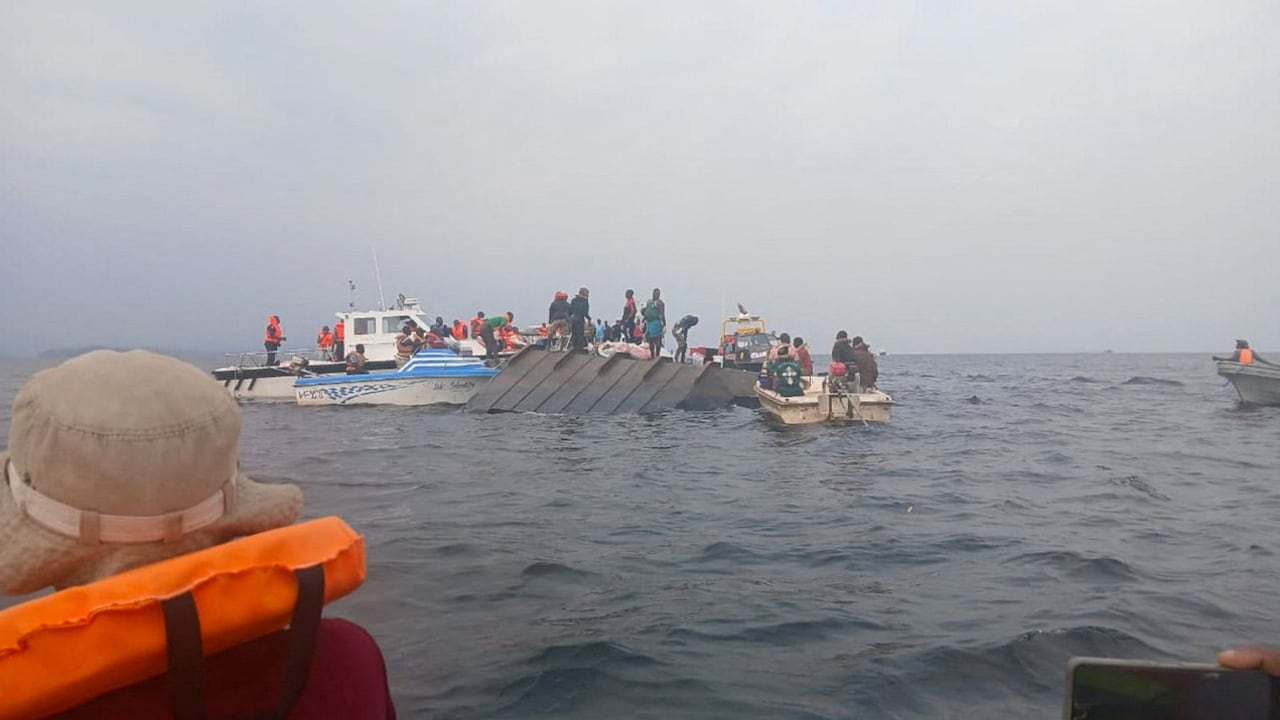
The sea does not care about ceremonies. It does not pause for speeches, nor does it soften its roll for the changing of guards. Out in the Bay of Bengal, where the gray water meets an equally gray sky, the waves keep slamming against the steel hulls of patrol boats regardless of who sits in the commanding office in Dhaka.
Yet, on land, the transition of power carries a profound weight.
When Rear Admiral Khandkar Misbah-Ul-Azim stepped into the role of the 18th Chief of Naval Staff of Bangladesh, the moment was marked by the traditional signatures and formal salutes. It is easy to look at such events as mere bureaucratic shuffling. Newspaper columns list the names, the dates, and the ranks in dry, predictable ink. They treat leadership like a mathematical equation, a simple progression from one number to the next.
But leadership at sea is never about numbers. It is about the terrifying, beautiful responsibility of guarding a nation's lifeline.
To understand what this appointment truly means, one must look away from the polished mahogany desks of the headquarters and look instead at the fisherman tossing on a wooden trawler fifty miles off the coast of Cox's Bazar.
The Silent Shield
Imagine a young sailor standing watch on a guided-missile frigate in the dead of night. The monsoon wind is biting, carrying the heavy scent of salt and impending rain. Below the deck, hundreds of his comrades are sleeping, trusting their lives to his eyes and the radar screen glowing a faint green in the dark. Beyond the ship lies a vast expanse of water that represents both the greatest vulnerability and the greatest economic promise of Bangladesh.
This is the reality that Rear Admiral Khandkar Misbah-Ul-Azim inherits.
The Bay of Bengal is not just a body of water. It is a crowded, volatile highway. Millions of tons of cargo move through these waters every single day, bringing the oil, consumer goods, and raw materials that keep the factories of Dhaka and Chittagong humming. Beneath the surface lie rich fishing grounds that feed millions, alongside untapped energy reserves that could secure the nation's future for generations.
But where there is wealth, there is friction.
Geopolitical currents run deep and fast here. Neighboring superpowers watch these waters with intense scrutiny. Maritime boundaries, though legally settled, require constant, vigilant enforcement. Piracy, illegal fishing, and human trafficking lurk in the blind spots of the coast. The ocean is a space where a minor miscalculation can spark a diplomatic crisis, and where neglect can invite economic ruin.
The man at the top must navigate these invisible currents long before they ever breach the surface.
The Long Climb to the Bridge
Command is not born in a day. It is forged through decades of routine, isolation, and decisions made under pressure.
A naval officer’s career is a slow accumulation of nights spent awake while the rest of the world sleeps. It begins in the discipline of the academy, where the rough edges of youth are ground down into precision. It progresses through years of command at sea, where one learns the specific, unpredictable language of the ocean.
You learn how a ship behaves when a cyclonic storm traps you in open water. You learn the precise tone of voice needed to keep a crew calm when an engine fails in treacherous currents. You learn to live with the isolation of being weeks away from your family, connected to the world only by crackling radio frequencies.
Rear Admiral Khandkar Misbah-Ul-Azim reached this pinnacle because he survived that long, demanding climb. His appointment as the 18th chief is a testament to a lifetime of accumulated trust. When the government hands over the metaphorical spyglass to a new commander, they are not just giving him a job. They are trusting him with the sovereignty of the nation's maritime borders and the safety of thousands of sailors who will follow his orders without hesitation.
Consider the sheer scale of the task ahead. The Bangladesh Navy has evolved rapidly over the last two decades. It is no longer a small, coastal defense force meant only to guard the river mouths and estuaries. Today, it is a multi-dimensional force operating submarines, advanced frigates, naval aircraft, and sophisticated maritime surveillance systems.
Managing this machinery requires more than tactical brilliance. It requires strategic foresight.
The Human Element of the Fleet
Steel hulls and advanced radar systems are useless without the human heart inside them. A navy is fundamentally a community of individuals. It is composed of the cook waking up at four in the morning to bake bread for three hundred sailors in a swaying galley. It is the technician calibrating a sonar sensor in forty-degree heat. It is the young officer making her first independent decision on the bridge.
The true test of the 18th Chief of Naval Staff will not be found in the procurement of new vessels or the signing of international treaties. It will be found in how he inspires and protects these individuals.
The maritime domain is changing at a breathless pace. Climate change is driving more frequent and violent storms into the bay, turning routine patrols into rescue missions. The rise of automated technology and cyber threats means the next conflict might not be fought with deck guns, but with lines of code aimed at a ship's navigation system.
The new chief must prepare his force for these unseen battlefields while ensuring that the core values of honor, duty, and sacrifice remain anchored.
A Legacy in the Making
The ceremony ends. The banners are packed away. The guests return to their routines.
In the quiet office where the charts of the Bay of Bengal are laid out across the table, Rear Admiral Khandkar Misbah-Ul-Azim now sits alone with the decisions that will shape the next chapter of maritime history. Every line on those charts represents a boundary to be defended, a shipping lane to be secured, and a responsibility that cannot be shared.
The ocean waits for no man. It offers no compliments, and it grants no favors to new leadership.
But as the patrol boats slip out of the harbors of Chittagong and Mongla into the darkening waters, they carry with them the quiet confidence of a fleet that knows its course has been set by a steady hand. The horizon remains wide, uncertain, and demanding. The watch has changed, but the vigil remains unbroken.