The coffee in the corner kiosk has gone cold, sitting beside a discarded newspaper whose headlines flutter in the sharp autumn wind sweeping across the Spree. Inside the Bundestag, the air is thick with a quiet, suffocating tension. This is not the loud, chaotic fury of a revolution. This is something much harder to watch. It is the slow, grinding erosion of certainty.
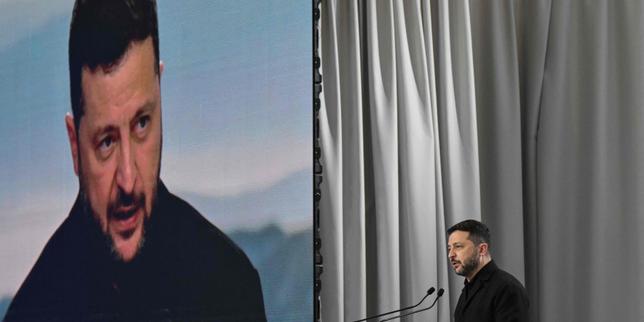
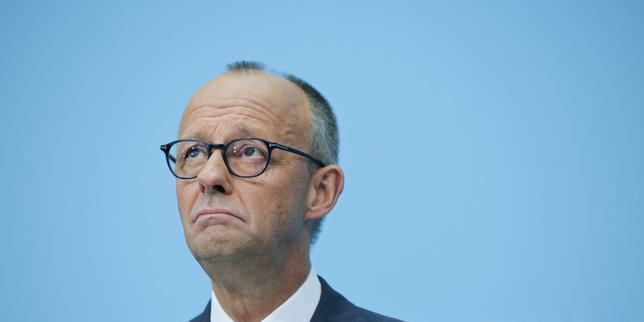
Friedrich Merz stands at the podium, his shoulders carrying the visible weight of a nation standing on a precarious ledge. Around him, the political architecture that has sustained Europe's economic engine for decades feels suddenly fragile, like ice thawing beneath a spring sun. If you enjoyed this piece, you might want to look at: this related article.
To understand why this moment matters, you have to look past the television cameras and the polished talking points. You have to look at the people standing in the grocery lines in Dortmund, the factory workers in Stuttgart watching export numbers tick downward, and the young voters in Leipzig who wonder if the promises of their parents' generation were written in disappearing ink.
Politics in Berlin has long traded on predictability. For years, the rhythm of German governance was metronomic, steady, and reassuringly dull. But stability is a luxury of the past. Today, the fractures are wide enough to see from space. Merz fights not merely for a coalition, nor simply for the survival of a cabinet. He fights for an idea. The idea that democracy can still deliver solutions when the world outside grows increasingly hostile and unpredictable. For another perspective on this development, check out the recent coverage from The Washington Post.
Consider what happens when the center fails to hold.
History provides no shortage of cautionary tales. When economic stagnation collides with institutional fatigue, the extremes wake up. They do not knock on the door; they break the windows. Merz knows this better than most. His career has spanned the reunification era, the euro crisis, the pandemic shockwaves, and now, a fracturing geopolitical landscape where old alliances fray daily.
Yet, standing before his critics, his defense is fierce, bordering on desperate. He insists that walking away now, or letting the government fracture into paralysis, would open a door that cannot easily be closed. He talks about democratic resilience not as a constitutional theory, but as a shield. A shield against cynicism. A shield against the sirens of populism who offer simple, destructive answers to complex, agonizing questions.
Down on the street, people feel the disconnect.
"They argue about percentages while our rent goes up," says an elderly woman waiting for the tram outside Alexanderplatz. Her observation is blunt, stripped of political jargon. It cuts straight to the core of the voter's dilemma. People do not care about parliamentary survival unless it improves their daily reality. And therein lies the cruel irony of Merz's position. To protect the democratic future, he must defend a present that millions find deeply frustrating.
The speeches echo through the vaulted halls, but the real referendum is happening in kitchens and cafes across the country. Citizens are weighing their trust against their anxiety. Can a government battered by internal dissent and external pressures truly steer the ship through the storm? Or is the current framework past its expiration date, desperately needing a complete overhaul rather than another patch on a leaking hull?
Merz argues that tearing down the structure mid-voyage is not reform; it is shipwreck. He paints a picture of a fractured parliament leading directly to institutional paralysis, leaving Germany rudderless at the exact moment Europe needs a steady hand.
The argument has merit, but it demands an immense amount of faith from a public that has grown profoundly weary of politicians asking for patience. Patience is an exhausted commodity.
As the debate stretches into the evening, the lights in the Reichstag cast long, sharp shadows across the stone floor. Outside, the city hums with its usual indifference, oblivious to the high-stakes chess game playing out behind closed doors.
The stakes are invisible until they are gone. A functioning parliament, a predictable transfer of power, an independent judiciary—these are the invisible beams holding up the roof. When they start to splinter, the collapse is rarely cinematic. It starts with a whisper of doubt, a shrug of cynicism, and ends with the quiet surrender of belief in the system itself.
Merz's defense of his government is an attempt to nail those beams back into place with his bare hands. Whether the wood is too rotted to hold is a question that will not be answered in a single news cycle, nor by a single vote.
The test of a democracy is not whether it avoids crisis. Every nation stumbles into the dark sooner or later. The true test is whether its leaders can look the public in the eye, acknowledge the mess, and still convince them that building together is better than burning it down apart.
As the final notes of the debate fade and the deputies file out into the cool Berlin night, the silence left behind is heavy. The coffee cups are cleared away. The papers are recycled. But the question remains suspended in the air, waiting for an answer that only tomorrow can provide.