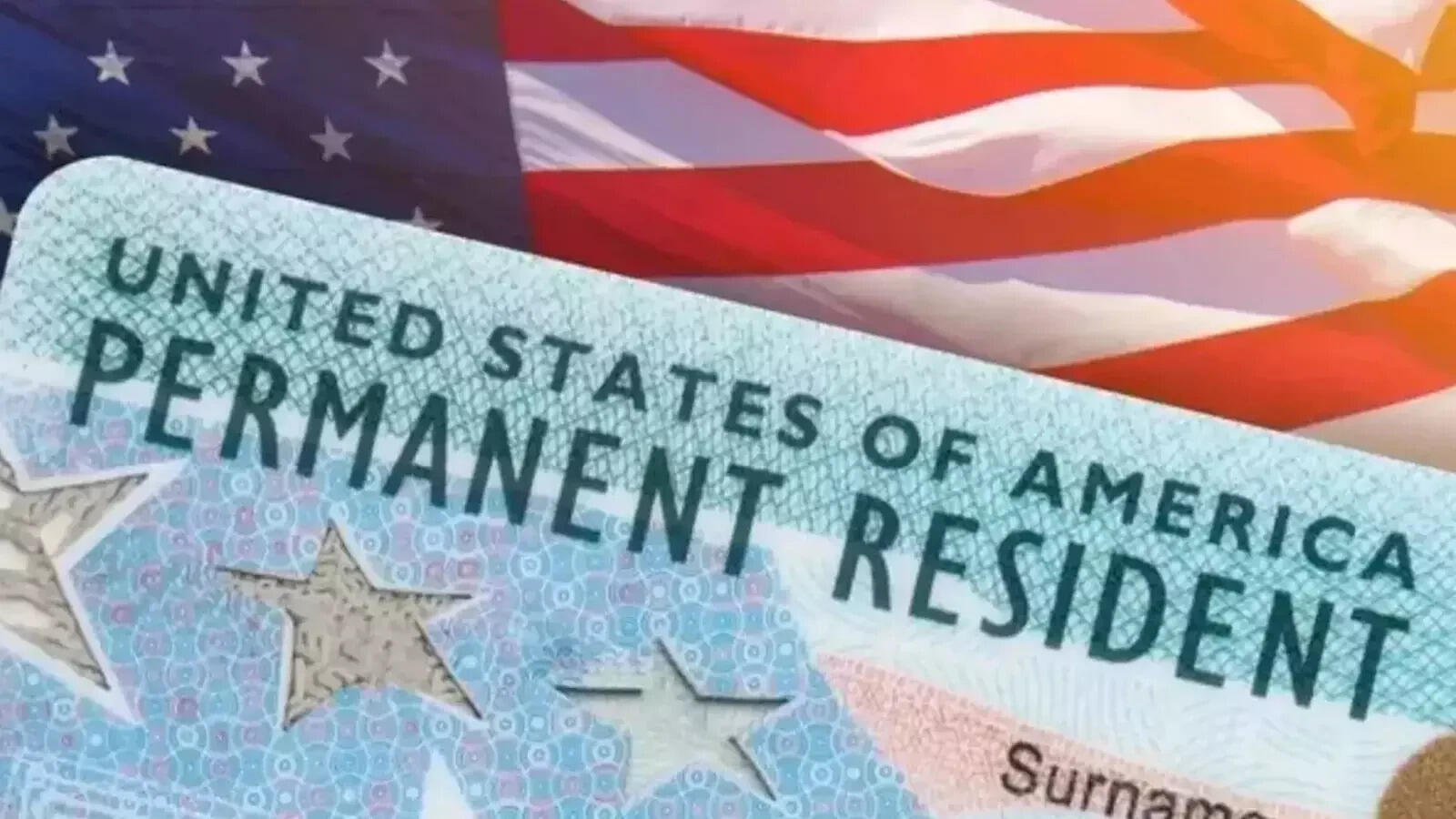
Elena keeps her Green Card in a small, RFID-blocking sleeve, tucked into a hidden compartment of her wallet. She touches it through the leather every morning before she leaves for work. It is a thin slice of polycarbonate that weighs almost nothing, yet it carries the entire mass of her existence—her right to wake up in her own bed, her right to see her daughter grow up in a school where the language is no longer a struggle, and her right to breathe without the constriction of fear.
But the wind is shifting.
When a new Secretary of the Department of Homeland Security (DHS) takes the oath of office, the change isn't just a matter of new letterhead or a different portrait in the lobby of a government building. It is a systemic pivot. For the millions of Permanent Residents living in the United States, a new administration can mean the difference between a streamlined path to citizenship and a labyrinth of suddenly reinforced walls.
The documents haven't changed. The laws, for the most part, remain the same. However, the interpretation of those laws—the "discretionary" power of the thousands of officers who decide your fate—can transform overnight.
Consider the "Notice to Appear." Under certain leadership, this document is a rare tool used for serious criminals. Under another, it becomes a broad net, snagging people for minor administrative lapses they didn't even know they’d committed.
The Paper Trail That Never Ends
Imagine a man named Mateo. He has lived in Chicago for twelve years. He pays his taxes, coaches soccer, and his Green Card is valid for another four years. He feels safe. He shouldn't.
One of the most dangerous myths of permanent residency is the word "permanent." It is a conditional promise. As a new Secretary takes the helm, the first thing every resident must do is audit their own history. This isn't about being paranoid; it is about being prepared for a higher standard of scrutiny.
The most common trap is the address change. Life is messy. People move for better jobs, cheaper rent, or to be closer to family. In the chaos of a move, filing Form AR-11 with the USCIS is often the last thing on a long to-do list. In a lenient era, a missed filing is a shrug. In a strict era, it is a technical violation of your status.
It is a small crack in the foundation. If the DHS decides to prioritize strict compliance, that forgotten form becomes a leverage point. You must ensure your physical reality matches the government’s digital record perfectly.
The Border Is Not Just a Line
When you carry a Green Card, the border is a living entity. It waits for you at the airport gate and the ship’s plank. Many residents believe that because they have their card, they can travel freely for as long as they wish. This is a gamble with stakes too high to calculate.
A new DHS Secretary often brings a renewed focus on "abandonment of residency." If you spend more than six months outside the country, you are no longer just a traveler returning home; you are a person who must prove they still live here.
If you stay away for more than a year without a reentry permit, the government may decide you’ve simply given up. They don't need a judge to decide this at the gate. The burden of proof shifts to you. You are the one who must explain why your life is still rooted in American soil while your body was elsewhere.
The smart move—the move that protects the life you've built—is to treat every international trip as a legal event. Keep your utility bills. Keep your tax transcripts. If you must be away for an extended period, apply for that reentry permit before you leave. Do not assume the person at the booth will be having a good day. Do not assume they will believe your story.
The Danger of the "Minor" Mistake
There is a specific kind of silence that falls over a room when an immigration attorney has to tell a client that a twenty-year-old misdemeanor is suddenly a problem.
Policies regarding "crimes involving moral turpitude" are notoriously elastic. What was overlooked five years ago might be a priority today. A new Secretary has the power to issue memos that redefine which offenses trigger deportation proceedings.
If you have anything on your record—a decades-old shoplifting charge, a reckless driving incident, a dispute that ended in a "no contest" plea—now is the time to sit down with a professional. Not a "notario." Not a well-meaning friend. A specialized attorney.
You need to know if your past has a ticking clock attached to it. If a new administration decides to broaden the scope of deportable offenses, you want to be the one who already has the legal arguments prepared, rather than the one caught in a surprise sweep.
The Ultimate Shield
There is only one way to stop being a "guest" in the eyes of the DHS.
Naturalization.
For many, the $725 application fee and the daunting civics test are hurdles they keep putting off. "I'll do it next year," they say. "I'm already legal, what's the rush?"
The rush is that a Green Card is a revocable privilege. Citizenship is a right.
A new Secretary can change the fee structures, making it more expensive to apply. They can change the "good moral character" requirements. They can increase processing times until the wait stretches into years.
By applying for citizenship now, you are essentially "locking in" your status. You are moving from a position of vulnerability to a position of permanence. You are gaining the right to vote—the only thing that truly makes a Secretary of Homeland Security answerable to you.
The Weight of Silence
The final thing a Green Card holder must do as the guard changes is to stop living in the shadows of their own status.
There is a psychological toll to being a permanent resident during a political transition. The news cycle becomes a source of ambient anxiety. Every headline about "cracks downs" or "new mandates" feels like a personal threat.
The antidote to this anxiety is precision.
Check your expiration dates. Most people don't realize that while their status might be permanent, the card itself expires every ten years. Renewing it during a transition can take much longer than usual. If your card expires in the next six to twelve months, start the process yesterday.
Don't wait for a letter. Don't wait for a knock.
The DHS is a massive, slow-moving machine. When a new person takes the wheel, the machine doesn't turn instantly, but it does start to drift. If you are standing in its path, you need to know exactly where the wheels are headed.
Elena still touches her wallet every morning. She is saving for her naturalization fee, $50 at a time, tucked into an envelope behind the grocery coupons. She knows the wind is blowing. She knows that in a country built by immigrants, the rules for staying can be rewritten by a single signature in Washington D.C.
She isn't afraid of the change. She is ready for it.
The polycarbonate card in her pocket is a shield, but it is a thin one. The real protection lies in the paperwork she filed last week, the attorney she consulted last month, and the citizenship test she practices at the kitchen table while her daughter does her homework.
Safety isn't a gift from the government. It is a structure you build, brick by brick, document by document, until the wind can no longer shake the house you've made.
A Green Card is a beginning. It was never meant to be the end of the story.