The morning air in northern Mexico tastes like sun-baked earth and anxious coffee. Mateo stands by the heavy wooden rail of his corral, his hand resting on the flank of a red Angus bull that breathes out a steady, white plume of mist. Dust hangs in the slanting light, catching the motion of flies and the quiet shuffle of hundreds of hooves.
For weeks, this yard has been too quiet.
Mateo is not a politician. He does not draft trade agreements or debate biosecurity protocols in air-conditioned boardrooms. He is a rancher whose family has turned dry soil into livelihood for three generations. When the border slammed shut, freezing Mexico cattle exports to the United States after the sudden, terrifying detection of New World screwworm, the silence was deafening. It was the sound of a supply chain snapping. It was the sound of bank payments turning into phantom weights.
Every morning meant walking out to look at animals that could not go anywhere. Feed costs mounted. Uncertainty grew teeth.
Then came the shift.
To understand why a single border crossing matters, you have to look past the bureaucratic language of sanitary mandates and trade corridors. You have to look at the animal itself.
The New World screwworm is not a metaphor. It is a biological ghost story. The fly Cochliomyia hominivorax does not merely bite; it lays eggs in the minor wounds of warm-blooded mammals. When the larvae hatch, they burrow, turning a scratch into a living cavern of destruction. For livestock producers on both sides of the Rio Grande, this parasite represents a primal, historical terror. It is the reason the United States and Mexico spent decades locking arms to eradicate the pest in the twentieth century, releasing millions of sterile flies from airplanes in a quiet war fought in the skies.
When a single case slips through the net, the alarm bells ring for a reason. The pause wasn't cruelty. It was a shield.
Yet shields cut both ways. When trade stops, the bleeding starts in the ledger books. Feedlots in Texas and Kansas rely on a steady rhythm of cross-border movement, a heartbeat of commerce that keeps beef prices stable and processing plants humming. North of the border, feeders need the inventory. South of the border, ranches need the revenue.
When the news finally broke that Mexico had resumed limited cattle exports, the reaction wasn't a celebration. It was a collective exhale. A slow, exhausted release of breath across thousands of miles of wire fence.
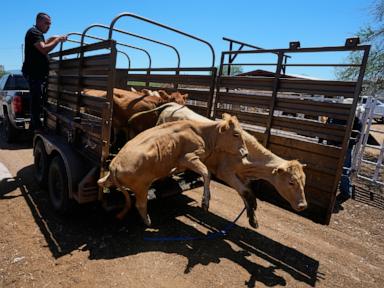
Consider what happens next: a truck rolls down a gravel track, its tires crunching against the limestone.
This is not a flood. It is a trickle. The reopening is strictly controlled, hemmed in by reinforced inspection stations, mandatory treatments, and veterinary certificates that read like medical charts. Every animal is scrutinized. Every ear tag is checked against a digital ledger.
To the untrained eye, it looks tedious. To Mateo, it looks like a lifeline.
"Limited" is the operative word. Only specific regions meeting stringent health criteria are allowed to send their livestock north. It is a system built on trust, verification, and a heavy dose of vigilance. If the screwworm is an invisible enemy, then paperwork is the new armor.
We often talk about the global economy as if it were a machine of pure logic, running on algorithms and freight manifests. But beneath the numbers lies a fragile web of human nerves. Mateo watched his grandfather weather droughts that cracked the earth wide open. He watched his father survive shifting currency markets that wiped out savings overnight. These are men and women who have learned to read the sky for rain and the market for ruin.
The screwworm pause tested a different kind of endurance. It tested patience in the face of the unseen.
The sun is directly overhead now, beating down on the galvanized tin roof of the loading chute.
The gate screeches on its rusted hinges. The red Angus bull hesitates, tosses its head, and then steps forward into the trailer, driven by the instinct of the herd and the steady encouragement of a raised hand. The wooden floor thuds under heavy hooves.
The engine catches, roaring to life with a deep, diesel vibration that shakes the dust off the tires. The truck begins to roll, inching down the long, empty road toward the northern frontier.
Behind it, the dust settles slowly back into the earth, leaving the yard quiet once more, but this time, the silence feels different. It is no longer waiting. It is moving.