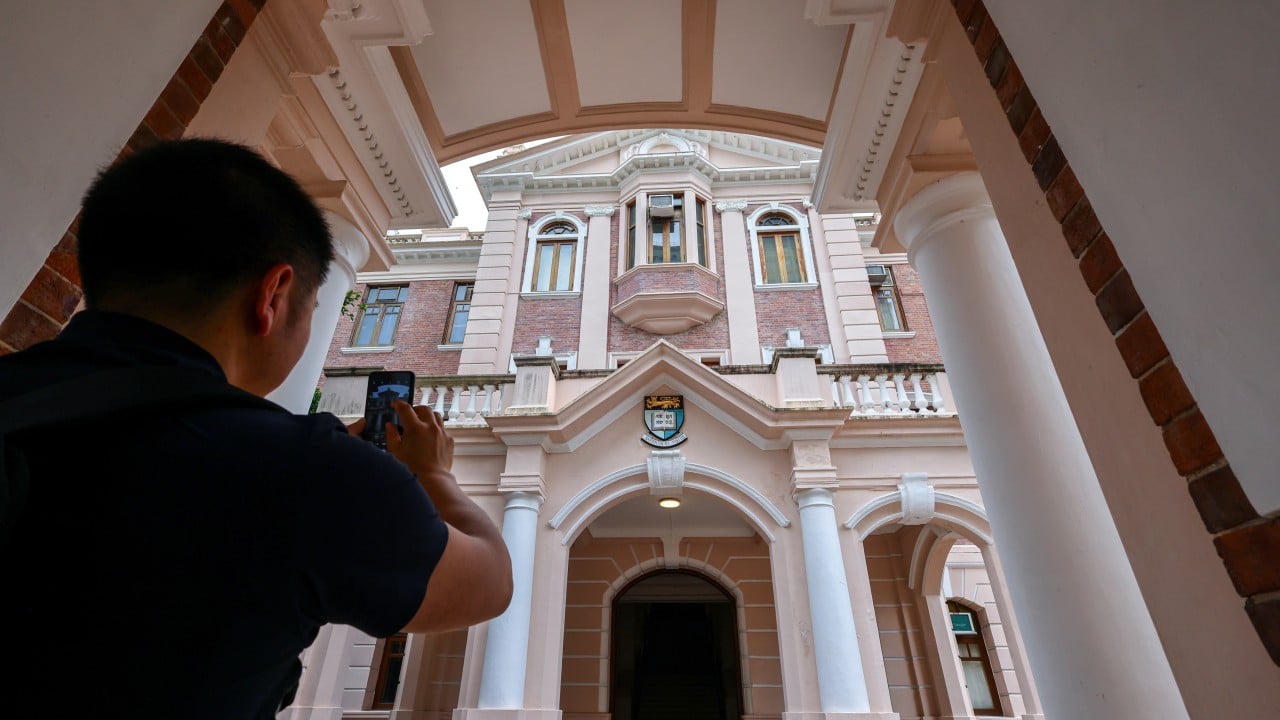
Fog clings to the stone steps of Pokfulam Road before the city wakes. Down below, the harbor hums with early cargo ferries, their wakes cutting dark lines across grey water. Up here, inside the historic gates of the University of Hong Kong, the morning silence feels different now. It feels heavy. Pregnant with an unspoken question that every student, professor, and alumnus is asking in hushed tones over morning milk tea.
Who comes next?
The university governing council recently made it official. Whoever steps into the President's office for the upcoming term must bring fresh ideas. They used bureaucratic language for it. They called it a requirement for leadership capable of guiding the institution through a coming period of transformation. But behind the neat press releases and the formal announcements lies a much messier, much more human reality.
Think about a lecture hall at 9:00 AM.
Imagine a student named Chloe, sitting in the third row, her fingers flying across a laptop keyboard as a visiting scholar talks about artificial intelligence reshaping global economies. Chloe is brilliant. She secured a scholarship from across the border, packed her life into two suitcases, and landed in a city that moves at the speed of light. She wants answers. She wants to know if the degree she is earning right now will still matter in five years, or if the ground beneath her feet is shifting too fast to catch.
She does not care about corporate governance structures. She cares about whether her university is a museum preserving past glories or a laboratory forging future survival.
That is the invisible stake of this leadership search.
For decades, institutions like HKU operated on a predictable rhythm. Prestige was an inheritance. Rankings were climbed through steady publication counts, international faculty recruitment, and well-funded laboratories. But the world outside the stone gates has fractured and reformed. Geopolitical currents shift daily. Funding models are strained. The expectations of young minds like Chloe have evolved past traditional lectures into a desperate hunger for agility, purpose, and real-world impact.
When the search committee looks for a new leader, they are not just filling a job vacancy. They are hunting for a translator.
Universities are notoriously stubborn beasts. They love tradition. They wrap themselves in scarlet gowns, Latin mottos, and century-old traditions. Yet, preservation without adaptation is just decay wearing a nice suit. The next leader cannot simply be an administrator who balances spreadsheets and keeps the peace. They must be someone willing to break comfortable habits.
Consider what happens when a ship enters stormy waters. The captain cannot keep looking at the old charts if the coastline has changed overnight.
The University of Hong Kong stands at a fascinating crossroads. It is uniquely positioned as a bridge between East and West, a bilingual academic powerhouse nestled in one of the most densely packed, high-energy urban centers on Earth. Yet, that very positioning makes it a lightning rod for the pressures of modern higher education. Academic freedom, international talent retention, funding sustainability, and the ethical integration of emerging technologies are not abstract debate topics here. They are daily operational realities.
When the governing body demands fresh ideas, they are admitting a vulnerability. They are acknowledging that the old playbook is fraying.
Let us be honest about why this is terrifying to some. Change disrupts tenure tracks, challenges administrative hierarchies, and forces old departments to justify their existence in a modern light. Professors who have spent thirty years teaching a specific syllabus are suddenly asked to reconsider how students learn in an era where information is instant and algorithmic.
Yet, the alternative to disruption is irrelevance.
A university is ultimately defined by its people. Not its endowments, not its Gothic architecture, and not its spot on global ranking tables. It is defined by the spark that flies when a curious student meets a courageous teacher in a room where challenging the status quo is encouraged rather than punished.
The next leader will inherit a community that is tired, anxious, yet fiercely proud. They will need the diplomatic grace of a statesman, the financial acuity of a venture capitalist, and the moral clarity of an educator who remembers what it feels like to be nineteen and uncertain about tomorrow.
Down on the harbor, the ferry horns blow again, cutting through the rising mist. The city keeps moving, relentless and demanding. Up on the hill, the empty chair waits. And somewhere in the third row, Chloe hits save on her notes, looks up at the whiteboard, and waits for someone to show her the way forward.


