The air at twenty thousand feet does not care about your age. It does not care about your pension, or the ache in your lower back after a ten-hour mission, or the birthdays you missed because the sky demanded your presence. At that altitude, the barometric pressure is merciless, the G-forces are ready to crush your ribs into your spine, and a Mach 2 intercept leaves zero room for hesitation.
Yet, in a nondescript briefing room on the western coast of Taiwan, a veteran pilot is staring at a calendar and doing the math. Meanwhile, you can explore similar developments here: Inside the Political Trap Andy Burnham Built for Himself.
His name is hypothetical, but his reality is pressed hard against concrete statistics. Let us call him Commander Chen. He is fifty-five years old. Under the old rules, his clock was ticking down to a mandatory retirement. He had precisely three years left before he would be handed a plaque, thanked for his service, and told to step aside for younger blood. But the skies above the Taiwan Strait have grown crowded. They have grown aggressive. And the military planners in Taipei are looking at a brutal truth: you cannot manufacture experience.
So, Taiwan is preparing to push the pilot retirement age to fifty-eight. To see the complete picture, check out the detailed article by The New York Times.
To understand why this matters, you have to look past the dry defense budgets and the bureaucratic memos. You have to look at the tarmac.
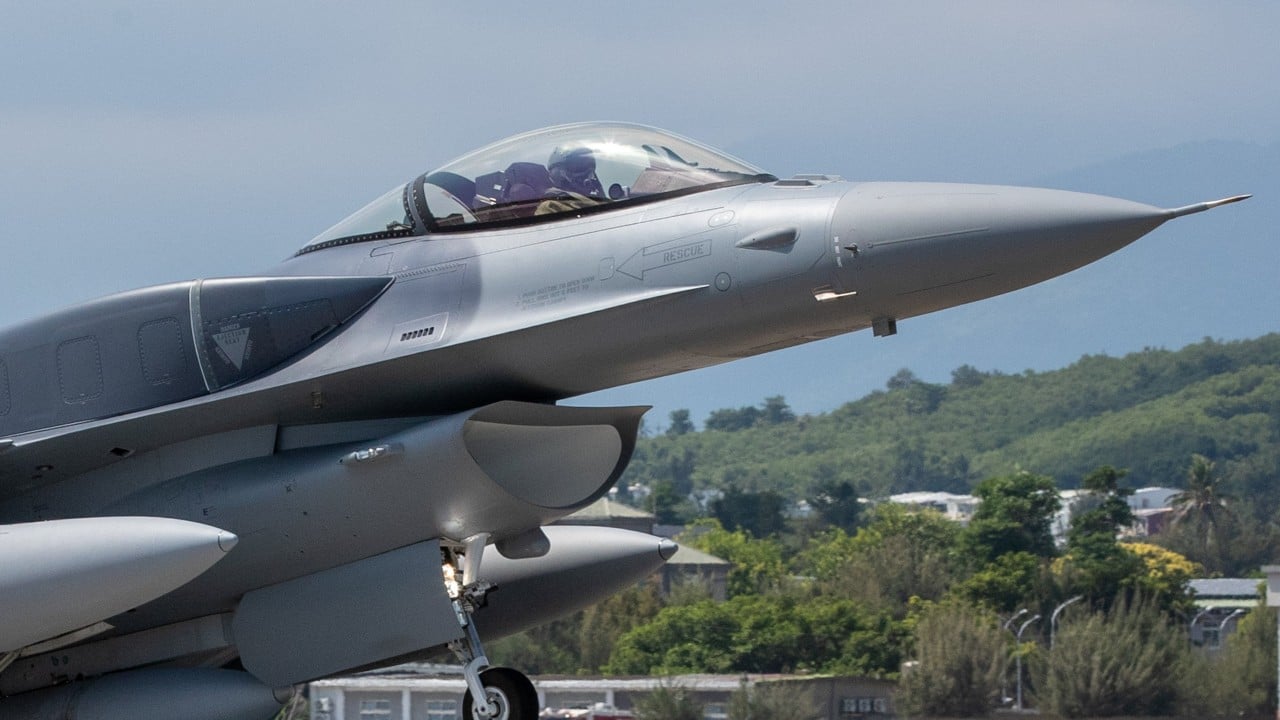
Sunlight glints off the fresh gray paint of a newly arrived F-16V Fighting Falcon. It is a machine of pure intent. Armed with advanced AESA radar, helmet-mounted cueing systems, and avionics that can process threat vectors before a human brain has even finished its morning coffee, this aircraft represents billions of dollars and years of geopolitical maneuvering. It is a masterpiece of modern aerospace engineering.
It is also useless without a human being inside who knows how to cheat gravity.
Here is the dirty secret of modern air power: buying a jet is the easy part. Writing a check to Lockheed Martin requires capital, diplomacy, and patience. Training the person who sits in the ejection seat requires something far rarer. It requires time. Years of it. Decades of muscle memory, split-second threat assessment, and the quiet, hard-won intuition that separates a pilot who survives a dogfight from one who becomes a statistic.
An eighteen-month crash course can teach a young recruit how to fly a basic airframe. It cannot teach them what it feels like to intercept a nuclear-capable bomber off your coast while your adrenaline spikes so high your vision tunnels. That kind of composure is forged slowly, year by punishing year, through countless hours of night flights, emergency drills, and near-misses over dark ocean waters.
When a nation faces an escalating threat environment, losing its most experienced pilots to an arbitrary retirement age is a slow form of self-sabotage.
Consider the arithmetic of attrition. Taiwan's air force is locked in a relentless, exhausting rhythm. Every time a foreign aircraft probes the island’s air defense identification zone, scramble orders ripple through the bases. Sirens wail. Pilots run across the tarmac. The jets scream into the vertical. This happens not once a month, not once a week, but almost daily. It is a war of exhaustion waged in peacetime.
The physical toll is staggering. Pulling nine Gs—nine times the force of gravity—drains the blood from your head, pushes your organs down, and feels like an elephant is sitting squarely on your chest. Younger pilots recover faster, yes. But they lack the scar tissue of experience. They lack the veteran who can look at a radar return and instantly smell the deception.
By raising the retirement age ceiling to fifty-eight for senior pilots and commanders, Taiwan is betting that wisdom can outpace biology.
It is a calculated gamble. Air forces are traditionally youth-obsessed organizations. The cockpit is often viewed as a young person's game, a realm of lightning-fast reflexes and boundless stamina. But warfare has changed. Modern aerial combat is increasingly about data management, electronic warfare, and tactical positioning long before visual contact is ever made. In this domain, the gray-haired aviator who has seen every tactical trick in the book is worth an entire squadron of rookies.
Of course, keeping men in their late fifties in the cockpit requires a complete reimagining of physical conditioning and medical monitoring. You cannot simply tell a fifty-eight-year-old to strap into an F-16V and hope for the best. The flight surgeons become central characters in this drama. Every morning brings mandatory ECGs, spinal checks, and cognitive load tests. Diet is monitored. Rest is enforced. The cockpit becomes a high-performance laboratory where human endurance is coaxed past its traditional expiration date.
And what of the psychological weight?
Imagine sitting at the dinner table with your family. You are fifty-seven years old. Most of your high school classmates are retired, playing golf, or traveling with their spouses. You, however, are waiting for the pager to vibrate. You are preparing to strap yourself into a multi-million-dollar fighter jet and fly out to meet foreign incursions that could, in a heartbeat, spark a global crisis.
Why do they stay?
It is not for the paycheck. It is not for the glory, which is mostly silent and invisible to the public. They stay because they know what is behind them. They know that the younger generation needs mentors in the air, leaders who can anchor a formation when the sky turns hostile. They stay because the preservation of a way of life often depends on the stubborn refusal of seasoned veterans to hang up their helmets.
The arrival of the new F-16V jets is frequently framed in the news as a triumph of hardware. Headlines celebrate the delivery of advanced weaponry, the upgrade packages, the deterrence capability. But hardware is merely dead metal until a human soul breathes life into it. The true story of Taiwan's defense isn't written in the factory manifests of defense contractors. It is written in the wrinkled skin around the eyes of aging commanders, in the smell of ozone and jet fuel, and in the quiet, resolute decision to extend a pilot's career because the country cannot afford to lose their institutional memory.
The horizon over the Taiwan Strait remains hazy. The patrols will continue tomorrow, and the day after that. But high above the clouds, inside a cramped cockpit bathed in the emerald glow of digital displays, a veteran's hands adjust the throttle.
The machine responds. The sky holds its breath.