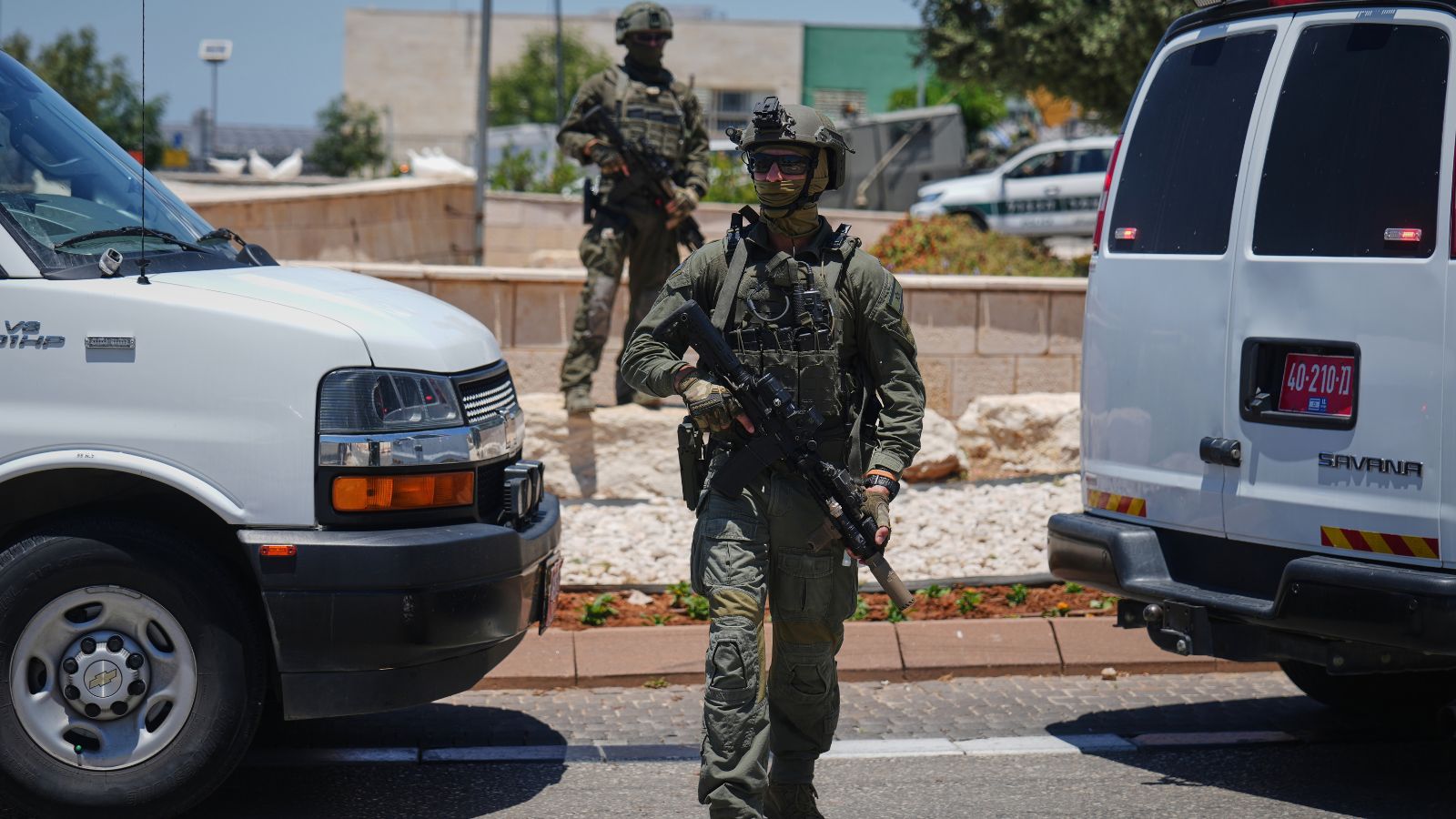
A single fatal attack in Israel has once again triggered a dangerous political reflex. When violence occurs, the immediate casualty is often the fragile domestic stability between the country's Jewish majority and its Arab minority. Following a recent lethal incident that left one person dead, right-wing government ministers instantly weaponized the tragedy, labeling entire Arab communities as breeding grounds for extremism. This heavy-handed rhetoric does not just alienate millions of citizens. It actively undermines the nation's internal security infrastructure by fracturing the very intelligence and policing partnerships needed to prevent future attacks.
The immediate political reaction followed a well-worn playbook. Rather than waiting for a comprehensive intelligence briefing or a Shin Bet security assessment, political figures rushed to microphones to score ideological points. They pointed fingers at the country’s Arab citizens, suggesting a collective complicity in the violence. This blanket condemnation ignores a fundamental reality. The vast majority of Arab-Israelis are deeply integrated into the state's economic, medical, and social sectors, frequently serving as the first responders who treat the victims of these very atrocities. If you enjoyed this piece, you should look at: this related article.
To understand why this political strategy is so destructive, one must look at the mechanics of domestic counter-terrorism. Security agencies rely heavily on community trust. When a government minister broadens the definition of an extremist to encompass an entire ethnic demographic, that vital trust evaporates overnight.
The Cost of Collective Blame
National security cannot operate effectively in a climate of total suspicion. When officials vilify an entire community, they shut down the channels of voluntary information sharing that stop terror plots before they materialize. For another angle on this story, refer to the latest update from Al Jazeera.
Israel’s internal security service, the Shin Bet, has historically relied on a delicate balance of surveillance, human intelligence, and community cooperation. Arab municipal leaders, local activists, and ordinary citizens regularly interface with state authorities to combat rising criminal violence within their own towns. When senior politicians brand these same towns as hostile entities, local cooperation dries up. Citizens become hesitant to report suspicious activity out of fear that their entire neighborhood will face punitive collective measures.
This political rhetoric also creates a self-fulfilling prophecy. Radicalization does not happen in a vacuum; it thrives on isolation and a sense of permanent disenfranchisement. When young Arab-Israelis hear top state officials declare that they are inherently untrustworthy, the barrier to extremist propaganda lowers. The state's own leadership inadvertently validates the narrative of radical recruiters who claim that Arab citizens will never be accepted as equals.
Rhetoric Versus the Security Reality
The disconnect between political grandstanding and actual security management is stark. While politicians demand sweeping crackdowns and collective punishments, career security officials quietly advocate for targeted, intelligence-led interventions.
Historically, sweeping measures like sweeping closures, mass detentions, and aggressive policing in non-violent neighborhoods produce diminishing returns. They strain police resources and anger moderate populations. In contrast, surgical operations aimed strictly at known networks yield tangible security benefits without generating widespread civil unrest.
The strategy of collective blame also ignores the shifting dynamics of modern lone-wolf attacks. Many recent assailants operate outside organized networks, driven by internet radicalization and personal grievances rather than direct orders from established groups. Detecting these individuals requires precise digital forensics and hyper-local community awareness, both of which are severely hindered when a government alienates the population living alongside potential attackers.
Economic Interdependence as a Security Shield
The rhetoric of division ignores the profound economic integration that stabilizes Israeli society daily. The nation's healthcare system offers the clearest evidence of this reality.
Arab doctors, nurses, and pharmacists form the backbone of Israel’s medical infrastructure. In any major hospital trauma unit, it is common to see Arab medical professionals working desperately to save lives alongside Jewish colleagues, treating patients regardless of ethnicity. The same interdependence exists in high tech, construction, and public transportation.
The Infrastructure of Daily Life
- Healthcare: Over 20 percent of physicians and nearly half of all pharmacists in the country are Arab citizens.
- Public Services: Major transport networks rely heavily on Arab operators to maintain daily transit lines.
- Higher Education: Arab student enrollment in major universities has grown significantly, creating shared spaces for intellectual and professional development.
Aggressive political rhetoric threatens to poison these integrated workplaces. When a minister implies that an Arab bus driver or an Arab surgeon belongs to a community of extremists, it introduces paralyzing suspicion into spaces that require absolute cooperation. The economic fallout of such distrust could paralyze essential services, dealing a self-inflicted blow to national resilience.
The Failure of Current Political Strategy
Blaming an entire minority group serves a specific political purpose. It diverts public attention away from systemic governance failures and intelligence blind spots.
By focusing public anger on a visible domestic scapegoat, political figures avoid accountability for their inability to curb illegal weapons proliferation or manage broader geopolitical instability. For years, Arab municipal leaders have begged the central government for stricter policing to remove illegal firearms from their streets, warnings that went largely unheeded until those weapons began being turned against Jewish targets. The current crisis is the direct result of long-term state neglect coupled with sudden, opportunistic political exploitation.
True security requires a total rejection of blanket demagoguery. Lasting safety is built on rigorous, targeted intelligence operations, absolute equality before the law, and the protection of the social fabric that connects every citizen to the state. Treating millions of domestic residents as an enemy population is a catastrophic strategy that guarantees more friction, less intelligence, and a weaker nation. Security forces need partners on the ground, not a population pushed into a corner by its own government's rhetoric.