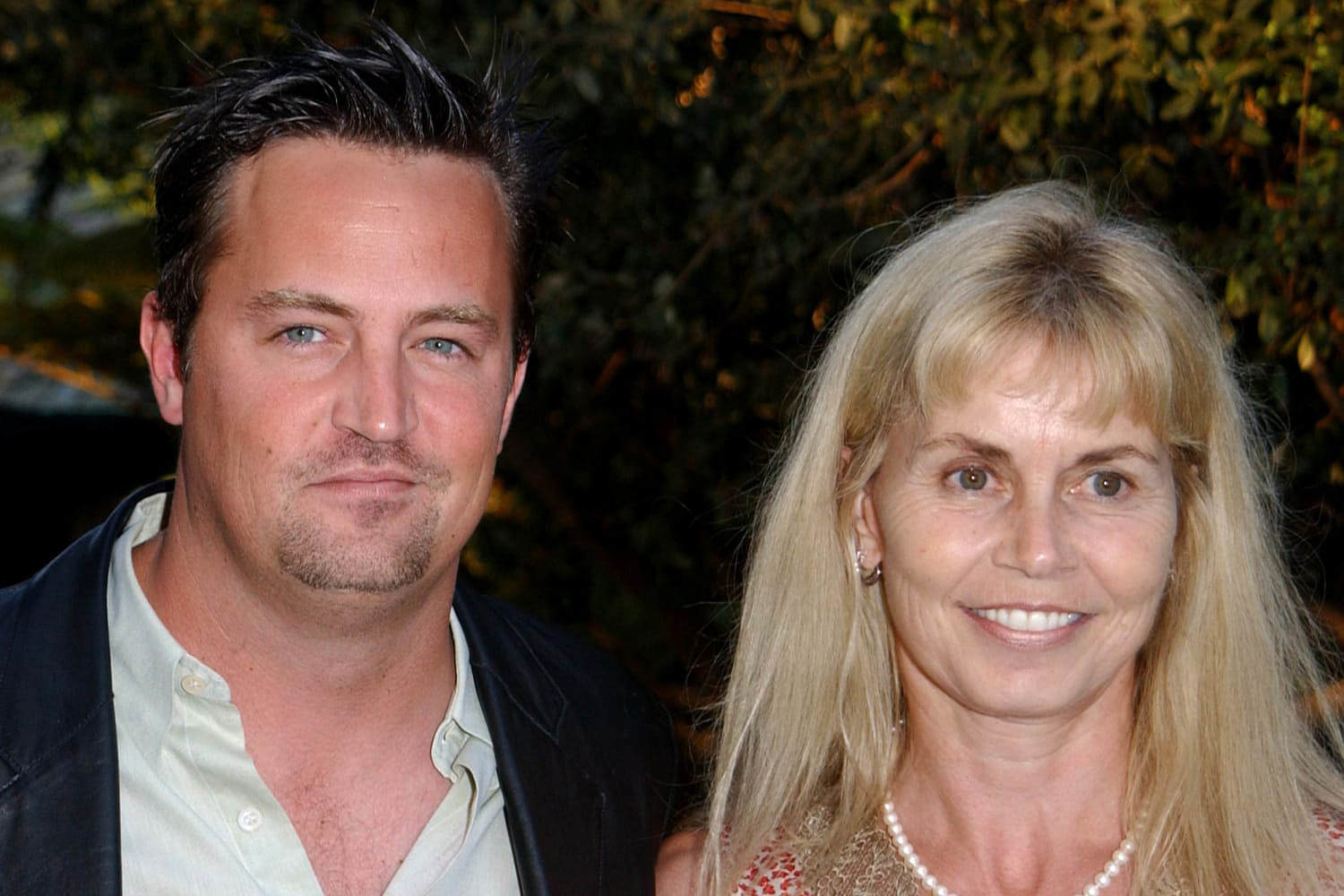
The media narrative surrounding the death of Matthew Perry has officially devolved into a scripted Hollywood melodrama. In this script, there is a clear villain, a tragic victim, and a grieving family demanding justice. The latest act features Perry’s mother, Suzanne Morrison, delivering a scathing victim impact statement ahead of the sentencing of Kenneth Iwamasa, Perry’s longtime personal assistant. Morrison condemned Iwamasa for betraying the family’s trust, injecting the actor with lethal doses of ketamine, and making a business out of feeding off vulnerable people.
It is an emotionally wrenching narrative. It is also a fundamental distortion of the mechanics of extreme wealth, systemic enabling, and high-functioning addiction.
The public consensus loves a scapegoat. Blaming the assistant, the crooked doctors, and the local "Ketamine Queen" allows society to maintain a comfortable illusion: that a beloved celebrity was a helpless prey animal hunted down by predatory subordinates. But anyone who has spent time inside the ecosystem of ultra-high-net-worth individuals knows this is a lie.
The harsh reality is that the power dynamic in that house was entirely inverted. Kenneth Iwamasa did not corrupt Matthew Perry. Matthew Perry subsidized an underground pharmaceutical supply chain because he had the capital, the clout, and the absolute authority to demand compliance from everyone on his payroll.
The Power Asymmetry of the Hollywood Payroll
To understand how Perry died, you have to look past the tragic imagery of the hot tub and examine the organizational chart of a major celebrity’s life.
The media treats a personal assistant like a corporate guardian or a fiduciary. Morrison stated that Iwamasa's "number one responsibility" was to ensure Perry remained drug-free. This is an absurd mischaracterization of the employment contract.
A personal assistant is an employee who serves at the absolute whim of their master. In Hollywood, the boundary between boss and employee does not just blur; it vanishes entirely.
- The Dependency Loop: Iwamasa lived with Perry. His housing, his income, his professional standing, and his daily existence were tied to the goodwill of an multi-millionaire battling severe substance abuse.
- The Command Structure: When an addict with tens of millions of dollars tells an employee to "shoot me up with a big one," that employee is not acting as an independent agent. They are acting under the massive, coercive gravity of immense wealth.
Imagine a scenario where a standard corporate employee is told by their CEO to falsify a document or lose their livelihood. We recognize the coercion. Yet, when a celebrity demands illegal drugs from a subordinate, we pretend the subordinate possesses the moral leverage to say no, stage an intervention, and walk away clean.
If Iwamasa had called "reinforcements" as Morrison suggested his safety net allowed, he would have been fired by the end of the business day. The replacement assistant would have been hired by the end of the week. The ketamine would have arrived regardless.
Demand Creates the Supply, Not the Other Way Around
The prosecution of the five individuals involved in Perry’s death—including Dr. Salvador Plasencia and dealer Jasveen Sangha—presents their actions as a conspiracy to exploit a vulnerable man. It is true that charging $2,000 for a vial of ketamine that costs $12 is predatory. It is true that operating a high-volume drug house is a federal crime.
But the mainstream press coverage systematically ignores the driving force of this entire enterprise: Matthew Perry’s relentless demand.
Addiction is a brutal, egalitarian disease, but wealth weaponizes it. When an average individual runs out of money, their access to the supply chain is naturally choked off. They hit rock bottom because they can no longer afford the climb.
A celebrity of Perry's stature never runs out of money. He possessed the financial infrastructure to bypass the medical establishment entirely when his legitimate doctors refused to increase his dosages.
[Legitimate Medical Refusal]
       │
       ▼
[Capital Outflow ($55,000 Cash)]
       │
       ▼
[Corrupted Medical Professionals (Plasencia/Chavez)]
       │
       ▼
[Illicit Street Facilitators (Fleming/Sangha)]
       │
       ▼
[Subordinate Delivery Mechanism (Iwamasa)]
This chart is not a predatory trap snapping shut on an innocent victim. It is a custom-built pipeline engineered by the purchasing power of the consumer. Perry was not a passive participant in this network; he was the primary economic engine funding it.
The Fallacy of the Celebrity Guardian
The emotional core of the family's condemnation rests on the concept of betrayal. They knew Iwamasa for 25 years. They trusted him. They believed he was a companion in the fight.
This highlights the profound delusion that surrounds elite recovery culture. You cannot pay a man a salary to be your best friend, your administrative servant, and your medical warden simultaneously. The roles are fundamentally incompatible.
True accountability requires equal footing. A paid subordinate can never offer true accountability because their survival depends on keeping the employer satisfied. By placing the burden of Perry’s sobriety onto a man without a medical degree, a nursing license, or independent financial security, the system surrounding Perry set up a catastrophic failure mode.
The medical professionals involved deserve every year of their prison sentences because they violated a professional oath and leveraged their licenses for profit. But projecting that same level of culpability onto an assistant who was essentially acting as a human extension of Perry’s own hand is a failure of logic.
The True Cost of Elite Isolation
The trial and subsequent media circus offer a convenient catharsis. By locking up the assistant and the dealers, the public can pretend the problem has been solved. We can pretend that the "bad guys" have been removed from the ecosystem and that Hollywood is safer for it.
It is a comforting thought, but it completely misses the structural rot.
The wealthy do not recover like the rest of us, and they do not relapse like the rest of us. They operate in a hyper-insulated vacuum where reality is filtered through layers of publicists, lawyers, managers, and assistants. In this environment, the truth is the rarest commodity available.
When a family blames the assistant for not saving their son, they are participating in the very same system of deflection that enabled the addiction in the first place. It assumes that an external force killed Matthew Perry, rather than the internal disease he fought for decades.
Iwamasa didn't kill Matthew Perry. He lacked the power, the agency, and the status to alter the trajectory of a man determined to find a high that his legal medical team wouldn't provide. Perry’s wealth bought him total autonomy, and in the end, total autonomy is precisely what killed him.