The humidity in Bangkok does not merely cling to your skin; it settles inside your lungs like a wet blanket. It smells of hot asphalt, open canal water, and exhaust fumes, baked under an equatorial sun that refuses to bargain. But beneath the sensory weight of the city lies a quieter, more terrifying pressure: the ground is simply giving way.
Water used to be Bangkok’s protector. Founded in the late eighteenth century as a fortress city carved out of river networks and marshy delta lands, the capital of Thailand earned the moniker "Venice of the East." Canals, known locally as khlongs, served as the arteries of daily commerce, spiritual life, and flood management. The city lived with the water, floating on teak houses, bobbing along the tides of the Chao Phraya River, adapting to the monsoon season with an elastic grace. You might also find this similar article insightful: The Anatomy of an Air Ambulance Disappearance Operational Failures and Search Dynamics.
Then came concrete.
Progress arrived in the mid-twentieth century wearing the heavy boots of industrialization. Canals were paved over to build multi-lane boulevards. High-rises sprouted from the soft, water-logged alluvial soil like brittle teeth. To feed this explosive growth, millions of gallons of groundwater were pumped from the deep aquifers beneath the city. As reported in detailed reports by The New York Times, the effects are significant.
The earth dried out. It compressed. It collapsed.
Today, Bangkok is sinking by as much as two to three centimeters every year. Compounding this geological freefall is rising sea levels driven by climate change and the sheer weight of millions of tons of concrete pressing down on a sponge. The city sits mere centimeters above sea level during high tides. When the monsoon rains collide with a swollen Chao Phraya River and an incoming tide, Bangkok does not merely flood. It drowns from both the sky and the soil.
And the people living through this know it.
Imagine standing
The Water That Remembers Everything We Built
news, travel
category: news
The floorboards of Somchai’s noodle shop on the edge of the Chao Phraya River do not dry anymore. They have given up on dryness, choosing instead a permanent, dark-grained dampness that smells faintly of river silt and old iron.
He remembers when the water stayed down. That was twenty years ago, before the city began to sink into the soft, ancient clay of the delta faster than the engineers could measure. Now, the high tides do not merely arrive; they occupy. They creep over the concrete embankments with the unhurried confidence of an uninvited guest who knows the locks have rusted open.
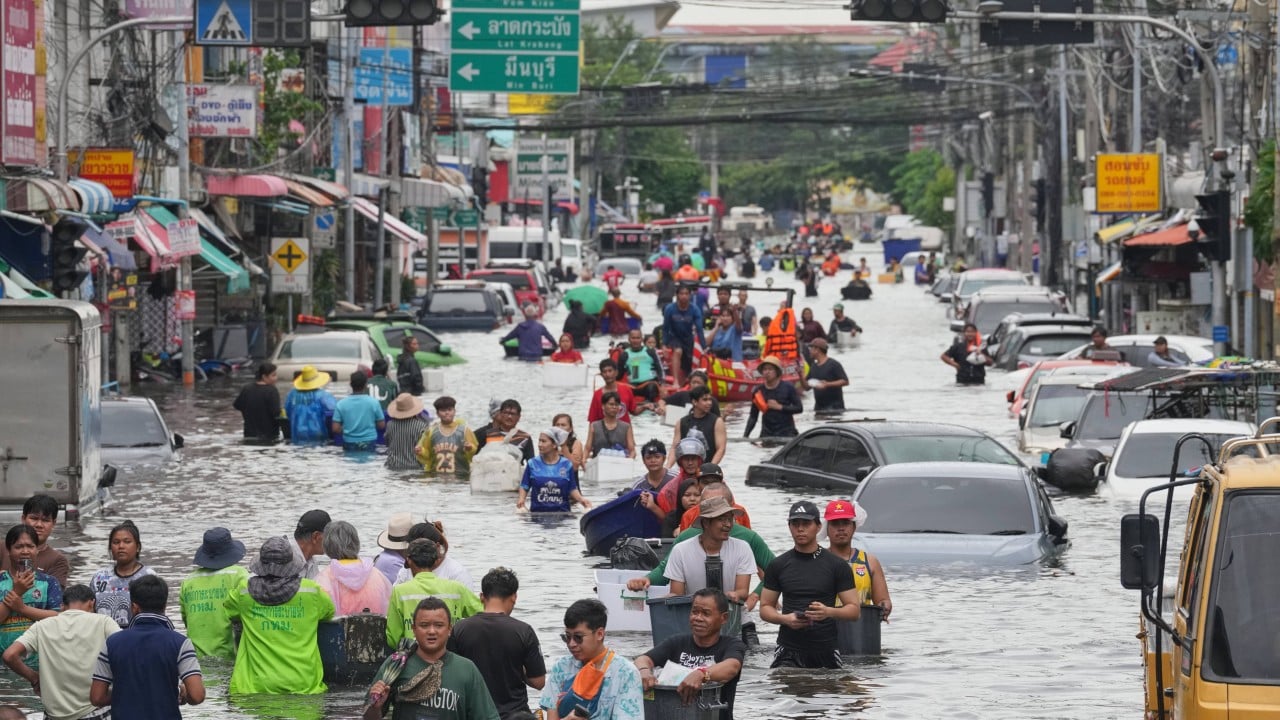
Step outside Somchai’s door, and you find a city wading.
Bangkok is drowning in slow motion. It is a metropolis of seventeen million souls built upon a swamp, weighted down by thousands of high-rises, starved of replenishing groundwater because of endless pumping, and squeezed by a warming gulf. Every monsoon season turns the streets into Venice without the romance—only the chemical reek of oil-slicked drainage canals and the low, vibrating hum of frustration that rises from millions of throats.
The water does not care about election cycles. It does not care about zoning laws, municipal budgets, or the frantic press conferences held by politicians in polished shoes who stand far away from the sludge. The water only rises. And with every inch it gains, a deeper, hotter fury settles into the chest of the city.
Consider what happens on a typical Tuesday afternoon during the rainy season.
A sudden deluge turns Sukhumvit Road into a brown, churning canal. Motorbikes stall out, their exhaust pipes gulping water and dying with a pathetic sputter. Pedestrians roll up their trousers and wade knee-deep through liquid filth, dodging open manholes that have become invisible vortexes of danger. A delivery driver stands on top of his delivery box, his phone held high above his head like a religious relic, watching his livelihood float past in the form of a soggy cardboard box.
This is not a natural disaster. It is a design failure.
For decades, the official narrative from city hall has been one of containment. We are building better pumps, they say. We are dredging the canals. We are constructing underground retention tunnels known locally as water dragons. But these engineering band-aids are failing against the sheer math of subsidence.
Geologists estimate that parts of Bangkok are sinking by as much as two to three centimeters every year. Meanwhile, sea levels in the Gulf of Thailand are creeping upward. Combine sinking earth with rising seas and intensifying tropical storms fueled by a warmer planet, and you have a slow-motion catastrophe. The city is essentially sitting in a bowl, and the spoon is stirring faster every day.
The rage of the inhabitants is not born of a single flood. It is an accumulation.
It is the fury of the shopkeeper who replaces his drywall for the third time in two years, only to watch it warp again. It is the anger of the factory worker in the outskirts whose wages are swallowed by repair bills for a flooded commuter bike. It is the quiet, grinding despair of families living in informal settlements along the canals, where rising waters carry not just rainwater, but raw sewage and industrial runoff directly into their living spaces.
In the past, people accepted these trials with the quiet fatalism that defines much of the region. They raised their furniture on concrete blocks. They built wooden walkways inside their homes. They smiled through the monsoon.
That patience has expired.
The anger is now vocal, pointed, and directed squarely at institutional inertia. Citizens point to sprawling real estate developments approved in known flood zones, projects that pave over natural absorption basins and push the water into poorer neighborhoods. They look at multi-million-dollar drainage projects that sit idle or underpowered while residential alleys turn into lakes.
The social contract is fraying at the edges, right where the water meets the dry concrete. When infrastructure fails on this scale, it ceases to be an engineering problem and becomes a crisis of equity. The wealthy can retreat to high-rise condominiums with automated flood gates and private generators. The vulnerable are left to bale out their kitchens with plastic buckets while waiting for pumps that never turn on.
To understand Bangkok’s crisis is to understand a fundamental truth about modern urban planning: we built our cities for a climate that no longer exists.
The traditional drainage systems were designed for predictable seasonal monsoons, not for the torrential, cloudburst anomalies of the twenty-first century. When three months of rain falls in three hours, the equations of the twentieth century collapse. Yet the response remains stubbornly bureaucratic. Committees are formed. Feasibility studies are commissioned. Master plans are drafted, shelved, and redrafted.
Meanwhile, the tides keep coming.
Back at the noodle shop, Somchai wipes down a stainless steel counter that will be damp again by sunset. He does not talk much about climate change treaties or carbon metrics. Those words belong to conference rooms thousands of miles away. He talks about the water mark on his wall—a dark, jagged line that creeps higher with every passing year, ticking upward like a fever chart on a dying patient.
The rage in the streets is not a passing storm. It is the sound of a city waking up to the realization that the ground beneath its feet is gone, and the people responsible for holding it up are standing on dry land, looking the other way.
The water continues to rise. The silence that follows is heavier than the rain.