The bread line on Valiasr Street starts before dawn.
Not because the bakeries are empty, though the flour costs three times what it did two winters ago, and not because the bakers are slow. People line up at five in the morning because by noon, the rumors start moving faster than the traffic, and nobody wants to be caught three miles from home when a telegram channel flashes a red alert about troop movements in the Persian Gulf or an unexpected speech from Washington.
Listen. You can hear the low hum of anxiety if you stand near any newsstand in central Tehran right now. It is the sound of millions of people refreshing their screens with thumbs that have grown calloused from scrolling through foreign election coverage.
To understand what is happening in Iran as elections approach in both the United States and Israel, you have to stop looking at satellite maps of missile silos and start looking at a kitchen table in Isfahan. That is where the real war is already being fought.
The Architecture of a Held Breath
Consider a hypothetical composite of a family living in a third-floor apartment overlooking the Zayanderud River—a riverbed that has been mostly cracked mud for years, serving as an accidental monument to broken promises. Let us call the father Reza, a forty-eight-year-old civil engineer whose salary buys half the groceries it did in 2022, and his daughter Sara, a twenty-two-year-old graphic designer who spends her evenings translating English political podcasts for her parents.
Every night at nine, the living room becomes an unofficial war room.
Reza does not care about the nuances of American swing-state polling or the fragile coalition arithmetic of the Israeli Knesset. He cares about one thing: whether the men who emerge victorious from those ballot boxes will decide that bombing Natanz or Fordow is the cleanest way to solve a decades-old headache before the new year.
"They treat us like a board game," Reza tells his daughter, tapping a cigarette against a glass ashtray. "One side wants to show they are tough before November. The other side wants to finish what they started in October. And we sit here waiting to see whose ceiling falls in first."
This is not paranoia. It is muscle memory.
Anyone who lived through the eight-year Iran-Iraq war in the 1980s knows the specific, metallic taste of air raid sirens. They remember taping black garbage bags over apartment windows so Iraqi bombers couldn't spot a sliver of kitchen light from ten thousand feet up. For forty years, that trauma sat locked in a basement trunk, brought out only during state television anniversaries.
Now, the trunk is wide open.
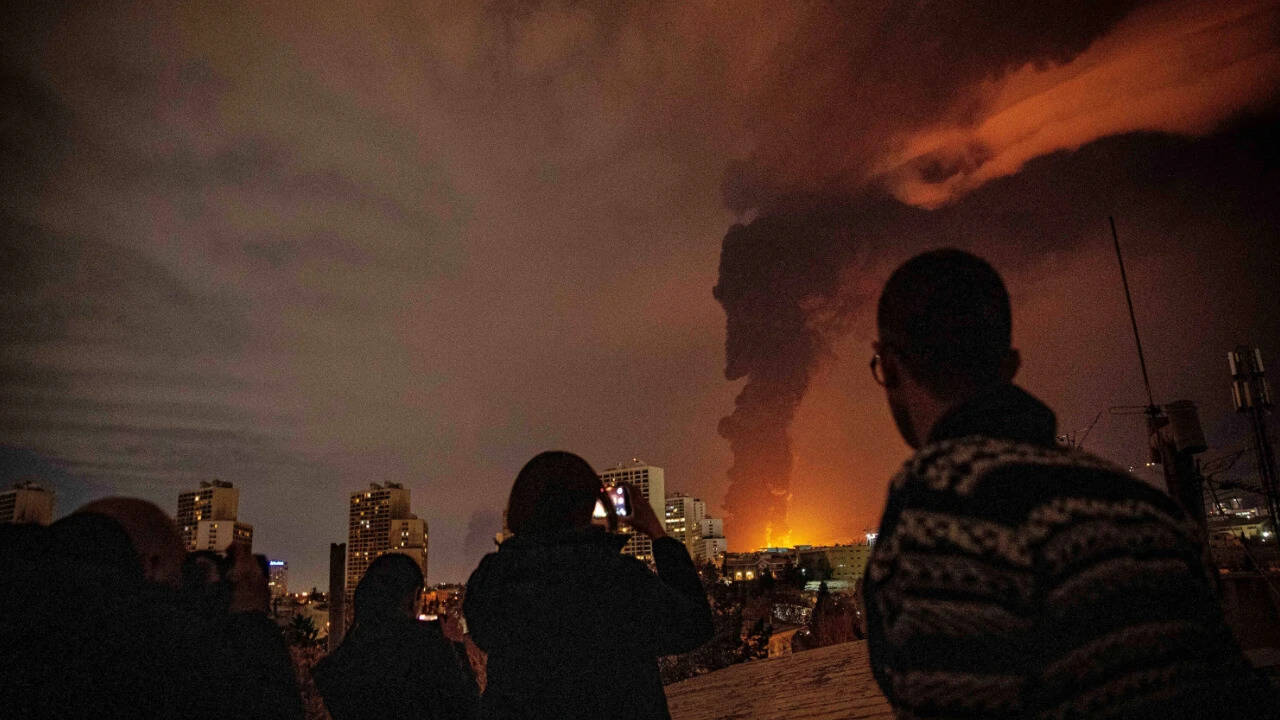
When direct missile exchanges shattered decades of shadow warfare between Iran and Israel in 2024, something fundamental broke in the Iranian psyche. The illusion of distance vanished. War was no longer a proxy conflict happening in the rubble of Gaza, the hills of southern Lebanon, or the deserts of Yemen. It was streaking across the night sky above Shiraz and Tehran in the form of interceptor trails and falling debris.
Why Foreign Ballots Dictate Local Survival
Why do elections thousands of miles away dictate the price of cooking oil in Mashhad?
Think of the Middle East right now as a dry forest in late August. Every political campaign in Washington and Jerusalem involves candidates striking matches to prove to their voters that they aren't afraid of the dark. Maybe they only intend to light a small torch to illuminate their own strength. Maybe they have no intention of burning the woods down.
But when the wind is blowing at sixty miles an hour, intention stops mattering.
In the United States, presidential campaigns routinely turn foreign policy into a theater of resolve. Candidates compete to prove who will draw the hardest line against Tehran, who will enforce the most crushing sanctions, and who will refuse to take military options off the table. To an American voter in Pennsylvania or Michigan, that rhetoric sounds like standard campaign toughness—a twenty-second soundbite forgotten by the next commercial break.
To a pharmacist in Tabriz trying to import insulin, that same soundbite triggers an immediate collapse in the rial.
Currency traders in Tehran's Ferdowsi Square don't wait for bills to be signed into law. They trade on tone. They trade on posture. When an American candidate promises "maximum pressure" or an Israeli leader warns that "no corner of the Middle East is beyond our reach," the Iranian currency drops five percent before sunset. By sunrise, the price of imported medicine, auto parts, and baby formula has adjusted upward to match the new reality.
The Israeli political calendar adds a sharper, more immediate edge to the fear.
For months, Israeli leadership has operated under the twin pressures of domestic political survival and the unfinished business of multi-front regional conflict. In Jerusalem, the debate isn't merely about containment anymore; it is about whether a decisive military blow against Iran's nuclear infrastructure or energy grid is both necessary and politically advantageous before voters head to the polls.
Iranians watch this debate unfold in real time through pirated satellite feeds and encrypted messaging apps. They see maps on foreign news networks with red circles drawn around Bushehr, Kharg Island, and Parchin. They know that Kharg Island handles roughly ninety percent of Iran's crude oil exports. If a bomb hits that terminal during an election-season escalation, the Iranian economy doesn't just stumble—it flatlines overnight.
The Invisible Economy of Panic
Walk through the Grand Bazaar in Tehran on a Tuesday afternoon, and you will witness a masterclass in defensive survival.
Merchants are no longer pricing goods based on what they paid for them last month. They are pricing them based on what it will cost to replace them if the Strait of Hormuz closes next week.
"Nobody wants to hold cash," explains a carpet dealer who has worked the same narrow stall for thirty years, asking not to be named because speaking openly about economic panic invites unwanted visits from plainclothes security agents. "If you hold rials, you are holding ice cubes in July. You buy gold coins. You buy dollars. You buy canned beans and sacks of rice. You turn everything paper into something heavy."
This hoarding isn't greed; it is a rational response to an irrational environment.
Consider what happens next:
- The Hoarding Spiral: Families pull their savings out of local banks to buy physical gold or foreign currency, starving the domestic banking system of liquidity.
- The Supply Freeze: Wholesalers stop distributing goods because they cannot predict tomorrow's exchange rate, creating artificial shortages of basic staples even before a single sanction is tightened.
- The Brain Drain Acceleration: Young professionals—doctors, software engineers, nurses—abandon long-term plans and take whatever exit visa they can secure, leaving hospitals and tech firms critically understaffed.
A twenty-nine-year-old surgical resident at a public hospital in northern Tehran described the quiet exodus happening in her own ward. Out of fourteen residents who started their training with her three years ago, six have already left for Germany, Canada, or the Gulf states. Four more have their bags packed and their licensing exams scheduled.
"We aren't leaving because we hate our country," she said during a brief break between shifts, her eyes rimmed with the dark circles of a thirty-six-hour rotation. "We are leaving because we cannot build a future on top of a fault line. Every four years, an election in another hemisphere decides whether we get to have electricity, medicine, or peace. How do you plan a marriage or a career around that?"
Trapped Between Two Fires
To live inside Iran today is to inhabit a suffocating paradox.
On one side stands a government in Tehran that has spent decades building an "Axis of Resistance" meant to project power outward and keep enemies far from Iranian borders. Yet the events of the past two years exposed the limits of that strategy. Air defenses proved vulnerable. Regional allies suffered devastating blows. The promise that ordinary Iranians would remain safe behind a shield of deterrence evaporated in the flash of retaliatory strikes.
At the same time, the domestic state apparatus has grown more brittle, not more flexible. Facing deep internal legitimacy crises following waves of nationwide protests, the authorities view any sign of compromise with the West as a fatal weakness. Hardliners in parliament openly demand that Iran abandon its long-standing religious decree against nuclear weapons, arguing that only a nuclear deterrent can stop foreign leaders from treating Iranian airspace like a shooting gallery.
On the other side stand foreign powers whose voters demand strength, deterrence, and decisive action—policies that, when translated into airstrikes or secondary sanctions, land squarely on the backs of eighty-eight million civilians who have zero say in either their own government's foreign adventures or the electoral choices of voters in Tel Aviv and Washington.
It is a trap with no obvious exit door.
Ask a taxi driver in Tehran what he hopes happens in the upcoming American and Israeli elections, and you won't get a partisan endorsement. You will get a bitter laugh.
"One candidate promises to choke us slowly with sanctions so we can't buy medicine," he says, weaving his battered Peugeot through gridlocked traffic near Azadi Square. "The other promises to let Israel bomb our refineries so we freeze in the winter. Tell me, which knife would you prefer?"
The Psychology of Perpetual Emergency
There is a specific exhaustion that comes from living in a state of permanent alert. Psychologists call it hypervigilance—a condition where the nervous system refuses to stand down because the brain has learned that relaxation leads to ambush.
In Iran, hypervigilance has become a national culture.
You see it in the way mothers pack "go-bags" with passports, birth certificates, cash, and a change of clothes, tucking them neatly behind the front door just in case. You see it in the sudden silence that falls over a crowded cafe whenever a low-flying commercial jet passes overhead, everyone instinctively looking up at the ceiling for three seconds before resuming their conversation.
You feel it in the dark humor that floods Iranian social media every time diplomatic talks stall. Memes circulate showing citizens casually eating sunflower seeds while ballistic missiles streak past their balconies, captioned with jokes about how rent in Tehran is still too high even in a war zone.
Humor is the last line of defense when control is completely stripped away.
Yet beneath the jokes lies a profound, aching grief for lost time. A generation of Iranians born after the 1979 revolution—people who had nothing to do with the hostage crisis, nothing to do with nuclear enrichment, and nothing to do with regional proxy wars—has spent its entire adult life in the waiting room of history.
They waited through the nuclear negotiations of 2015, watching the rial briefly strengthen and foreign companies return, daring to believe they might finally join the global economy. They watched that hope disintegrate in 2018 when Washington tore up the deal. They waited through the pandemic, through currency collapses, through street protests, and now they wait through another cycle of foreign elections that will decide whether their cities remain intact.
What the Maps Miss
When military analysts in Washington or Tel Aviv draw up contingency plans for a strike on Iran, they speak in clean, sterile nouns.
They talk about centrifuges. They talk about hardened underground facilities. They talk about degrading launch capabilities and re-establishing deterrence. In those briefing rooms, a war looks like a surgical procedure—a series of precision-guided munitions hitting concrete bunkers in the desert, followed by a calibrated diplomatic off-ramp.
They rarely factor in what happens to the water treatment plants in a city of ten million people when the electrical grid takes collateral damage.
They rarely calculate the cost of panic when eight million residents of Tehran try to flee north toward the Caspian Sea on two narrow mountain highways at the exact same moment. They do not measure the quiet devastation of an elderly man in Kerman dying of a treatable heart condition because international banking restrictions froze the transfer needed to import his pacemaker.
War, even a "limited" war, does not stay inside the lines drawn by planners. It bleeds outward into hospitals, bakeries, classrooms, and family albums.
The Quiet Rituals of Defiance
Still, life refuses to surrender entirely to the headlines.
Go to the foothills of Mount Tochal on a Friday morning, and you will see thousands of Tehranis hiking up the rocky trails before the sun gets too high. They carry thermoses of cardamom tea, fresh walnuts, and flatbread wrapped in cloth. Near the summit, strangers share breakfast on flat boulders, trading gossip about football, complaining about the traffic, and deliberately refusing to mention the news for three precious hours.
Down in the city, underground art galleries still open their doors behind unmarked steel gates. Young musicians still record albums in soundproofed basements. Bookstores along Karimkhan Street remain packed with students hunting for translated novels and philosophy texts, desperate to connect with a wider world that seems determined to wall them off.
These small, stubborn acts of normalcy are not denial. They are resistance against the slow erasure of human dignity.
As evening falls over Tehran, the traffic along the Modarres Expressway turns into a river of red brake lights stretching toward the Alborz mountains. In apartments across the city, curtains are drawn, tea is poured, and smartphones are plugged into wall chargers so their batteries will be at one hundred percent before midnight.
Nobody knows what the morning news will bring from Washington or Jerusalem. Nobody knows whether the next flash on their screen will be an election result, a diplomatic breakthrough, or the first warning of an air raid.
In the third-floor apartment overlooking the dry riverbed in Isfahan, Reza finishes his cigarette, crushes it out in the glass ashtray, and walks over to the living room window. Down on the street below, a young boy is kicking a scuffed leather soccer ball against a brick wall, over and over, the rhythmic thud echoing cleanly through the cool night air—the only sound in the city that isn't waiting for permission to exist.