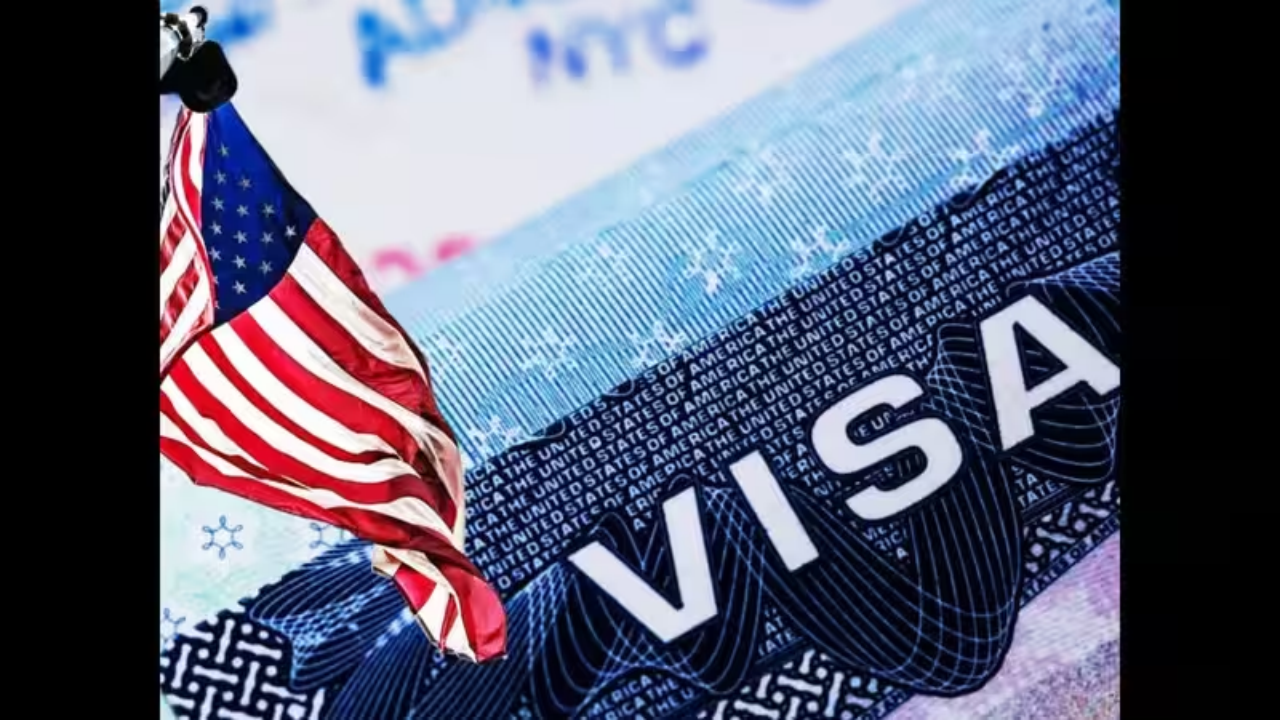
Headline figures like 300,000 revoked visas and 4,000 birth tourism cancellations obscure a deeper structural shift: the federal government is treating post-issuance revocation as a primary enforcement instrument rather than a rare exception. Surface-level reporting treats a revoked visa as a single event with a uniform outcome. In operational reality, a visa is a conditional travel document, not a guarantee of admission or an automatic termination of domestic status. Understanding this shift requires separating headline totals from legal mechanics, identifying where raw counts mislead, and tracing how aggressive screening alters travel, compliance, and institutional planning.
Deconstructing Competitor Logic and Reporting Gaps
Conventional coverage of large revocation milestones typically relies on three shortcuts that weaken analytical precision. First, it aggregates heterogeneous actions into one headline number. A revocation triggered by an overseas arrest, a suspected misrepresentation on a nonimmigrant application, or a facilitator tied to birth tourism does not carry the same evidentiary standard or operational consequence.
Second, surface reporting frequently conflates visa revocation with loss of lawful status or immediate removal. A nonimmigrant visa governs entry at a port of entry, whereas lawful status inside the United States depends on admission terms and ongoing compliance. A foreign national already inside the country may retain valid status even after a visa is canceled, though departing and attempting to reenter becomes a major hurdle.
Third, headline summaries rarely distinguish between verified facts and inferred intent. Public announcements establish aggregate counts and broad rationales—such as continuous vetting, criminal allegations, fraud, or national security—while leaving granular breakdowns by visa class, nationality, and individual case disposition incomplete. When a specific figure such as 4,000 birth-tourism-linked revocations is cited alongside a 300,000+ overall total, observers often treat the subset as a clean measure of total illicit activity rather than a reflection of where enforcement resources were concentrated at a given snapshot in time.
The Architecture of Post-Issuance Enforcement
To evaluate visa revocations rigorously, examine the system through four structural dimensions rather than raw volume alone.
1. The Vetting Cadence Shift
Historically, consular scrutiny peaked at the initial interview and tapered off until renewal. Continuous vetting flips that timeline: databases, criminal records, travel patterns, and public digital footprints can trigger post-issuance review long after stamp placement. When monthly revocation volume climbs from roughly 8,000 per month in 2025 to more than 10,000 per month in 2026, the primary driver is throughput—automated or semi-automated matching against derogatory indicators followed by administrative cancellation.
2. The Legal Distinction Between Travel Permission and Domestic Status
Under U.S. immigration mechanics, revoking a visa cancels permission to apply for entry at a port of entry. It does not automatically execute physical removal. However, revocation creates sharp asymmetry:
- Individuals abroad face immediate travel disruption and may be barred from returning without securing a new visa, which is often denied or delayed if the underlying ground is fraud or security.
- Individuals inside the country may remain in valid status temporarily, yet face heightened downstream risk if Department of Homeland Security enforcement initiates separate proceedings or if they travel internationally and cannot reenter.
3. The Birth Tourism Enforcement Vector
Targeting birth tourism illustrates how enforcement scales from individual applicants to ecosystem participants. Travel undertaken primarily to obtain U.S. citizenship for a child has long sat at the intersection of nonimmigrant intent and alleged misrepresentation. When a dedicated task force expands actions from 4,000 to over 6,000 revocations across both travelers and facilitators, it signals two operational priorities:
- Upstream deterrence: Canceling visas of intermediaries, coordinators, or facilitators aims to disrupt repeatable pipelines rather than rely solely on case-by-case border inspections.
- Retroactive credibility testing: Prior itineraries, medical or lodging arrangements, and application statements become retrospective evidence of whether the original nonimmigrant purpose was candid.
4. The Evidentiary and Due Process Friction
High-volume revocation regimes operate under speed constraints that strain precision. When screening expands to encompass social media activity, broad policy categories, or contested conduct, two friction points emerge: over-inclusion and opacity. Broad keyword or association flags can sweep in lawful travelers or students whose speech or travel patterns resemble risk profiles without proving inadmissibility. Meanwhile, limited public disaggregation makes it harder for outside analysts to measure error rates, reversal frequencies, or disparate impacts across visa categories.
Hidden Cause-and-Effect Chains
Standard accounts stop at "more revocations mean stricter enforcement." A systems view exposes second-order effects that reshape behavior across borders.
Chilling Effect on Routine Mobility
Even when a visa holder has no criminal record and complies with stay limits, awareness of rapid cancellations alters travel calculus. International students, researchers, and cross-border professionals may cancel short trips abroad to avoid getting stranded outside the country during a sudden revocation or administrative hold. For organizations relying on rotating global talent, delayed return timelines turn predictable mobility into an unbudgeted operational risk.
Information Asymmetry and Premature Self-Removal
Because revocation does not automatically strip domestic status, lack of clarity causes two opposite errors. Some individuals assume a revoked visa equals an immediate deportation order and depart unnecessarily. Others assume their visa stamp protects them at the border and travel internationally without checking whether a quiet revocation has already occurred. Both errors stem from treating a single administrative label as a complete legal diagnosis.
Escalation from Administrative Action to Litigation
As revocation totals climb into the hundreds of thousands, contested edge cases inevitably test administrative authority. Disputes over free expression, alleged misrepresentation without clear proof, or procedural notice create sustained friction between executive enforcement speed and judicial review.
What Remains Known Versus What Remains Inferred
Disciplined analysis requires keeping the evidentiary boundary visible.
Known facts:
- Total U.S. visa revocations under the second Trump administration surpassed 300,000 by October 2026, building on more than 100,000 in 2025 and exceeding 175,000 by August 2026, up from roughly 40,000 in 2024.
- Monthly revocation pace accelerated from approximately 8,000 per month in 2025 to over 10,000 per month in 2026.
- State Department enforcement has targeted alleged criminal conduct, fraud or misrepresentation, national security or foreign policy grounds, and birth tourism participants and facilitators (crossing 4,000 in October 2026 and exceeding 6,000 in November 2026).
Educated hypotheses:
- A substantial share of the volume increase reflects automated continuous-vetting matches rather than traditional manual consular re-investigations, given the jump in monthly run-rate.
- Disaggregating the 300,000+ figure by visa subclass would likely show heavy concentration in high-volume nonimmigrant categories such as tourist, business, and student visas, though comprehensive official breakdowns remain incomplete.
Tactical Playbook for Navigating High-Volume Revocations
Whether advising international travelers, students, or global mobility teams, response protocols should follow a strict operational sequence rather than ad-hoc reactions.
- Audit status separately from visa validity. Never treat a valid visa foil as proof of uninterrupted admissibility, and never treat a revocation notice as automatic loss of domestic status without verifying current status and specific grounds.
- Pre-screen international travel exposure. Before any non-essential trip outside the United States, evaluate re-entry risk, pending applications, and any prior arrests, citations, or inconsistent travel records that could trigger post-issuance cancellation.
- Eliminate application and itinerary drift. Ensure stated travel purposes, funding, accommodation details, and ties to home countries align consistently across DS-160 filings, border interviews, and actual travel behavior—especially where birth tourism or misrepresentation scrutiny applies.
- Maintain a digital and compliance hygiene baseline. Keep accurate records of addresses, enrollment or employment status, and legal dispositions, and avoid ambiguous online statements or unverified intermediaries that create avoidable screening flags.
- Engage qualified immigration counsel before taking irreversible steps. If a revocation occurs, map options based on whether the individual is inside or outside the United States, whether a prudential or substantive revocation applies, and whether a new application or legal challenge is viable.
Limits of These Measures
Compliance discipline reduces preventable risk, but no checklist eliminates structural uncertainty. Executive revocation authority is broad, shifting policy priorities can alter enforcement weight across categories without warning, and opaque screening criteria mean even scrupulous applicants can face false positives or delays. Reinstatement is never guaranteed, and legal remedies often require time that disrupts academic calendars, business schedules, or family plans.
Strategic Action
Build contingency buffers into every cross-border timeline: decouple mission-critical work or study milestones from single-trip international travel, require early verification before booking return flights, and treat post-issuance vetting as a permanent operating condition of global mobility rather than a temporary spike.