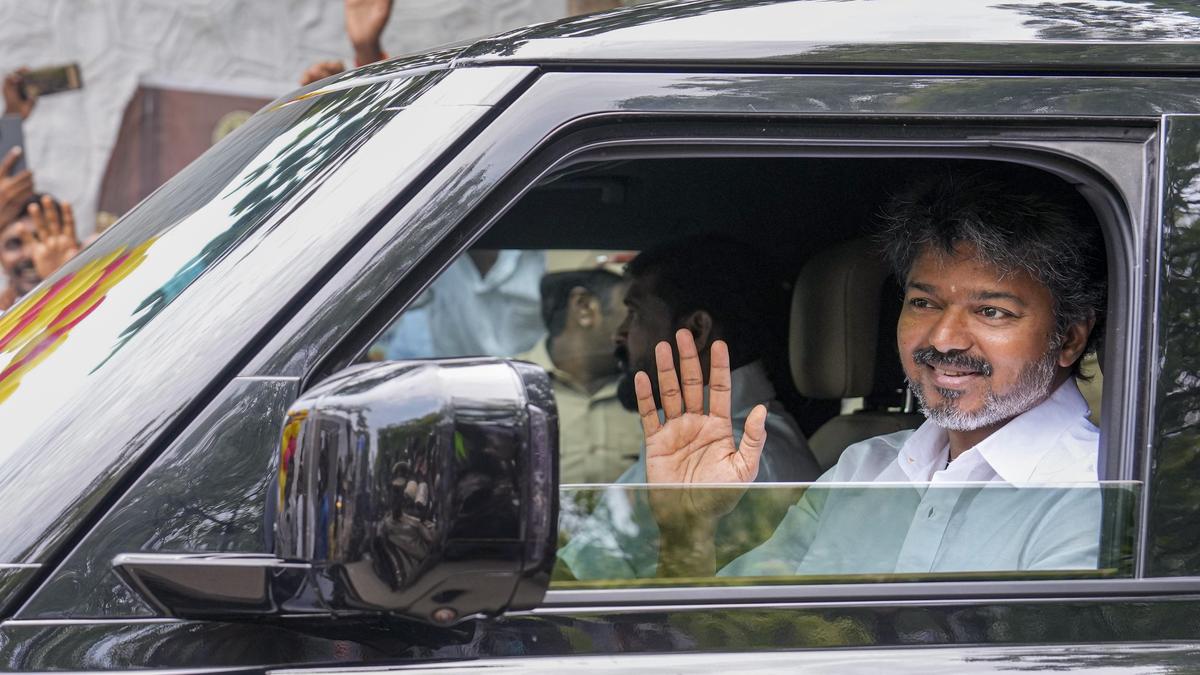
The dust hasn't even settled in Chennai, but the shockwaves are already hitting the shores of Jaffna and Batticaloa. Actor-turned-politician Vijay and his party, Tamilaga Vettri Kazhagam (TVK), didn't just participate in the 2026 Tamil Nadu Assembly elections. They basically nuked the existing political order. Scoring 108 seats in a debut run isn't just a "strong showing." It’s a full-blown political earthquake that’s ended the decades-long tug-of-war between the DMK and AIADMK.
But look across the Palk Strait. You'll see that Sri Lanka’s media and political circles are obsessed with this win. Why? Because for Sri Lankan Tamils, Tamil Nadu isn't just a neighbor. It’s their primary cultural and political lungs. When Vijay wins big, the air in Sri Lanka changes.
Sri Lanka’s Front Pages Go All In
If you picked up a newspaper in Colombo or Jaffna this morning, you’d think the election happened on the island. Major Tamil dailies like Virakesari and Thinakaran didn't hold back, using words like "tsunami" and "humungous win" to describe the TVK surge. This isn't just about celebrity worship.
Sri Lankan media outlets like the Daily Mirror even ran cartoons showing Vijay emerging as a giant figure out of South India. This level of coverage is rare for a "foreign" election. It happens because the fate of the Tamil diaspora and the unresolved "Tamil question" in Sri Lanka has always been tied to who sits in the Fort St. George in Chennai.
The Northern Province saw fans bursting crackers as if their own local candidate had won. For a population that’s felt politically stuck for years, Vijay represents a new kind of hope—or at least a fresh face in a room full of stale promises.
What Sri Lankan Leaders Really Think
Politicians in Sri Lanka aren't just watching; they’re already lobbying. M.A. Sumanthiran from the Ilankai Tamil Arasu Katchi (ITAK) was quick to congratulate Vijay, but his message had a clear subtext. He’s looking for "unabated support" for the Tamil people in Sri Lanka.
You’ve also got Namal Rajapaksa chiming in. It's an interesting move. By wishing Vijay strength, the Rajapaksas are signaling they want a "more positive relationship" on issues that impact both nations. They know Vijay’s massive 35% vote share gives him a mandate that can’t be ignored by the central government in New Delhi either.
Here’s what’s actually happening behind the diplomatic talk.
- The Fisheries Conflict: This is a constant friction point. Fishermen from Tamil Nadu and Northern Sri Lanka often clash over territorial waters. Vijay’s stance on this will define his early foreign policy "soft power."
- Repatriation: There are still thousands of Sri Lankan refugees in Tamil Nadu camps. Vijay’s manifesto mentioned them, and now he has the seats to actually do something.
- The 13th Amendment: Sri Lankan Tamil parties want India to pressure Colombo for provincial autonomy. They’re hoping Vijay will be a louder voice than the previous administration.
Breaking the Dravidian Duopoly
For fifty years, Sri Lankan Tamils knew exactly what to expect from the DMK or the AIADMK. One used a specific brand of Dravidian identity; the other leaned on MGR’s legacy. Vijay has flipped the script. By securing 1.7 crore votes, he surpassed MGR’s historic vote share records.
Honestly, the DMK being pushed to 59 seats and AIADMK crumbling to 47 is a scenario nobody saw coming two years ago. For observers in Colombo, this signals a shift toward a more youth-centric, performance-based politics rather than just heritage-based campaigning.
Vijay’s TVK is currently the single largest party. Even though they’re 10 seats short of the 118 majority mark, the momentum is entirely on his side. He’s already meeting with his 108 MLAs, many of whom are first-timers. This "amateur" energy is exactly what’s captivating the Sri Lankan audience. They want to see if a political outsider can actually govern, because if he can, it might inspire similar movements in their own fractured political system.
The Cultural Connection Is the Real Driver
Don't underestimate the power of cinema here. In the North and East of Sri Lanka, Vijay isn't just a politician. He’s "Thalapathy." His movies have been the backbone of entertainment in these regions for decades. When he transitioned to politics, the emotional investment was already there.
Social media in Sri Lanka was flooded with reels and satirical takes on his rivals weeks before the election. People weren't just observing; they were participating. Groups in Jaffna even put up massive cut-outs and banners. This isn't just "spotlight" coverage. It’s a shared identity.
What Happens Now
The celebrations will eventually stop, and the hard math of government formation begins. Vijay has a few options. The Congress, which holds 5 seats, has already hinted at supporting him.
If you're following this from Sri Lanka, keep your eye on three things. First, watch who Vijay picks for his cabinet—specifically if he appoints anyone with a background in international relations or Tamil welfare. Second, see how quickly he mentions the "Sri Lankan issue" in his first official assembly address. Third, watch the response from the Sri Lankan government in Colombo. They’ll likely try to invite him for a visit soon to feel out his temperament.
For those looking to stay ahead of the curve, start tracking the TVK’s official statements regarding the Palk Strait fishing rights. That will be the first real test of how this "big win" translates into actual policy for the region. The era of the two-party system is over, and the new neighborhood watch has officially begun.