The smell of scorched hairspray and floor wax is the first thing you never forget. Backstage at an international beauty pageant in the early nineties, the air hums with a frantic, breathless electricity that feels like a cross between a high-stakes athletic locker room and a debutante ball. Young women—many barely out of their teens, clutching dog-eared passports and wearing borrowed evening gowns—stand in narrow, fluorescent-lit corridors. They are waiting for a nod, a clipboard signature, or the sudden, miraculous appearance of a man who holds the keys to the next chapter of their lives.
Ambition. That is the currency in those hallways. It is an intoxicating, blinding thing when you are twenty-two years old, standing five thousand miles from home, told repeatedly that your smile is your ticket out of obscurity.
For decades, the public consumed these pageants as harmless, glittering spectacles—a televised parade of evening wear, rehearsed answers about world peace, and tears of joy under a rhinestone crown. Yet beneath the broadcast cameras and the polite applause operated an entirely different ecosystem. When former Miss Switzerland Beatrice Keul stepped forward to allege that Donald Trump and Jeffrey Epstein used the international pageant circuit as a "hunting ground" for young women, her words did not merely add another headline to a crowded news cycle. They pulled back a heavy velvet curtain on a predatory architecture that hid in plain sight.
To understand how such an environment functions, you have to strip away the glamour and look at the mechanics of access.
The Architecture of the Backstage Pass
Consider a hypothetical scenario—a composite drawn from dozens of documented accounts across the modeling and pageant industries of that era. Imagine a young woman from a small European town, let us call her Clara, arriving in New York or Atlantic City for an international competition. She speaks accented English. Her parents mortgaged their savings to pay for her wardrobe. Every official rulebook tells her that the judges are evaluating her poise, her intellect, and her grace.
Then the rehearsals end, and the "unofficial" schedule begins.
In the world of 1990s pageantry, proximity to wealthy benefactors was framed not as a red flag, but as an audition. You were told that the men sitting at the VIP tables—real estate moguls, financiers, nightclub owners—were the gatekeepers of modeling contracts, film roles, and sponsorships. If a man with a private jet or a famous last name invited the contestants to a private dinner, a yacht party, or a suite at the Plaza Hotel, declining wasn't just seen as rude. It felt like professional suicide.
Beatrice Keul’s testimony slices directly into this psychological trap. Having represented Switzerland in the early 1990s—a period coinciding with the height of Trump’s ownership and involvement in the pageant universe and his well-documented social orbit with Jeffrey Epstein—Keul described a stark dissonance between the wholesome television product and the predatory reality behind closed doors. According to her account, the pageants functioned less as meritocratic competitions and more as curated catalogs for powerful men.
Think of it like a gated estate where the security guards work exclusively for the host, not the guests. Once you step past the threshold, the normal rules of social accountability dissolve. Who do you complain to when the man crossing the boundary is the man who owns the building, signs the checks, and sits on the judging panel?
When Glamour Becomes a Lever
The genius of this system—if one can apply such a word to something so corrosive—was how effortlessly it weaponized a young woman’s own hopes against her. Predators rarely need to use physical force when they control the narrative of a victim's future.
In her public statements, Keul recounted specific encounters from 1993, detailing how young women were routinely ushered into private spaces with Trump and Epstein, subjected to unwanted physical advances, and treated as decorative commodities rather than competitors. She described the confusion and paralysis that followed—the immediate, sickening realization that the crown was never the point.
I still remember the first time I watched a young woman navigate that exact realization in a professional setting. You can see the light go out behind her eyes in real time. One second she is leaning forward, eager to discuss her portfolio, her charity work, her dreams of a career in broadcast journalism; the next, a hand lingers too long on the small of her back, a comment is whispered about her body rather than her resume, and the entire floor drops out from beneath her. She smiles anyway, because she has been trained from childhood to be polite, to not make a scene, to protect the comfort of the powerful man in the room at the expense of her own dignity.
That reflex is the invisible currency of every predatory network.
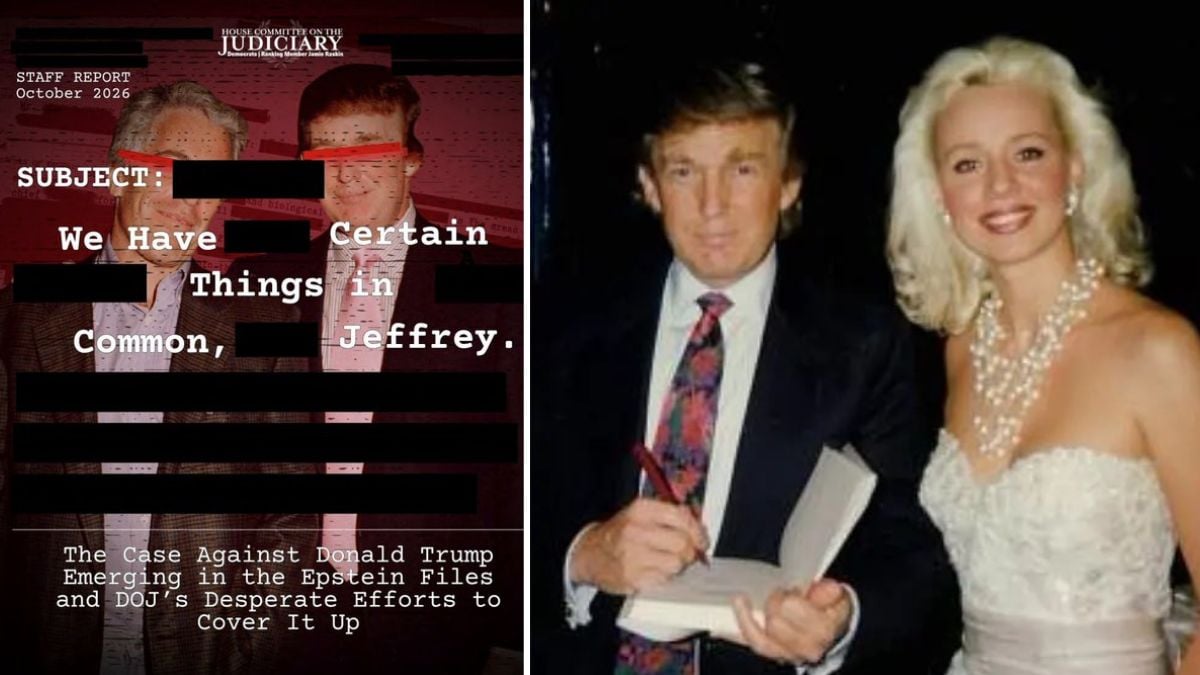
To grasp the full weight of Keul’s allegations, we have to examine the documented intersection of the two men at the center of her story. Throughout the 1990s and early 2000s, Donald Trump and Jeffrey Epstein moved through the exact same corridors of Palm Beach, Manhattan, and Atlantic City. Photographic archives, flight logs, and contemporary press profiles confirm they were frequent social fixtures at the same exclusive parties—events often heavily populated by aspiring models and pageant contestants.
In 1992, NBC broadcast footage of Trump and Epstein standing together at a Mar-a-Lago party, laughing and gesturing toward a crowd of young women dancing on the floor. In 2002, Trump famously told New York magazine that Epstein was a "terrific guy" who liked beautiful women as much as he did, adding the chilling qualifier that many of them were "on the younger side."
When Beatrice Keul speaks of a "hunting ground," she is not inventing a metaphor out of thin air. She is naming the exact operational model that those archival clips and quotes have whispered about for thirty years.
The Machinery of Silence
Why does it take decades for a woman like Keul to be heard? People who have never stood inside an asymmetric power dynamic often ask this question with a faint edge of suspicion, as if delayed speech implies invented memory.
It doesn't. Delayed speech is the natural byproduct of institutional insulation.
Look at the ecosystem surrounding pageants and modeling agencies in the 1990s:
- Total Economic Leverage: Contestants operated without union protections, independent legal counsel, or standardized human resources channels. Their visas, hotel rooms, and return flights were often controlled directly by the event organizers.
- Reputational Fragility: In an industry built entirely on public perception, a woman who accused a billionaire sponsor of misconduct was instantly branded "difficult," "ungrateful," or "unstable"—a label that traveled across international agencies faster than any portfolio.
- Cultural Complicity: The broader media apparatus treated billionaires surrounded by teenage models not as a warning sign, but as proof of virility and status. Tabloid columns celebrated the very behavior that victims experienced as coercion.
Silence was not a choice. It was a survival mechanism.
Keul herself noted that for years she carried the weight of those encounters in private, watching the men involved ascend to the highest pinnacles of global wealth and political power while the women who passed through those rooms quietly rebuilt their lives away from the spotlight. Speaking up in 1993 meant screaming into a hurricane. Speaking up decades later, after the systemic rot of Epstein’s trafficking network had been exposed to the world, meant finally having a vocabulary that the public could no longer pretend not to understand.
Still, even now, the resistance is palpable. Whenever a former contestant steps forward—whether it is Keul detailing her experiences in the early nineties, or the former Miss Teen USA contestants who recounted Trump walking unannounced into their dressing rooms while they were changing—the response follows a predictable script. Denials are issued immediately. Motives are questioned. The women are accused of seeking attention, money, or political leverage.
It is an exhausting, familiar choreography. Yet notice what the denials rarely address: the structural reality of the room itself. Nobody disputes that the dressing rooms had no locks. Nobody disputes that the VIP parties existed. Nobody disputes that the line between "pageant sponsor" and "private host" was deliberately erased.
The Invisible Stakes
Strip away the famous names and the political tribalism that instantly engulfs any story mentioning Donald Trump, and you are left with a much quieter, far more uncomfortable truth. The pageant world of the 1990s was not an anomaly. It was a concentrated, high-glamour version of a vulnerability that exists wherever young people trade their youth and ambition for access to closed rooms.
We see the same pattern in the early days of Hollywood studio systems, in elite gymnastics training centers, in high-fashion houses, and in Silicon Valley pitch meetings. The stage dressing changes—sometimes it is a tiara and a sash, sometimes a script or a seed-funding check—but the underlying mechanism remains identical. An authority figure manufactures scarcity, positions himself as the sole arbiter of who succeeds, and uses that manufactured desperation to bypass normal human boundaries.
When Beatrice Keul describes young women being paraded before wealthy men like merchandise, she is exposing the foundational lie of those spaces: the promise that talent and hard work are what actually matter.
I admit that writing about this leaves a lingering sense of unease, because it forces us to confront how willingly the rest of us bought the ticket. Millions of viewers tuned in every year to watch those broadcasts. We bought the magazines, admired the lifestyle profiles, and accepted the myth that proximity to extreme wealth was inherently aspirational. We looked at the shiny surface of the crown and never asked who had to polish it, or what it cost them in the dark corridors behind the stage.
What Remains After the Lights Go Down
Truth has a stubborn, unhurried way of outlasting the people who try to bury it. You can buy NDAs, you can hire publicists, and you can surround yourself with layers of security and prestige, but you cannot erase the sensory memory of a twenty-something woman standing in a hotel hallway, realizing she was never invited to compete—she was invited to be chosen.
Beatrice Keul’s account does not require theatrical embellishment to chill the blood. Its power lies in its specificity: the names, the dates, the sudden shift in atmosphere when the cameras stopped rolling and the private invitations began. By refusing to let those memories remain polite secrets, she forces a reckoning not just with two men, but with an entire culture that mistook predation for prestige.
The stage lights eventually burn out, the confetti is swept into black plastic bags, and the ballroom empties into the cold morning air—leaving only the women who walked across that floor to tell us what really happened in the dark.