Power does not always announce itself with a gavel strike or the roar of a crowd. Sometimes, it arrives in the quiet rustle of heavy bond paper, the synchronized click of fountain pens, and the measured cadence of economists who speak in percentages the way poets speak in sorrow.
We forget that money is a shared hallucination. It is an agreement built on trust, held together by a fragile thread of belief that the paper in our wallets will still buy bread tomorrow. At the center of that belief sits the Federal Reserve, an institution designed to be boring, opaque, and insulated from the violent pendulum swings of electoral politics. It is the architectural basement of the American economy. You do not think about the foundation until the walls start to crack.
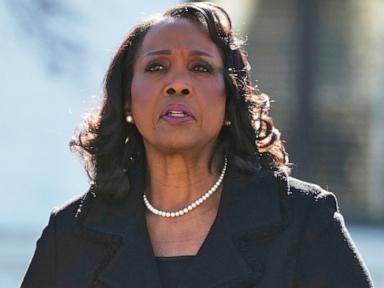
Recent events have introduced a new kind of tremor into that basement. The announcement of a committee aimed directly at investigating Federal Reserve Governor Lisa Cook is not merely a bureaucratic footnote. It is a collision between two worlds that were never meant to occupy the same room: the steady, glacial clockwork of monetary policy and the electric, hyper-charged theater of modern politics.
To understand why this matters, you have to step away from the ticker tapes and look at the human mechanism behind the numbers.
The Weight of the Chair
Imagine walking into a room where every word you utter can cause a factory worker in Ohio to lose overtime or a tech startup in Austin to secure its next funding round. That is the daily reality inside the Eccles Building in Washington.
Lisa Cook arrived there carrying a biography that reads like a map of intellectual endurance. She is an economist who has walked the dusty roads of post-apartheid South Africa studying banking systems, listened to the quiet anxieties of rural laborers, and crunched macro data that most people cannot parse in a lifetime. She is the first Black woman to sit on the Fed board of governors. That milestone alone makes her a lightning rod, but her votes and voice carry a heavier gravity still.
Monetary policy is supposed to be the adult in the room. When inflation surges or labor markets tighten, the Fed pulls the levers of interest rates. These are blunt instruments. They do not care about political party lines. They do not check voter registration cards before deciding whether to make borrowing more expensive.
Or at least, they are not supposed to.
When politicians begin to scrutinize individual governors through investigative committees, the air in the room changes. The invisible boundary line—the one drawn decades ago to keep political opportunism from corrupting the nation’s currency supply—begins to blur.
The Cost of Uncertainty
Markets despise mystery. They can tolerate bad news; they can price in a recession, a war, or a supply chain choke point. What they cannot digest is institutional chaos.
When confidence in the independence of the central bank begins to erode, the ripple effects move outward with terrifying speed. Think of it like a heavy ship anchored in a turbulent harbor. If the anchor holds, the ship rocks but stays pointed into the wind. If the anchor starts dragging across the seabed, the ship drifts toward the rocks.
Independent central banking is that anchor. In emerging economies around the globe, history is littered with the wreckage of nations where political leaders treated the national bank like a personal checkbook or a weapon to punish rivals. Hyperinflation follows. Savings evaporate. The baker charges a wheelbarrow of cash for a loaf of bread.
We are a long way from wheelbarrows in America. Our financial system is deep, liquid, and resilient. Yet institutional norms do not break all at once. They fray, thread by thread, until someone pulls on the last loose end and the whole garment comes apart in their hands.
When a governor faces targeted political investigation, every future vote is viewed through a distorting lens. Did she vote to hold rates steady because the inflation data demanded it, or because she was looking over her shoulder at a congressional subpoena? That doubt is toxic. Once financial actors start trying to predict political pressure instead of economic indicators, the compass loses True North.
The Human Element Behind the Dashboard
Let us drop the macroeconomic jargon for a moment and look at the kitchen table.
In a suburban home outside of Chicago, a couple sits at a laminate table late at night, bills spread out like a fan of bad cards. They are trying to decide whether to refinance their mortgage or wait out the storm. They do not know who Lisa Cook is. They do not read transcripts of Federal Open Market Committee meetings. They only know that their car payment went up, their grocery bill refuses to shrink, and the news anchor on the television keeps talking about political fights in Washington.
They feel the friction. They do not know the mechanics, but they feel the heat.
When trust in institutions fractures, it trickles down to this exact level. It turns financial anxiety into a generalized cynicism. People stop believing that the rules apply fairly, or that anyone at the top is steering the ship with a steady hand.
The investigation into Lisa Cook is framed in the language of accountability and oversight. Oversight is a vital part of a constitutional republic. No public official should be above inquiry. But the timing, the posture, and the underlying intent reveal something deeper: a creeping desire to colonize the last remaining neutral spaces in American governance.
What Happens When the Referee Joins the Game
Consider what happens next when every referee in the stadium is accused of wearing a jersey under their black-and-white stripes.
If the central bank becomes just another arena for partisan warfare, monetary policy loses its primary superpower: credibility. When Fed Chair Jerome Powell or Governor Cook speaks, the world listens because they believe the data is clean. Strip that away, and every interest rate decision becomes a partisan street fight. Markets will demand a higher risk premium to hold American debt. Mortgages will cost more. The cost of living will creep upward, not because of supply chains or labor shortages, but because of a tax on mistrust.
We have built a complex, interconnected global financial order on the assumption that American institutions are heavier than partisan politics. That assumption is now being stress-tested.
The inquiry into Lisa Cook is not an isolated legal maneuver. It is a referendum on whether expertise still matters in a room full of ideologues, and whether the quiet, technical business of steering the world's largest economy can survive the oxygen-hungry theater of modern politics.
The ink on the committee announcement is dry, but the story is only beginning. And as the machinery of Washington grinds forward, the quiet anchor at the bottom of the global economy continues to drag across the dark floor, searching for purchase in a storm of our own making.


