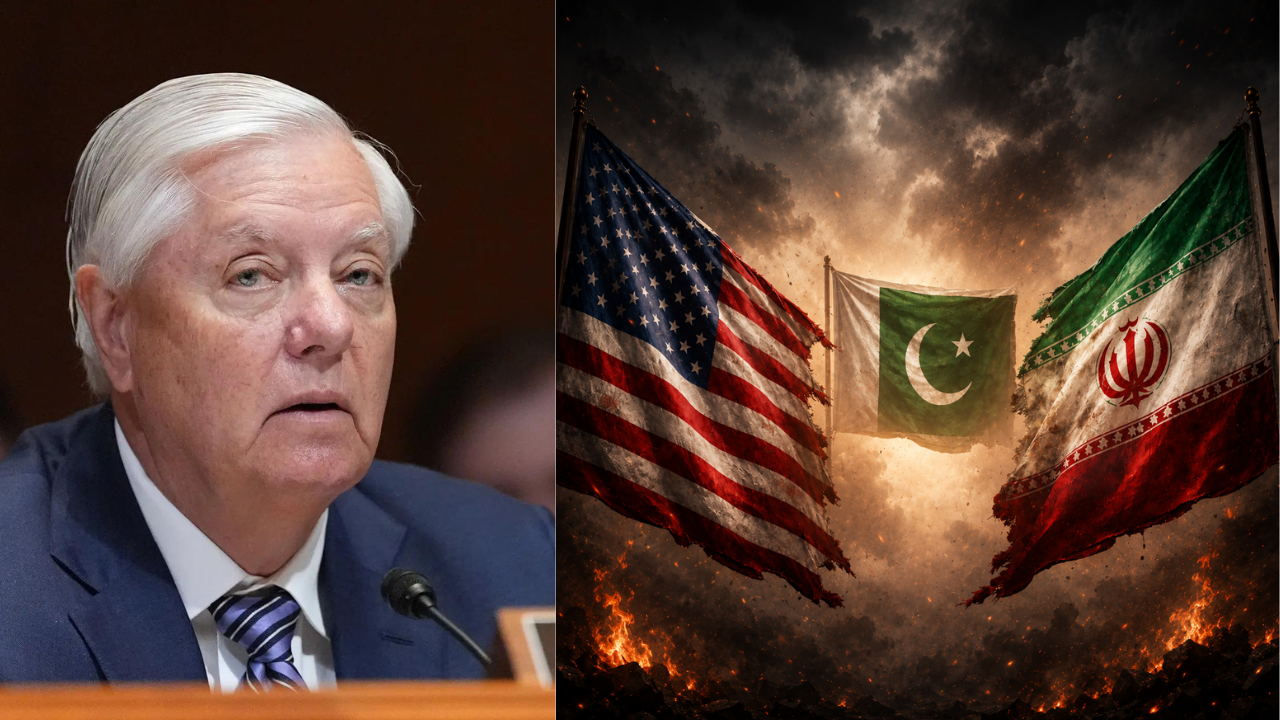
The era of the "double game" is hitting a brick wall in Washington. For decades, the United States viewed Pakistan as an uncomfortable but necessary partner, a bridge between the West and the more volatile corners of Central and South Asia. That bridge is crumbling. Recent friction between Iran and Pakistan, sparked by cross-border missile strikes and an escalating aircraft row, has forced a blunt realization among American officials. Islamabad isn't the reliable mediator it claims to be.
When you look at the recent fallout from the Iran-Pakistan border skirmishes, it's clear something shifted. The US isn't just watching from the sidelines anymore; it’s actively questioning whether Pakistan’s influence is actually stabilizing or just adding fuel to the fire. You don't get to play both sides forever without getting burned. Washington’s patience has run thin because the results just aren't there.
The Myth of the Neutral Broker
Islamabad has long marketed itself as the only player capable of talking to everyone—the Taliban, Beijing, Tehran, and Riyadh. But being a "mediator" implies you have the trust of all parties and the political capital to enforce peace. Pakistan has neither right now. When Iran launched strikes into Pakistani territory targeting militant groups, and Pakistan responded in kind, the veneer of regional diplomacy shattered.
US officials are privately—and increasingly publicly—expressing skepticism. If Pakistan can't manage its own border with Iran without resorting to kinetic strikes, how can it be trusted to mediate wider regional conflicts? The logic is simple. You can't be an arsonist and the fire department at the same time. This isn't just about one incident. It's about a pattern of behavior where Pakistan uses proxy groups to maintain leverage, only to have those same groups cause international headaches.
Washington is Looking for a New Rolodex
Don't think for a second that the US is going to stay stuck in this stagnant relationship. The search for alternatives is already underway. Countries like Qatar, Turkey, and even India are being viewed through a different lens. Qatar has already proven its worth as a backchannel for everything from Afghan negotiations to hostage releases in the Middle East. They offer what Pakistan currently lacks: deep pockets and a lack of baggage.
India’s growing strategic partnership with the US also changes the math. As New Delhi expands its influence in the Middle East through the I2U2 Group (India, Israel, UAE, and the US), Pakistan’s traditional role as a strategic gateway is becoming obsolete. Washington is realizing it doesn't need to beg Islamabad for access or mediation when better-behaved partners are available.
The Iran Aircraft Row was the Last Straw
The specific tension surrounding the Iran aircraft incident highlighted a massive disconnect. When Tehran and Islamabad started trading accusations over airspace violations and militant hideouts, it forced the US to pick a side in a fight it didn't want to be in. The US Department of State has been uncharacteristically sharp about the need for "accountability" rather than just "de-escalation."
What’s really happening? The US sees Pakistan’s inability to control its own territory as a direct threat to regional stability. If Iran feels emboldened to strike inside Pakistan, it suggests that Islamabad’s military deterrent isn't what it used to be. For American strategists, a weak Pakistan is just as dangerous as an uncooperative one. It creates a vacuum that extremist groups are all too happy to fill.
Why the Old Playbook is Failing
For years, the US followed a predictable cycle. Pakistan would do something frustrating, the US would threaten to cut aid, Islamabad would offer "intelligence cooperation," and the money would keep flowing. That cycle is broken. The Cold War is over. The War on Terror is in a different phase. The "strategic depth" Pakistan seeks in Afghanistan has turned into a security nightmare on its own western front.
- The Taliban in Kabul aren't taking orders from Islamabad anymore.
- The Pakistani economy is on life support, requiring constant IMF bailouts.
- Internal political instability has made the military’s grip on foreign policy look shaky.
When you're a US policymaker, you look at those three points and ask: "What am I actually buying with this partnership?" The answer, increasingly, is "not much."
Shifting Alliances in a Multi Polar World
We have to talk about China. Pakistan’s reliance on Beijing has made Washington deeply suspicious. It’s hard to trust a mediator when you know their first phone call is to your primary global rival. This isn't just about regional squabbles; it's about the larger geopolitical chessboard. If Pakistan is firmly in China's camp, its "mediation" will always be viewed through the lens of Beijing's interests.
The US isn't going to cut ties completely—that would be reckless. But the "special relationship" is dead. Expect more transactional dealings. Expect the US to bypass Islamabad and talk directly to regional powers that can actually deliver results. This isn't a "pivot" anymore; it's a full-scale realignment.
The Economic Reality No One Mentions
You can’t be a regional power when you can’t pay your electricity bills. Pakistan’s domestic crises have stripped it of its international prestige. A nation focused on avoiding default doesn't have the bandwidth to lead complex diplomatic missions. The US knows this. They see a country distracted by internal bickering and a collapsing currency.
While Islamabad tries to play the role of a regional heavyweight, its neighbors are moving on. Central Asian republics are looking for routes to the sea that don't involve the instability of the Durand Line or the volatility of Balochistan. The US is encouraging these alternatives. It’s about building a regional architecture that doesn't rely on a single, unreliable pillar.
Practical Shifts in US Policy
If you're tracking where the money and the meetings are going, the trend is obvious.
- Increased military cooperation with India to counter regional threats.
- Using the UAE and Qatar as the primary diplomatic hubs for Middle East-South Asia relations.
- Demanding concrete action against militant groups before any high-level strategic dialogues occur.
This isn't just a temporary dip in relations. It's a fundamental change in how the US perceives its interests in the region. The aircraft row with Iran didn't create the distrust, but it certainly validated it.
Start looking at the Gulf states if you want to see where real mediation happens in the next five years. Watch how the US strengthens ties with nations that offer stability rather than "strategic depth." The old guard in Islamabad might still think they're indispensable, but the view from Washington says otherwise. Stop waiting for a return to the status quo; it isn't coming back.