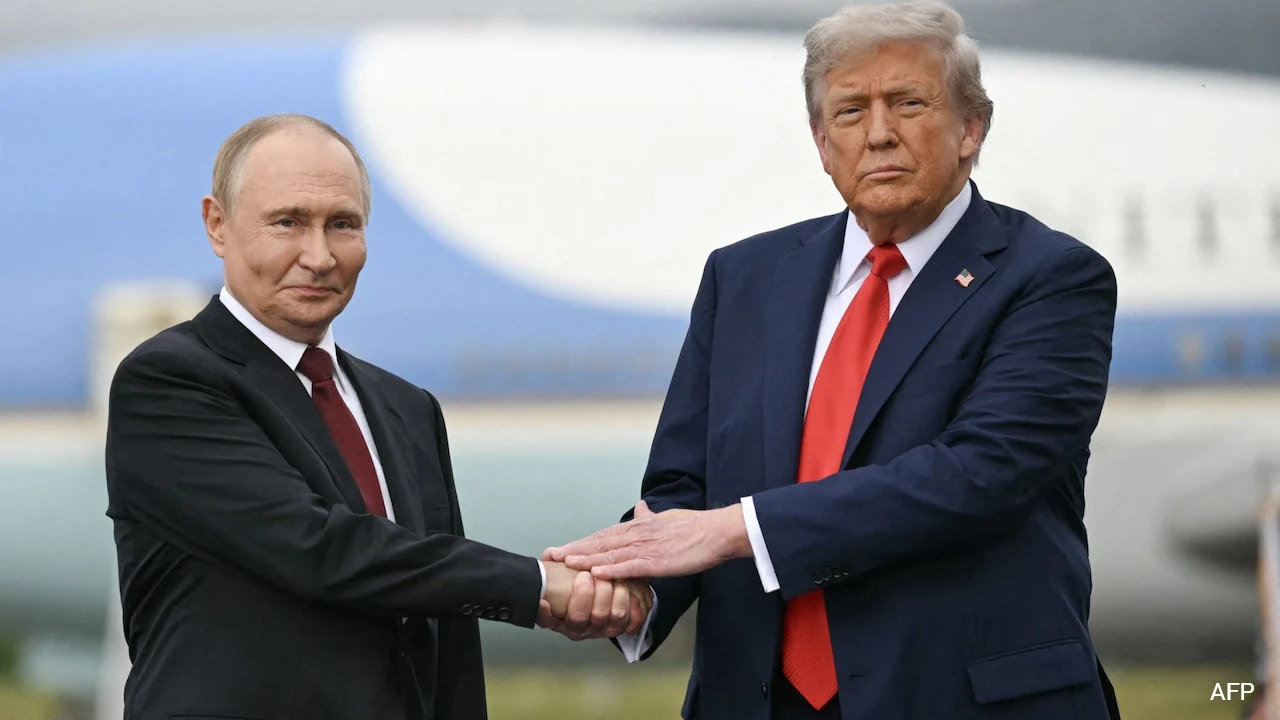
When a top American intelligence official publicly states that Vladimir Putin is "not America's friend in Ukraine," the headline writes itself. It sounds obvious on the surface. Of course the Russian president isn't aligned with Washington's goals in Eastern Europe.
Yet that blunt assessment carries massive diplomatic weight. Intelligence chiefs don't speak off the cuff like cable news pundits. Every word is vetted, weighed, and aimed at specific audiences in Washington, Kyiv, Brussels, and Moscow.
If you've followed the war in Ukraine since 2022, you know that political rhetoric in the United States often swings wildly depending on who is holding the microphone. Some politicians push for rapid peace talks at any cost. Others demand open-ended military aid. Sitting right in the middle of that storm is the US Intelligence Community, whose actual job isn't to pick sides, but to state cold, hard reality.
And the reality they're pointing to is simple. Putin isn't looking for a fair compromise in Ukraine, and treating him like a good-faith negotiating partner is a dangerous mistake.
Why This Intelligence Assessment Matters Right Now
Washington is full of noise. You have think tanks publishing fifty-page white papers, lawmakers arguing over defense budgets, and foreign diplomats lobbying behind closed doors. When the Director of National Intelligence or the CIA Director steps up to a microphone—whether in a Senate Intelligence Committee hearing or a public security forum—they cut through that noise.
Saying Putin is "not America's friend in Ukraine" is diplomatic shorthand for a much deeper threat assessment. In intelligence speak, it means Russian objectives directly collide with core American national security interests.
Here is what that statement actually signals to policymakers:
- No genuine off-ramp exists yet. Intelligence agencies monitor Russian communications, troop movements, and economic shifts. If Putin were secretly preparing his public for a peaceful settlement, US intelligence would see the groundwork being laid. Instead, they see a Kremlin preparing for a long confrontation.
- Ceasefire talks are often used as tactical pauses. Historically, Moscow has used diplomatic negotiations to buy time, rearm, and regroup while exploiting divisions among Western allies.
- The stakes extend past Ukraine's borders. Intelligence officials consistently warn that a Russian victory in Ukraine wouldn't satisfy Moscow. It would embolden the Kremlin to test NATO's resolve elsewhere in Europe.
I've spent years reading declassified CIA estimates and watching Senate threat briefings. One thing stands out every single time. Politicians talk about what they hope foreign leaders will do. Intelligence officers talk about what foreign leaders are actually doing. Right now, the data shows Putin betting that Western patience will run out before Russia's war machine breaks down.
The Gap Between Political Rhetoric and Intelligence Reality
To understand why an intelligence chief's warning hits differently, you have to look at how divided Washington has become over Ukraine policy.
Over the past few years, the debate in Congress and the media has fractured into two loud camps. On one side, hawks argue that anything short of total Ukrainian victory is a catastrophic failure. On the other, self-described realists argue that the US should force Kyiv to the negotiating table immediately to end the bloodshed and stop spending taxpayer money.
Both sides tend to project their own wishes onto Vladimir Putin.
Those pushing for quick negotiations often assume Putin is a traditional transactional leader—someone who wants a slice of territory, a security guarantee, and a handshake so he can get back to selling oil and gas. They treat the war like a real estate dispute that just needs a tough mediator.
The US Intelligence Community doesn't buy that theory. Not even a little.
According to annual threat assessments published by the Office of the Director of National Intelligence (ODNI), Putin views the conflict in Ukraine through an existential, historical lens. He doesn't just want a few eastern provinces. He wants to strip Ukraine of its sovereignty, prevent it from ever integrating with Western institutions, and fracture the transatlantic alliance that has kept Europe stable since World War II.
You can't easily split the difference with someone whose primary goal is erasing a neighbor's independence. That's the core message behind calling him "not America's friend." It's a warning against wishful thinking.
How Putin Plays the Long Game Against Washington
If you want to understand Putin's strategy, stop looking at daily battlefield maps and start looking at Western election calendars.
Russia's military has taken staggering losses in Ukraine. Hundreds of thousands of troops have been killed or wounded, thousands of armored vehicles have been destroyed, and Western sanctions have forced Moscow to overhaul its entire economy into a wartime production machine. By almost any conventional metric, the 2022 invasion was a massive strategic miscalculation.
So why hasn't Putin backed down? Because he doesn't think he has to outfight NATO. He just thinks he has to outlast Washington.
Putin is a former KGB officer who understands how democracies work—and where their weak spots are. Democracies have short attention spans. Voters get tired of inflation, domestic crises flare up, and political administrations change every four years. Autocracies don't have to worry about midterm elections or angry cable news segments.
Russian strategy relies on three main pillars to wait out the West:
- War of attrition on the ground. Russia has a much larger population and industrial base than Ukraine. By grinding forward slowly, even at horrific human cost, Moscow hopes to exhaust Ukrainian manpower and air defenses.
- Information warfare in Western democracies. Russian intelligence services actively amplify divisive narratives online, aiming to convince American and European voters that supporting Ukraine is hopeless, corrupt, or against their own economic interests.
- Building an axis of sanctioned states. Moscow has leaned heavily on Iran for drones and missiles, North Korea for artillery shells and troops, and China for dual-use electronics and economic lifelines.
When US intelligence officials warn that Putin is actively working against American interests in Ukraine, they're looking at this entire picture. He isn't merely defending Russian border security. He's actively assembling a coalition of anti-Western powers to undermine American influence globally.
What Most People Get Wrong About Negotiating With the Kremlin
Whenever an intelligence leader makes a hawkish-sounding statement about Russia, critics immediately jump in with the same accusation. They claim the intelligence community is trying to sabotage diplomacy and trap America in another "forever war."
That misses the point entirely. Intelligence agencies don't oppose diplomacy. They just insist that diplomacy has to be rooted in leverage, not illusions.
Think about how real negotiations work in international politics. A leader only makes concessions when the cost of continuing a war becomes higher than the cost of ending it. Right now, Putin believes time is on his side. Every time he sees delays in US weapons shipments or public squabbling among NATO members, his confidence grows. Why would he compromise today if he thinks Washington might walk away tomorrow?
There's also a huge misconception about what a "frozen conflict" would look like. Some commentators suggest drawing a ceasefire line right where the troops currently stand, similar to the Korean Peninsula in 1953.
Here is the problem with that comparison. In 1953, the United States stationed tens of thousands of troops in South Korea, signed a formal mutual defense treaty, and built a massive fortified border. Without hard security guarantees and heavy weaponry backing up a ceasefire in Ukraine, a pause in fighting wouldn't bring peace. It would just give Russia three or four years to rebuild its tank factories, fix its military logistics, and launch a third, much deadlier invasion.
Intelligence analysts look at past behavior to predict future actions. In 2014, Russia seized Crimea and backed separatists in the Donbas, then signed the Minsk agreements. Moscow violated those agreements almost immediately and used the frozen conflict to destabilize Ukraine from within before launching a full-scale invasion in 2022. Ignoring that track record isn't pragmatism. It's amnesia.
The Global Ripple Effects Nobody Talks About
It's easy to view Ukraine as a regional European problem, especially when you're sitting thousands of miles away in the United States. Rent is high, groceries cost too much, and Eastern Europe feels very far away.
Yet US intelligence agencies constantly emphasize that the outcome in Ukraine directly affects American security at home and in the Indo-Pacific. Beijing is watching every single move Washington makes.
Chinese President Xi Jinping has made no secret of his desire to bring Taiwan under Beijing's control. Right now, Chinese military planners are studying how the US and its allies respond to Russian aggression. They're measuring how quickly Western factories can produce artillery shells, how long Western voters will tolerate economic pain, and whether Washington sticks by its partners when things get tough.
If Putin succeeds in forcing Ukraine to surrender territory through brute force, it sends an unmistakable signal to Beijing. It proves that nuclear-armed autocracies can redraw borders by force and wait out Western democracies. On the flip side, if Ukraine remains independent, sovereign, and strongly backed by its allies, it raises the perceived cost of military aggression everywhere.
The same logic applies to nuclear proliferation. Ukraine gave up the world's third-largest nuclear arsenal in 1994 under the Budapest Memorandum, trading those weapons for security assurances from Russia, the US, and the UK. If a non-nuclear state gets carved up by a nuclear neighbor while the guarantors look away, every other vulnerable nation on earth will draw the same conclusion. They'll decide that building their own nuclear weapons is the only real guarantee of survival. That's a nightmare scenario for US national security.
How to Read Between the Lines of Intelligence Briefings
When you see headlines quoting a US intelligence chief on Russia, China, or any other global hotspot, you can evaluate the news much more accurately if you know how the intelligence community communicates.
Officials rarely blurt out secrets by accident. When they use plain, punchy language like calling Putin "not America's friend," they're usually doing one of three things:
- Declassifying intelligence to preempt a foreign move. The Biden administration famously used this tactic in late 2021 and early 2022, releasing intelligence about Russian invasion plans before Moscow could stage a false-flag attack. Calling out Putin's intentions publicly strips away his element of surprise.
- Signaling unity across the US government. Sometimes foreign leaders try to play the White House, the Pentagon, and the State Department against each other. A clear statement from the intelligence chief reminds adversaries that the entire US national security apparatus sees through their tactics.
- Educating the public and Congress ahead of major policy decisions. Intelligence leaders know that sustained foreign policy requires public support. Plain English works much better than classified jargon when trying to explain why a distant conflict matters.
You don't need a top-secret security clearance to spot these signals. Pay less attention to the dramatic cable news commentary surrounding the quote, and look closely at the timing. When an intelligence chief speaks bluntly about Putin, ask yourself what's happening on the ground in Ukraine or on Capitol Hill that same week. Usually, there's a major aid package stalled, a new Russian offensive brewing, or a high-stakes diplomatic summit right around the corner.
Putting This Into Practice When Following Foreign Policy News
News coverage of the war in Ukraine can feel overwhelming, contradictory, and exhausting. One day you read that Russia's economy is on the brink of collapse; the next day you read that Russian forces are advancing on a key eastern town.
To stay grounded and avoid getting swept up by sensational headlines, apply a few practical filters to your news diet:
- Prioritize primary intelligence documents over punditry. Once a year, the Office of the Director of National Intelligence releases its unclassified Annual Threat Assessment. It's free, readable, and written by career analysts rather than partisan commentators. Reading the ten-page section on Russia will give you a clearer picture than a hundred hours of television debates.
- Watch what Moscow does, not what Kremlin spokespeople say. Russian officials routinely float rumors about being "open to peace talks" whenever Western legislatures are debating aid for Ukraine. Check whether those statements are accompanied by actual troop pullbacks or changes in Russian state media propaganda. Until the domestic messaging inside Russia shifts away from conquering Ukraine, talk of peace is purely tactical.
- Separate tactical setbacks from strategic reality. Wars don't move in straight lines. A village changing hands in eastern Ukraine doesn't mean the entire war is lost, just as a successful drone strike deep inside Russia doesn't mean the Kremlin is about to fall. Look at six-month trends in weapons production, economic stability, and alliance cohesion instead of daily map changes.
Understanding US intelligence assessments doesn't require agreeing with every policy decision coming out of Washington. You can debate the exact dollar amount of foreign aid, question how weapons are tracked, and push European allies to carry more of the financial burden. Those are healthy, necessary debates in a democracy.
Just don't fall for the illusion that Vladimir Putin wants the same things America wants. US intelligence has spent decades studying the man in the Kremlin, and their verdict couldn't be clearer. In Ukraine, he isn't a misunderstood partner waiting for the right deal—he's an adversary betting everything on watching the West blink first.