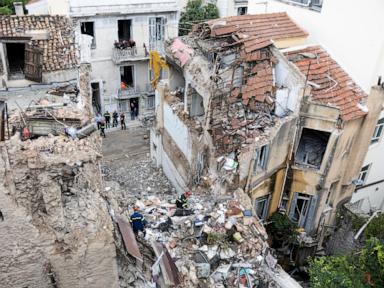
Dense urban environments built adjacent to ancient archaeological zones present distinct structural engineering challenges, where aging masonry, unreinforced concrete, and historical zoning restrictions collide with modern environmental stressors. When a multi-story structure fails catastrophically—such as the recent incident near the Acropolis in Athens—the event exposes vulnerabilities that extend far beyond isolated maintenance failures. It highlights systemic deficiencies in urban risk assessment, structural degradation tracking, and emergency response logistics under severe spatial constraints.
Evaluating such structural failures requires a shift from descriptive reporting to an analytical deconstruction of material fatigue, load redistribution mechanics, and urban search and rescue operational constraints.
The Material Degradation Matrix In Historic Urban Zones
Urban centers like Athens feature building stocks constructed across multiple eras, ranging from mid-century reinforced concrete frames to older unreinforced masonry structures. The interaction between these architectural typologies creates micro-environments of accelerated structural decay.
The primary drivers of structural failure in such districts operate through three distinct vectors:
- Carbonation and Reinforcement Corrosion: In reinforced concrete buildings erected during the mid-twentieth century, atmospheric carbon dioxide reacts with calcium hydroxide within the cement matrix. This carbonation process lowers the pH level of the concrete, destroying the passive alkaline layer that protects internal steel rebar from oxidation. Once corrosion initiates, the volumetric expansion of iron oxide generates internal tensile stresses, causing cracking, spalling, and a catastrophic loss of cross-sectional load-bearing capacity.
- Foundation Settlement and Subsurface Hydrology: Historic districts often rest on complex geological formations overlaid with centuries of urban fill. Fluctuating water tables, heavy vehicular vibration, and subterranean utility leaks alter soil mechanics beneath foundations. Differential settlement introduces secondary bending moments into structural members that were originally engineered for uniform vertical loads.
- Thermal Fatigue and Cyclic Stress: High ambient temperatures combined with extreme seasonal fluctuations induce continuous thermal expansion and contraction cycles. Unreinforced masonry and aged mortar joints suffer cumulative micro-fracturing under these thermal gradients, gradually reducing shear resistance until a threshold event triggers sudden structural instability.
The Physics Of Progressive Collapse
Catastrophic structural failure rarely occurs simultaneously across an entire building. Instead, it follows a deterministic sequence of progressive collapse, where the localized failure of a single primary load-bearing element transfers excess loads to adjacent members, exceeding their ultimate capacity in a cascading failure chain.
When a lower-story column or a primary shear wall yields—whether due to material fatigue, unauthorized interior alterations, or localized foundation failure—the building's internal load paths must instantly reconfigure. If the remaining structural elements lack sufficient redundancy or ductility, dynamic load amplification factors cause instantaneous sequential overloading.
In confined urban settings, buildings frequently share party walls or stand within meters of adjacent structures. This spatial proximity alters blast or collapse dynamics, transforming a single-building failure into a multi-hazard zone where falling debris compromises neighboring structural envelopes, utility lines, and narrow access corridors.
Urban Search And Rescue Operational Dynamics
The extraction of trapped or unconscious occupants from a collapsed structure demands an empirical, phased approach governed by structural stabilization physics and time-critical medical triage. The operational efficiency of first responders is measured in minutes, dictated by the physiological limits of crush syndrome, asphyxiation, and traumatic blood loss.
Emergency response units confronting a pancake or lean-to collapse face a hostile operational environment characterized by unstable debris fields, severed utility feeds, and restricted physical access. The primary tactical challenge involves establishing structural shoring before heavy extraction equipment can be deployed. Without stabilizing remaining overhead slabs or dangling masonry lintels, rescue operations risk secondary collapses that endanger both victims and extraction teams.
Tactical resource allocation during the initial response phase relies on acoustic sensors, thermal imaging, and canine units to map void spaces where survivors are statistically most likely to be located. However, dense urban masonry rubble dampens acoustic signals and blocks thermal signatures, necessitating precision core-drilling and fiber-optic borescope insertion to verify interior survivability spaces without disturbing precarious debris equilibrium.
Economic Externalities And Regulatory Gaps
The financial and regulatory architecture governing older urban properties often disincentivizes proactive engineering interventions. Property owners face stringent preservation mandates that restrict exterior modifications, while interior structural retrofitting remains capital-intensive and disruptive. Consequently, maintenance cycles are reactive rather than predictive.
Municipal authorities typically rely on complaint-driven inspection models rather than mandatory non-destructive testing intervals for buildings exceeding a specific age threshold. This regulatory posture creates an information asymmetry between structural reality and municipal databases. Without thermal imaging audits, ultrasonic pulse velocity testing, and half-cell potential measurements of embedded steel, structural degradation remains undetected until ultimate load limits are breached.
To eliminate structural collapse risks in high-density heritage zones, municipal policy must pivot from aesthetic preservation enforcement to mandatory structural health monitoring frameworks. Property owners should be required to commission certified engineering audits at defined decadal intervals, utilizing non-destructive testing to quantify internal degradation before macroscopic failure occurs. Urban planning agencies must integrate real-time sensor data regarding ground vibration, foundation movement, and structural tilt into emergency dispatch systems, enabling predictive intervention protocols that replace crisis response with systematic risk mitigation.