The waiting room of any local clinic smells vaguely of antiseptic and cheap upholstery. On the wall, there is usually a laminated poster detailing when you should get a mammogram, a colonoscopy, or a blood pressure check. Most people look at those charts with a sense of quiet reassurance. They represent the consensus of science. They are the rules of survival, etched in stone by the smartest minds in the country.
We trust those numbers blindly. We schedule our lives around them. When a doctor says, "You're fifty, it's time," we don't argue. We strip into a paper gown and submit to the machinery of modern diagnostics because we believe someone, somewhere, is looking out for us with absolute objectivity.
But those guidelines do not descend from a mountaintop. They are crafted in quiet, sterile conference rooms by a rotating group of independent experts known as the U.S. Preventive Services Task Force. For decades, this body operated like a steering wheel on a massive ship—silent, essential, and largely hidden from the passengers.
Then came the purge.
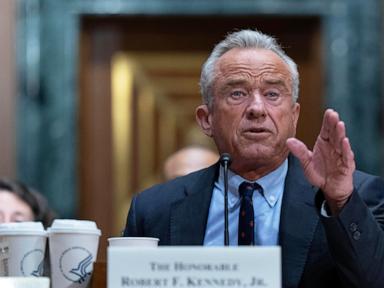
The sudden firing of the leadership within the agency overseeing this task force has sent a shudder through the medical community. Robert F. Kennedy Jr., steering the Department of Health and Human Services, dismantled the existing hierarchy in a move that felt less like a standard bureaucratic transition and more like an ideological eviction.
This isn't just a story about shifting political appointments in Washington. It is a story about what happens when the very definition of preventative truth becomes political property.
The Invisible Shield
To understand the weight of this disruption, we have to look at what these guidelines actually do. They are the invisible shield standing between the American public and preventable catastrophe.
Consider a routine checkup. A doctor notices a slight irregularity in a patient's routine bloodwork. Because of a specific guideline established by the task force, that doctor orders a definitive screening. The insurance company pays for it without a deductible, because federal law mandates coverage for these top-rated preventive services. The disease is caught early. The patient lives.
When you alter the leadership of the body that dictates these rules, you alter the shield.
The task force has historically operated under a strict, almost monastic commitment to rigorous data. They do not care about political optics. They do not care about pharmaceutical profit margins. They look at the evidence: Does screening thousands of asymptomatic people for a specific condition save more lives than it harms through over-diagnosis and unnecessary procedures?
It is a delicate, mathematical balance. If you screen too early, you subject healthy people to invasive biopsies and crushing anxiety. If you screen too late, people die.
Now, that balance is in the hands of an administration that has openly questioned long-standing medical orthodoxies. The concern among public health officials isn't just that the guidelines will change; it's that the methodology itself will be infected by ideological bias.
The Machinery of Doubt
The human mind craves certainty, especially when it comes to illness. When the institutions meant to provide that certainty begin to fracture, doubt rushes into the vacuum.
Imagine a woman sitting at her kitchen table, looking at conflicting medical advice on her phone. One source tells her to follow the traditional screening schedule for cervical cancer. Another source, suddenly elevated by federal health agencies, suggests that the old guidelines were part of a corporate medical conspiracy.
How does she choose?
When leadership is replaced not because of a lack of competence, but because their adherence to traditional scientific consensus clashes with political narratives, the average citizen is left adrift. Medicine ceases to be a refuge of objective facts and becomes another theater in the culture war.
The real danger here is not an immediate, dramatic collapse of the medical system. It is a slow, generational erosion. It is the quiet decision by thousands of ordinary people to skip a routine scan because they no longer trust the authority that recommended it.
The Re-evaluation of Truth
The new direction at the department of health promises a radical overhaul of American wellness. Proponents argue that the current system is captured by corporate interests, overly reliant on pharmaceutical interventions, and blind to chronic, systemic health crises. They promise a return to foundational wellness.
But the tools being used to achieve this vision raise profound questions about the future of objective science. Dismantling established panels of experts eliminates decades of institutional memory. It replaces a system built on peer-reviewed, empirical consensus with one driven by executive decree and unconventional theories.
We are entering an era where the data on the laminated poster in your doctor's office may no longer be a reflection of collective scientific agreement. Instead, it may be a reflection of who holds the pen in Washington.
The stakes are entirely human. They are measured in the quiet conversations between doctors and patients, the anxious waiting for lab results, and the undetected illnesses that find a way to grow in the spaces where trust used to live.
The steering wheel of American medicine has been violently jerked in a new direction. The ship is turning. Whether it is heading toward a renaissance of holistic health or toward a preventable disaster is a question that will be answered not in the halls of Congress, but in the health outcomes of millions of unsuspecting patients over the coming decade.