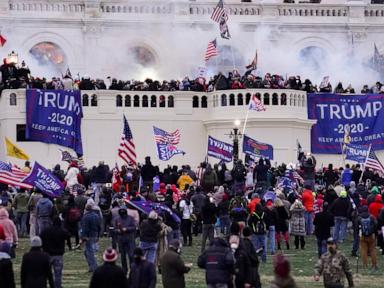
A federal judge has officially wiped clean the remaining seditious conspiracy convictions against core members of the Proud Boys, delivering a final, grinding halt to the flagship legal effort meant to hold leaders of the January 6, 2021, Capitol attack accountable.
U.S. District Judge Timothy Kelly—himself a appointee from Donald Trump’s first term—granted the Department of Justice’s motion late Friday to dismiss charges against Ethan Nordean, Joseph Biggs, Zachary Rehl, and Dominic Pezzola with prejudice. The decision comes on the heels of a coordinated push by federal prosecutors under the current administration, effectively dismantling years of painstaking work by career investigators.
+-----------------------------------------------------------------------+
|                       EXECUTIVE CLEMENCY PIPELINE                      |
|                                                                       |
|   1. Mass Clemency         2. DOJ Vacate Motion     3. Forced Dismissal|
|   [Executive Order]  --->  [Appeals Court Remand]-->[District Court   |
|   Commutes sentences       DOJ moves to drop        Judge bound by    |
|   & pardons ~1,500         vacated charges          prosecutorial     |
|   rioters                                           discretion]       |
+-----------------------------------------------------------------------+
To view this simply as a routine judicial cleanup after a broad presidential pardon is to miss the structural shift taking place in the American legal system. The move reflects an extraordinary exercise of executive authority: using prosecutorial discretion to systematically dismantle past convictions secured by the executive branch's own career attorneys.
Judge Kelly left zero ambiguity about his reluctance. In a sharp seven-page memorandum, he wrote that the court was legally bound by Supreme Court precedent dictating that the executive branch holds exclusive power over criminal prosecutions. He made a point to clarify that his order was by no means an endorsement.
"President Trump's views about the prosecution of those who attacked the U.S. Capitol on January 6—whether those views are based on fact or fiction—are well known," Kelly wrote. He added that the court possessed no legal mechanism to force a presidency to continue prosecuting a case it actively wished to drop.
The Legal Mechanics of an Unprecedented Erasure
The pathway to Friday's dismissal was engineered in stages. Soon after returning to office, the administration granted sweeping clemency to roughly 1,500 individuals charged in connection with the Capitol attack. Former Proud Boys national chairman Enrique Tarrio received a full pardon, erasing his 22-year sentence.
For Nordean, Biggs, Rehl, and Pezzola, the administration initially commuted their prison terms while leaving the felony convictions on their records. That intermediate stage did not last.
By mid-2025, the Justice Department, under D.C. United States Attorney Jeanine Pirro and Deputy Attorney General Todd Blanche, petitioned the D.C. Circuit Court of Appeals to vacate the group's underlying jury convictions. Once the appellate court granted that request and remanded the matter back to the district level, the Department filed a formal motion to dismiss the entire indictment with prejudice.
This move permanently prevents any future administration from reinstating the charges.
Lawyers for the executive branch relied on the principle of absolute prosecutorial discretion. Courts have historically held that judges cannot force prosecutors to pursue a case against their will, even if a jury has already rendered a guilty verdict. By moving to vacate the verdicts prior to requesting dismissal, federal attorneys deftly bypassed the traditional clemency process, converting a political act of mercy into a procedural wipe of the judicial record.
A Judge’s Warning on the Peaceful Transfer of Power
Kelly’s written opinion reads less like a standard legal dismissal and more like a warning shot regarding the erosion of constitutional norms.
The judge recounted the events of January 6 as a direct assault on Congress and the peaceful transition of power. He cited Ronald Reagan’s 1981 inaugural address, reminding the public that the routine, orderly handoff of executive authority is "nothing less than a miracle" of self-governance.
By noting that the administration’s narrative surrounding the insurrection was built on assertions independent of established trial facts, Kelly drew a clear line between judicial findings and political directives. His order underscored the reality that while a president cannot rewrite historical evidence presented in open court, executive power over the Department of Justice allows an administration to effectively scrub the legal consequences of that evidence.
The Systematic Removal of the Public Record
This dismissal is not an isolated event. It represents a broader effort to scrub the legal record of the January 6 prosecutions.
Over the past year, the Justice Department has quietly dismantled public access points related to the Capitol breach investigation. The comprehensive, searchable online database that previously detailed thousands of arrests, charging documents, plea agreements, and trial exhibits was removed from public servers. Similar motions to drop charges are pending in other high-profile cases, including those against key figures of the Oath Keepers.
The broader implications extend well beyond individual defendants. When jury verdicts achieved through months of public testimony and evidence presentation can be erased by subsequent political leadership, the systemic deterrent against political violence changes fundamentally.
Prosecutors spend years building cases around complex charges like seditious conspiracy, which requires proving a high threshold of concerted action to oppose the government by force. By nullifying those convictions after the fact, the current administration creates a legal precedent where the longevity of a sedition conviction depends entirely on who holds the White House.
The legal fight over the Proud Boys is formally over. The four men walk away without active federal convictions or prison terms for their involvement in the event. Yet, as Judge Kelly highlighted in his final remarks, the broader question facing the nation is whether its governing institutions can maintain stability when the foundational principles of accountability and the rule of law are so easily rewritten by executive decree.

.webp)