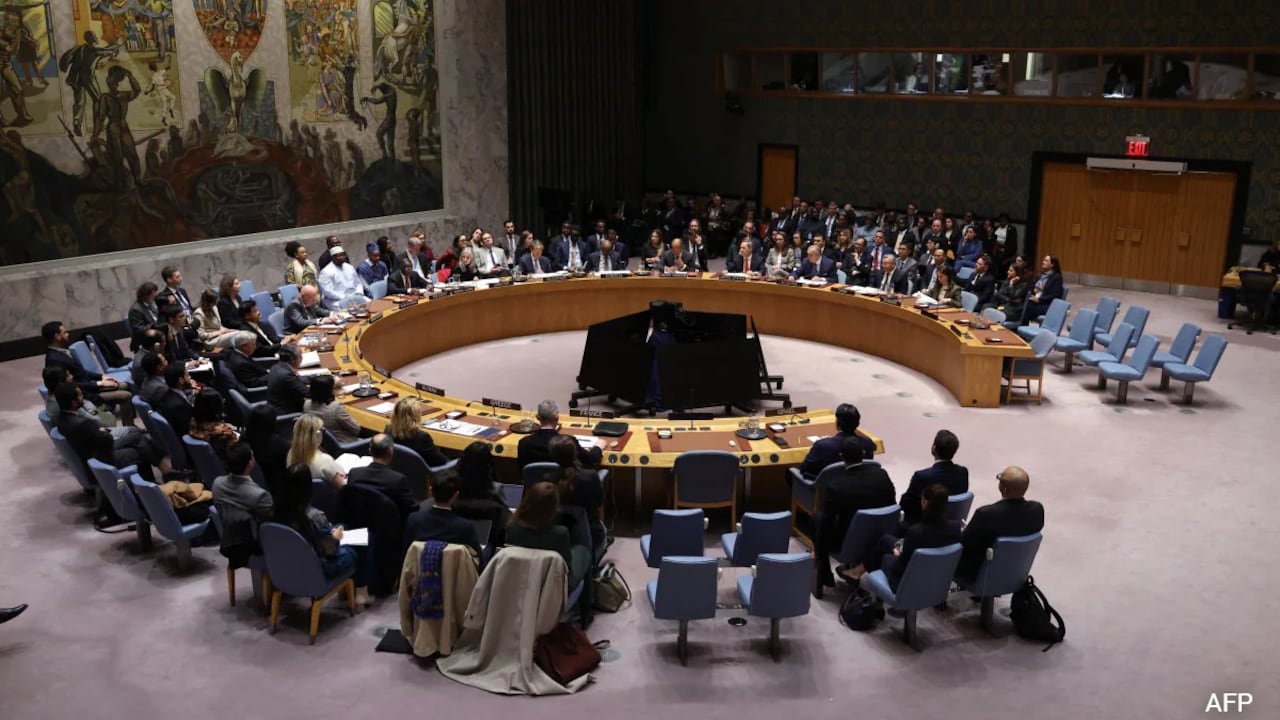
International governance architectures decay not from a lack of high-level discourse, but from structural obsolescence. India's recent diplomatic push regarding the overhaul of United Nations Security Council working methods targets a critical operational friction point. The debate rarely centers on the grand visions of permanent seat allocation; rather, it fixates on the procedural machinery that governs daily decision-making.
When a multilateral body designed in 1945 attempts to manage twenty-first-century transnational security anomalies using mid-century administrative ruleset protocols, systemic bottlenecks emerge. To evaluate the validity of these reform demands, one must deconstruct the internal mechanics of the council, map the cost functions of procedural opacity, and isolate the exact variables driving institutional inefficiency.
The Tripartite Failure of Current Operating Procedures
The functional decay of the council stems from three distinct procedural failures that inhibit swift mediation and equitable participation.
First, the monopoly on drafting resolutions held by self-selected penholders creates an informational and strategic asymmetry. A small subset of permanent members controls the text generation phase of diplomatic negotiations. This allows dominant states to embed preferences deep into preliminary drafts before non-permanent elected members gain meaningful access. By the time a text reaches broader circulation, the structural parameters are fixed, transforming consultation into a ratification exercise rather than a negotiation.
Second, the abuse of the veto mechanism extends far beyond its intended constitutional boundary. Conceived as a unanimity safeguard for major powers during existential crises, the veto now functions as a perpetual shield for national interests and allied proxies. The mechanism creates an asymmetric cost structure. Permanent members pay zero procedural penalty for casting a veto, while the international community absorbs the entire humanitarian and geopolitical cost of the resulting paralysis.
Third, the opacity of informal consultations shuts out non-member states whose sovereignty and regional stability are directly impacted by council resolutions. Closed-door negotiations under the guise of efficiency often serve to shield diplomatic horse-trading from public scrutiny. This lack of transparency severs the feedback loop between operational mandates and local realities on the ground, yielding peacekeeping and enforcement directives that fail upon execution.
The Cost Function of Procedural Opacity
In institutional economics, opacity serves as a rent-seeking mechanism. Within the UN Security Council, closed consultations reduce accountability while raising transaction costs for the broader UN membership.
When ten elected members lack access to early-stage negotiations, they must expend finite diplomatic capital trying to amend mature texts. This produces a reactive posture. Instead of shaping normative frameworks, elected states spend their tenure managing damage control or registering symbolic abstentions.
The resource misallocation extends to field operations. Mandates drafted behind closed doors frequently lack the precise operational clarity required by field commanders and humanitarian coordinators. The ambiguity is a deliberate diplomatic compromise designed to secure consensus among permanent members who disagree on ultimate objectives. Consequently, field missions inherit structural contradictions, leading to mandate creep, resource starvation, and mission failure.
Mechanics of Proposed Structural Overhauls
Meaningful reform requires re-engineering the internal rules of procedure rather than merely expanding membership counts.
Codification of Penholdership Distribution
Distributing drafting responsibilities based on regional expertise and active engagement rather than permanent status alters the informational balance. If an elected member holding specific regional competence acts as co-penholder, the resulting text incorporates ground-level operational realities rather than distant geopolitical abstractions.
Procedural Constraints on the Veto
Proposals to restrict veto application in cases of mass atrocities represent a direct attempt to align institutional design with international humanitarian law. While permanent members resist structural curbs on their prerogative, linking veto usage to mandatory public justifications raises the reputational cost of obstruction. When a state must formally articulate why preventing aid delivery or halting a ceasefire serves international peace, the domestic and international political calculus shifts.
Mandatory Engagement Thresholds
Establishing statutory timelines for circulating draft resolutions provides elected members adequate windows for technical review and capital consultation. Procedural rules must mandate that no text moves to a vote without a minimum transition period for domestic inter-agency coordination within member states. This simple operational fix strips away the emergency pressure tactics permanent members frequently use to ram through contentious mandates.
Institutional Inertia and Strategic Counter-Measures
The primary obstacle to overhauling working methods is the institutional design of Article 108 of the United Nations Charter, which requires the concurrence of all five permanent members for any charter amendment. Because permanent members benefit from the current asymmetrical architecture, they possess structural veto power over institutional reform.
Advocates of reform must therefore bypass the trap of seeking comprehensive charter amendments for every operational change. Altering working methods falls largely under the purview of the provisional rules of procedure of the council itself, which can be modified by a procedural vote of nine members without requiring ratification by the General Assembly or the consent of all permanent members.
By focusing pressure on procedural votes rather than constitutional rewrites, reform coalitions can incrementally dismantle the exclusionary practices governing daily operations.
Strategic Execution Pathway
To shift the equilibrium, developing nations and reform-minded elected members must execute a synchronized three-phase tactical sequence.
- Procedural Challenge: Initiate continuous procedural votes on working methods during every presidency rotation, forcing permanent members into public opposition against transparency measures.
- Coalition Synchronization: Align the voting blocks of the African Group, the Accountability, Coherence, and Transparency group, and the L.69 alignment to act as a unified voting bloc on administrative budgets and procedural adoptions.
- Normative Cost Amplification: Document instances where opaque drafting and veto paralysis directly correlate with field mission failures, translating abstract diplomatic complaints into quantifiable operational risks for the organization.
Institutional decay accelerates when internal rules protect the status quo against environmental feedback. Until the working methods of the council are bound by rigorous transparency and equitable drafting mechanics, the institution will remain structurally unequipped for modern geopolitical volatility.