The sharp decline in candidates for the United Nations Secretary-General (UNSG) position—dropping from thirteen in 2016 to four in the 2026 cycle—is not a sign of waning global interest, but a reflection of a tightened selection bottleneck and a calculated shift in geopolitical risk-reward ratios. This contraction signals that the "open" selection process established by General Assembly Resolution 69/321 has reached an equilibrium where only those with pre-negotiated viability or extreme institutional backing choose to enter the public "audition" phase.
The Structural Bottleneck of Resolution 69/321
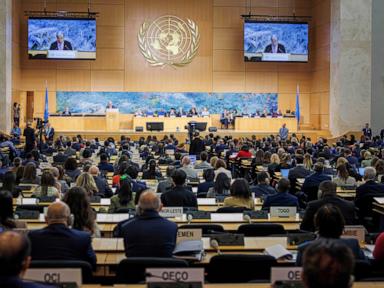
The 2016 cycle was an anomaly driven by the novelty of public hearings. For the first time, candidates presented vision statements and engaged in televised dialogues. This transparency initially lowered the "perceived cost of entry," leading to a crowded field. By 2026, the strategic reality has set in: public performance has a negligible impact on the final decision compared to the private veto power of the P5 (Permanent Five members of the Security Council).
The selection process functions as a multi-stage filter where the General Assembly provides the optics, but the Security Council provides the mandate. The current participation deficit originates from three specific structural pressures:
- The Incumbent Shadow: Unlike 2016, where an open vacancy existed after Ban Ki-moon’s second term, the current geopolitical climate demands a successor who can manage immediate, high-intensity conflicts. Potential candidates who lack a clear "path to 9" (the nine affirmative votes required in the Security Council, including no vetoes) are self-censoring to avoid political damage to their domestic or regional standing.
- Informal Regional Rotation: While not codified in the UN Charter, the principle of regional rotation is a rigid informal constraint. Following Western Europe (Guterres), Asia (Ban), and Africa (Annan), the Eastern European Group (EEG) and the Latin American and Caribbean Group (GRULAC) view this as their rightful cycle. The scarcity of candidates suggests that regional blocs are attempting to consolidate support behind a single "champion" rather than diluting their leverage through multiple entries.
- The Gender Parity Mandate: There is an unprecedented institutional expectation that the next Secretary-General must be a woman. This specific criterion effectively halves the global talent pool of eligible high-level diplomats and heads of state, further narrowing the field before the first vision statement is even drafted.
The Cost Function of Diplomatic Auditions
Entering a UNSG race is not a low-stakes endeavor. For a sitting Prime Minister or Foreign Minister, a public "audition" involves significant diplomatic capital. The reduction in candidates represents a rationalization of these costs.
The Political Opportunity Cost for a high-caliber candidate is extreme. A public loss in the General Assembly can diminish a candidate's authority within their home country or regional organization. In 2016, several candidates saw their careers plateau or decline following a poor showing in the Security Council straw polls.
The Strategic Signaling Risk involves the P5. A candidate who performs "too well" in the General Assembly public hearings may be perceived by a P5 member—specifically Russia, China, or the United States—as being too independent or beholden to the broader UN membership. This creates a "Popularity Paradox" where the more a candidate appeals to the 193 members of the General Assembly, the more likely they are to be vetoed by the Security Council. The current small field suggests that candidates are prioritizing private assurances over public campaigning.
Institutional Mechanics: Why Four is the Equilibrium
The current roster of four candidates is a return to a more traditional, albeit more transparent, power dynamic. This small number allows for a deeper interrogation of each candidate’s ability to manage the "Three Pillars of UN Operations":
1. Administrative Competence and Budgetary Discipline
The UN is currently facing a liquidity crisis. A candidate must demonstrate a capacity to manage a $3.6 billion regular budget and a $6 billion peacekeeping budget. In a field of four, the Security Council can more effectively vet a candidate’s history of fiscal management. The "audition" acts as a stress test for how a candidate handles granular questions on reform, a process that becomes unmanageable with thirteen participants.
2. Crisis Mediation and Neutrality
The core function of the UNSG is the "Good Offices"—the quiet diplomacy used to prevent or settle international disputes. The public hearings are designed to test a candidate's rhetorical skill, but the private Security Council interviews focus on their willingness to act as a "Secretary" rather than a "General." A smaller field allows the P5 to probe specific stances on active conflicts without the distraction of fringe candidates.
3. Navigation of the P5 Fracture
The most significant barrier to entry in 2026 is the profound misalignment between the P5 members. Any candidate perceived as leaning toward a "Western" or "Global South" agenda will face an immediate veto. The four candidates currently in the running represent a narrow "corridor of viability"—individuals who possess enough diplomatic ambiguity to avoid an early veto while maintaining enough stature to lead the Secretariat.
The Gender Parity Variable
The push for a female Secretary-General is no longer a peripheral suggestion; it is the central gravitational force of the 2026 election. The fact that the field is small indicates that the "qualified and willing" pool of female candidates at the head-of-state or foreign-minister level is being heavily scrutinized for their ability to command the Secretariat.
The historical data shows that of the nine Secretaries-General since 1945, zero have been women. This creates a high-pressure environment for the four candidates currently auditioning. If the field were larger, it might suggest a lack of consensus on the gender requirement. The small field indicates that the "female candidate" requirement has been internalized by member states as a prerequisite for a viable nomination.
The Strategic Path Forward
The 2026 selection process will be defined by its ability to resolve the tension between the General Assembly’s desire for transparency and the Security Council’s need for a manageable operative. The participation deficit is not a failure of the system but a refinement of it.
To navigate the final stages of the selection, the following maneuvers are essential:
- Consolidation of Regional Blocs: The EEG or GRULAC must present a unified front. If multiple candidates from the same region remain in the race, they will inevitably cannibalize their own support during the Security Council straw polls.
- The Veto-Proof Vision Statement: Candidates must draft vision statements that prioritize "multilateralism" and "charter values" over specific policy prescriptions that could alienate a P5 member. The goal is to remain the "least objectionable" option.
- Leveraging the GA/SC Tension: A candidate who can secure a massive majority in the General Assembly will create a "moral mandate" that makes it politically expensive (though not impossible) for a P5 member to exercise a veto.
The 2026 election is moving away from the "open market" model of 2016 and toward a "curated selection" model. The reduced number of candidates ensures that the remaining contenders are those with the highest degree of institutional resilience. The final selection will likely be determined not by who wins the most "likes" in a public hearing, but by who survives the gauntlet of the first three Security Council straw polls without a red ballot.