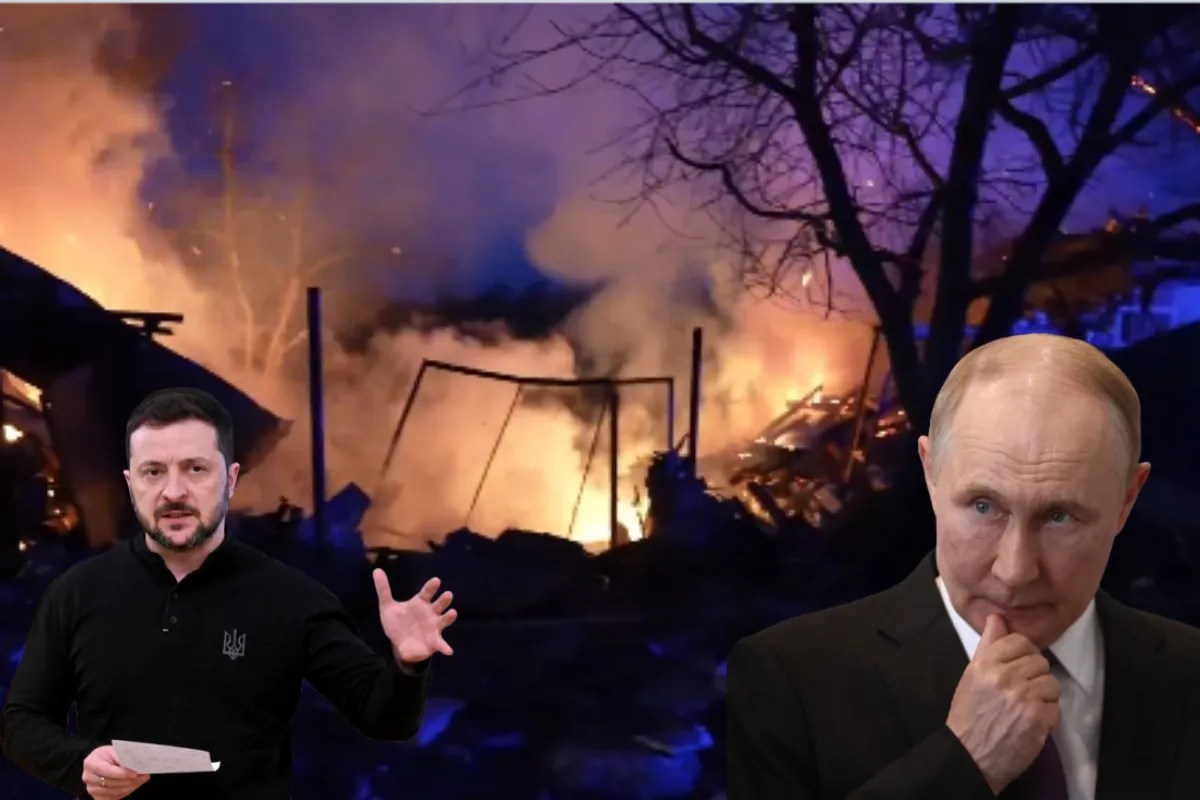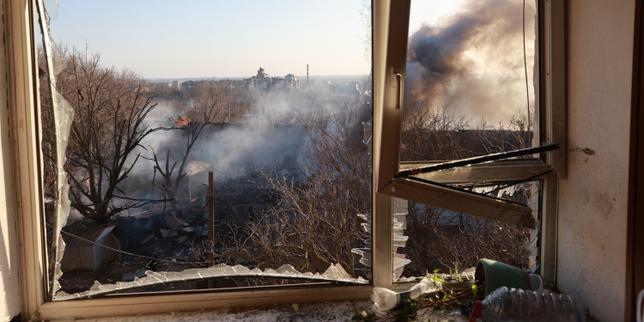
Standard war reporting has become a repetitive loop of territorial bookkeeping. The "live updates" you consume are designed to make you feel informed while ensuring you miss the systemic shifts actually deciding the outcome. Media outlets track a single treeline in the Donbas as if it were the hinge of history. It isn't. We are witnessing the first high-attrition industrial war of the sensor-saturated age, and the "lazy consensus" that more tanks or a faster news cycle will break the deadlock is dangerously naive.
Most coverage focuses on the geography of the front. This is a 19th-century metric applied to a 21st-century problem. If you want to understand this conflict, stop looking at the map and start looking at the electromagnetic spectrum and the factory floor.
The Myth of the Breakthrough
Every six months, a new "game-changing" platform is heralded as the silver bullet. First, it was Javelins. Then HIMARS. Then Leopards and F-16s. This cycle of techno-optimism ignores a brutal reality: in a world of ubiquitous surveillance, the "breakthrough" is dead.
When drones can see every movement within 20 kilometers of the zero line, the element of surprise—the fundamental requirement for a blitzkrieg—evaporates. You cannot mass armor for a decisive punch when the enemy sees you fueling up in a garage three towns away. The "stalemate" isn't a failure of courage or strategy; it is a structural byproduct of the Transparent Battlefield.
I have watched analysts predict a "collapse" of one side or the other for two years based on morale or single-village captures. They are wrong because they treat war like a sporting event with a clock. In reality, this is a contest of industrial endurance.
The Calculus of Attrition
While the headlines scream about a specific missile strike in Kyiv, the real story is the Cost-Exchange Ratio.
- The Drone Disparity: When a $500 FPV drone kills a $5 million T-90M tank, the defender isn't just winning a tactical engagement; they are winning a macroeconomic war.
- The Shell Gap: Western production lines were optimized for "just-in-time" delivery and high-tech, low-volume precision. Russia shifted to a "just-in-case" total war economy.
- Electronic Warfare (EW): This is the silent killer of Western tech. GPS-guided munitions, once thought to be infallible, are being rendered useless by sophisticated jamming. If your $100,000 Excalibur shell misses by 50 meters because of a signal jammer, it’s just an expensive paperweight.
Why the Front Lines Don't Matter
The obsession with "liberating territory" is a political necessity but a strategic trap. Territory is a lagging indicator of power. The leading indicators are energy resilience, logistics depth, and internal political cohesion.
Imagine a scenario where Ukraine retakes every inch of its 1991 borders tomorrow. If their energy grid is destroyed and their demographic core has fled to Berlin and Warsaw, have they "won"? Conversely, if Russia holds the Donbas but its central bank collapses and its labor force is decimated by mobilization and brain drain, what is the value of that dirt?
We need to stop asking "Who is winning today?" and start asking "Who can sustain 2027?"
The False Promise of "Live" Reporting
Live blogs create an illusion of momentum. They satisfy the lizard brain’s craving for "newness." But war moves in cycles of months and years. By focusing on the "En Direct" updates, you are blinded to the Cumulative Effect.
- Systemic Degradation: A bridge hit today isn't about the bridge. It's about the extra 400 calories of fuel every truck must burn to take the long way around, multiplied by 10,000 trucks over six months.
- The Human Capital Crisis: No amount of Western hardware can replace a 35-year-old veteran NCO with three years of combat experience. Both sides are burning through their most valuable resource—competent, trained humans—at a rate that cannot be replenished by a three-week crash course in the UK or a Russian penal colony recruitment drive.
The Contradiction of Western Aid
The current strategy of "as long as it takes" is actually a strategy of "as little as possible to avoid escalation." This half-measure approach ensures the very stalemate the West claims to want to break.
By drip-feeding technology, the West allows the Russian military to adapt. It is an evolutionary process. You introduce a new threat, Russia suffers for two weeks, adapts its EW and tactics, and the advantage is gone. To actually shift the needle, you need Mass and Velocity, not a curated boutique of high-end toys.
The Wrong Questions
People often ask: "When will the war end?"
This is the wrong question. It assumes a neat treaty signing on a battleship.
The right question is: "What does a functional Ukraine look like in a state of permanent mobilization?"
The border may eventually freeze, much like the 38th Parallel in Korea. If that happens, the success of the state won't be measured by whether they hold Mariupol, but by whether they can build a high-tech defense industry that makes the cost of a renewed invasion too high to bear.
The Brutal Reality of Modern Logistics
In my time analyzing supply chains, I’ve seen how "efficiency" is the enemy of "resilience." The West spent thirty years building efficient militaries. Russia kept its "inefficient" Soviet-era mass. In a short war, efficiency wins. In a long war, mass is the only thing that matters.
The North Atlantic alliance is currently struggling to produce more than 100,000 artillery shells a month, while Russia—a country with a GDP smaller than Italy’s—is pushing significantly higher volumes. This isn't because Russia is "stronger"; it’s because they are organized for the reality of the 1940s, which, as it turns out, is exactly what the 2020s require.
The Innovation Trap
We love stories about MacGyvered drones and Starlink. These are fascinating, but they are stopgaps. Innovation without scale is just a hobby. Ukraine has incredible grassroots innovation, but it is currently fighting an industrial-scale beast. The disparity between "cool tech" and "mass production" is where wars are lost.
Stop Reading the Live Updates
If you want to understand the trajectory of this conflict, stop refreshing the feed. The "breaking news" about a drone hitting a refinery or a village being "grey-zoned" is noise.
Look at the interest rates in Moscow. Look at the shell production capacity in Scranton, Pennsylvania. Look at the demographics of the graduating classes in Kyiv. That is where the war is being fought. Everything else is just a very expensive, very deadly distraction.
The map is lying to you. The stalemate is the intended feature of a transparent, high-attrition battlefield where neither side has found the answer to the drone-dominated sky. Until someone solves the problem of moving armor across an open field that is being watched by a thousand eyes, the lines on your "live" map will barely move, regardless of how many notifications you get on your phone.
Focus on the capacity to endure, not the ability to advance. The former determines the latter.
Stop looking at the red and blue lines. Look at the furnace.
Choose your metrics wisely or remain a victim of the news cycle.